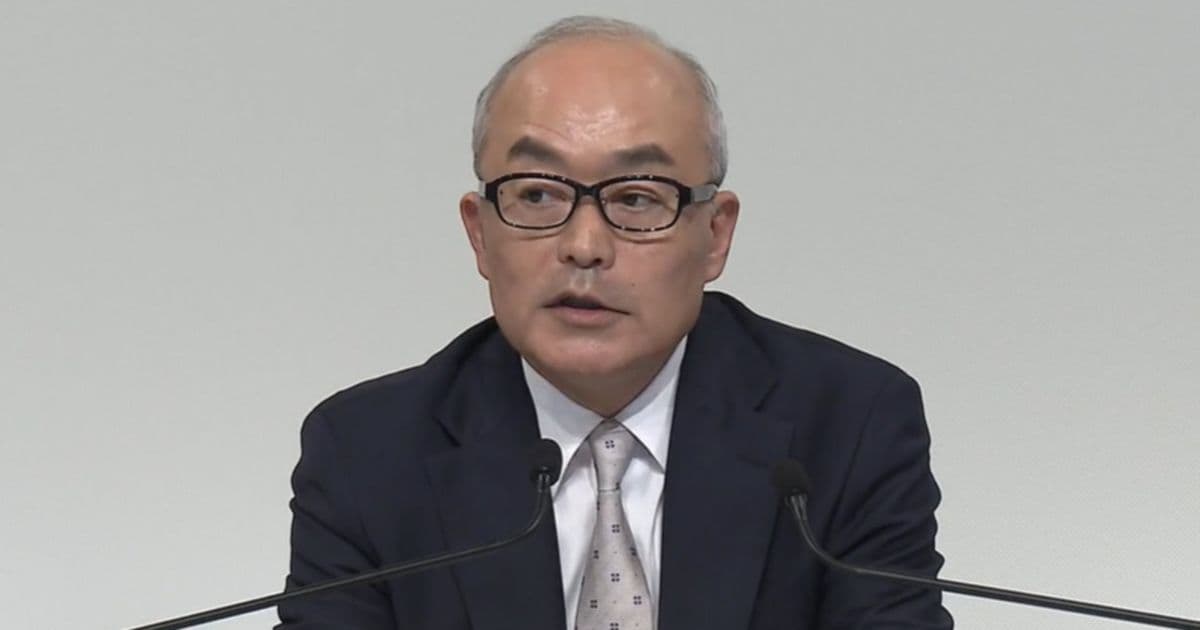
Sony Group President Hiroki Totoki announced that artificial intelligence will be central to the next wave of gaming content, positioning the firm to capture growth in AI‑enhanced experiences while bolstering its sensor business through a joint venture with TSMC.
Sony Group Leverages AI to Accelerate Gaming Innovation, CEO Says
Business news
Tokyo – At a strategy briefing on May 8, Sony Group President and CEO Hiroki Totoki outlined a multi‑year plan that places artificial intelligence at the core of the company’s gaming evolution. Totoki said AI will "drive the continuing evolution needed in gaming content" and help "reinvigorate the industry." The announcement coincided with two concrete moves:
- AI‑enhanced game development – Sony’s internal studios will adopt generative‑AI tools for level design, character animation, and adaptive storytelling, aiming to cut production cycles by up to 30 %.
- Joint venture with TSMC – A new partnership to develop next‑generation image sensors, targeting a 15 % performance uplift for PlayStation hardware and a broader rollout into mobile and automotive markets.
The briefing also referenced a ¥45 billion ($300 million) internal budget earmarked for AI research and talent acquisition through 2028.
Market context
The global gaming market is projected to reach $285 billion by 2027, growing at a 9.5 % CAGR, according to Newzoo. AI‑driven content creation is emerging as a differentiator; a recent IDC survey found that 62 % of developers plan to integrate generative AI into at least one title within the next 12 months.
Sony’s PlayStation ecosystem currently commands a 33 % share of console shipments worldwide, with the PS5 selling 23 million units since launch. However, rising component costs—particularly for memory chips—have pressured margins, prompting a planned price increase of 5 % for the console in Q3 2026.
The TSMC partnership is significant because the foundry’s 3‑nm process can deliver sensor pixels that are 1.8 times more sensitive than the current generation. This capability is expected to improve real‑time ray tracing and motion tracking, features that are increasingly demanded by premium titles and cloud‑gaming services.
What it means
- Accelerated content pipelines – By embedding AI into asset creation, Sony could reduce development budgets by an estimated ¥10 billion per flagship title, freeing capital for higher‑risk, IP‑driven projects.
- Hardware differentiation – Advanced sensors will enable lower latency eye‑tracking and higher fidelity HDR, giving the PlayStation a tangible edge over rivals such as Microsoft’s Xbox Series X, which relies on a different sensor roadmap.
- Revenue diversification – The sensor JV opens a new B2B revenue stream. If the joint venture captures just 5 % of the projected $70 billion mobile sensor market by 2028, it would add roughly ¥150 billion ($1 billion) in annual sales to Sony’s Electronics segment.
- Strategic positioning against AI‑centric competitors – While companies like Epic Games and Unity are rolling out AI toolkits for developers, Sony’s internal integration paired with hardware upgrades positions it to offer a more seamless end‑to‑end solution, potentially locking in developers to the PlayStation ecosystem.
Overall, Totoki’s AI‑focused agenda signals a shift from incremental console upgrades to a broader platform strategy that couples software innovation with next‑gen sensor technology. If execution matches the outlined timelines, Sony could sustain its market leadership while opening new growth avenues beyond traditional gaming hardware.
Comments
Please log in or register to join the discussion