
Three of five finalists in South Korea's national AI competition used foreign open-source code, highlighting challenges in developing truly homegrown foundation models.
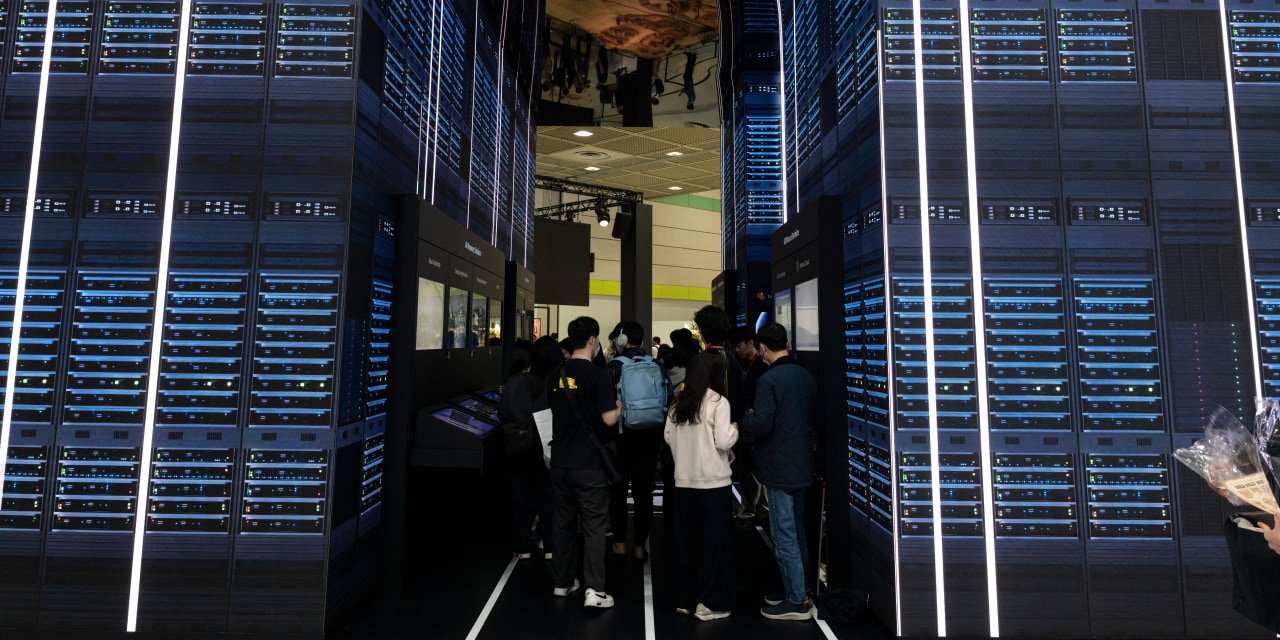
South Korea's ambitious effort to build sovereign AI capabilities is facing practical limitations, with three of the five finalists in a national competition for indigenous AI models relying on foreign open-source foundations. The revelation exposes the tension between geopolitical aspirations and engineering pragmatism in the global AI race.
The Ministry of Science and ICT launched the competition to reduce dependence on U.S. and Chinese AI technologies, offering substantial funding to develop homegrown foundation models. Yet finalists from major institutions including Naver Cloud, LG AI Research, and a consortium led by ETRI (Electronics and Telecommunications Research Institute) openly acknowledged building upon Meta's Llama architecture and other foreign open-source models.
'Starting from scratch would have required years of development and enormous computational resources we simply don't have,' explained one technical lead from an ETRI-backed team. 'Using Llama as our base allowed us to focus our limited resources on domain-specific fine-tuning for Korean language and cultural contexts.' The teams emphasized that foreign open-source components were strategically modified with Korean datasets and specialized techniques to enhance local relevance.
This pragmatic approach underscores the immense challenges smaller nations face in competing with U.S. and Chinese tech giants that command vast datasets, specialized talent pools, and near-unlimited computing infrastructure. South Korea's $1.5 billion investment in AI development through 2027 appears insufficient to overcome these structural disadvantages in foundation model development.
The reliance on foreign core technologies creates strategic vulnerabilities despite surface-level sovereignty. Updates to underlying architectures remain controlled by overseas entities, and export restrictions could suddenly invalidate entire development pipelines. Meanwhile, China's aggressive investment in domestic AI ecosystems—showcased by Huawei-powered models like Z.ai's GLM-Image—demonstrates an alternative path that South Korea has yet to match.
Market positioning reveals another layer of complexity: Korean finalists targeting enterprise applications argued their hybrid approach delivers practical value faster. One team demonstrated a 38% accuracy improvement in Korean legal document processing compared to GPT-4, achieved by fine-tuning Llama-3 with domestic case law. Such specialized implementations may offer near-term commercial advantages despite dependence on foreign foundations.
This competition outcome signals a potential middle path for nations lacking AI superpower resources—strategic adoption and localization of open-source models rather than pure indigenous development. However, it raises critical questions about long-term technological sovereignty as foundation models increasingly shape economic and security infrastructures globally. The Korean experience suggests that for most countries, true AI independence remains more aspirational than achievable with current resource allocations.
Comments
Please log in or register to join the discussion