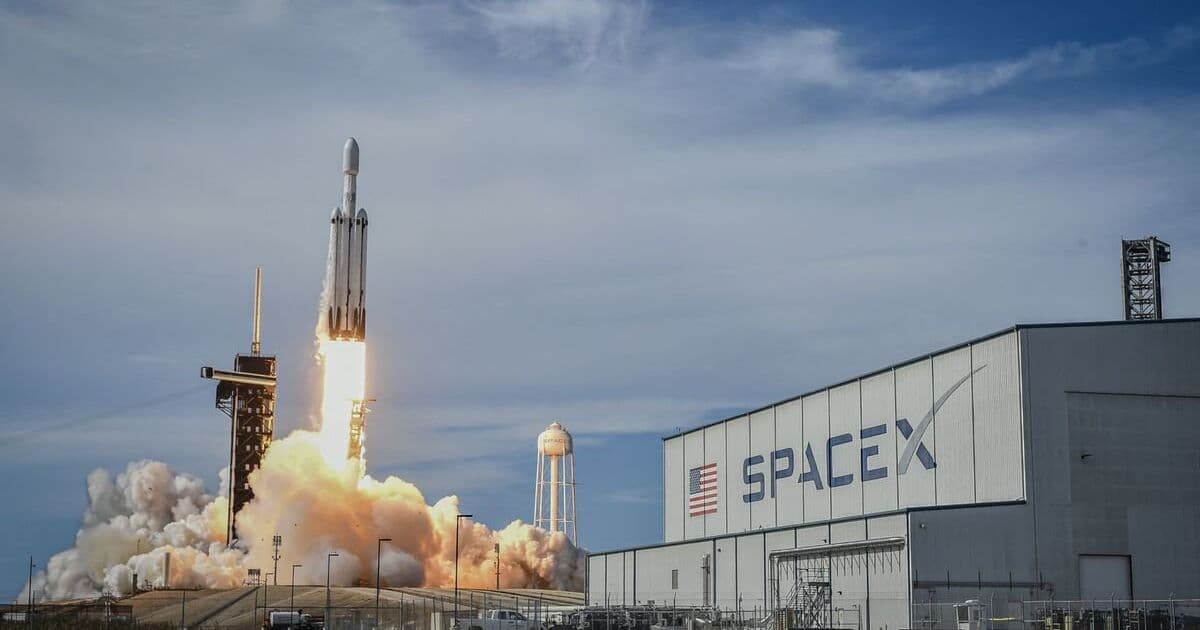
Elon Musk is pursuing a merger between SpaceX and xAI, seeking to consolidate his AI and space ventures as xAI's compute demands surge.
SpaceX is in advanced talks to combine with xAI, according to people familiar with the matter, as billionaire Elon Musk moves quickly to consolidate his empire. The potential merger would unite Musk's space exploration company with his artificial intelligence startup, creating a vertically integrated technology powerhouse spanning both orbital and terrestrial computing infrastructure.
The talks have reached a stage where SpaceX has informed some of its investors about the potential combination, suggesting the discussions are substantive rather than exploratory. This move comes as xAI's computational requirements have grown exponentially, with the company recently announcing plans to spend $10 billion on AI training infrastructure.
What's Actually New
The merger discussions represent a significant shift in Musk's business strategy, moving from parallel development of his various ventures toward active integration. xAI, founded in 2023, has rapidly become one of the most compute-intensive AI companies, requiring massive GPU clusters and data center capacity that SpaceX's satellite internet business could potentially help provide.
SpaceX's Starlink satellite constellation could offer unique advantages for AI model training and deployment, potentially enabling distributed computing across its global network of low-Earth orbit satellites. This would be particularly valuable for xAI as it competes with larger rivals like OpenAI, Google DeepMind, and Anthropic for computational resources.
The Compute Challenge
xAI's rapid growth has created significant infrastructure demands. The company recently announced it would spend $10 billion on AI training this year alone, highlighting the capital-intensive nature of frontier AI development. By combining with SpaceX, xAI could potentially leverage the rocket company's manufacturing capabilities, launch infrastructure, and satellite network to create novel AI training and deployment architectures.
SpaceX's experience with large-scale hardware production and deployment could help xAI scale its computational infrastructure more efficiently. The rocket company's vertical integration model, which includes in-house manufacturing of rocket engines and spacecraft, could be applied to AI hardware development and deployment.
Investor Implications
The fact that SpaceX has informed some investors about the potential merger suggests the company is preparing for significant strategic changes. This could impact SpaceX's valuation and future fundraising efforts, particularly as the company seeks to balance its space exploration ambitions with the growing demands of AI development.
Investors in both companies would likely see benefits from the merger, including potential synergies between space-based and terrestrial computing infrastructure, shared research and development costs, and expanded market opportunities. However, the combination would also create a massive conglomerate spanning multiple high-growth technology sectors.
Industry Context
The potential SpaceX-xAI merger comes amid a broader trend of AI companies seeking to control their computational infrastructure. Companies like Google, Amazon, and Microsoft have long maintained in-house chip design capabilities, while newer AI companies are increasingly looking to secure their hardware supply chains.
Musk's move could accelerate this trend, potentially prompting other AI companies to seek similar vertical integration strategies. The combination of space-based and terrestrial computing infrastructure could also influence how future AI models are trained and deployed, particularly for applications requiring global reach or low-latency processing.
Timeline and Next Steps
While the talks are described as "advanced," no final agreement has been reached, and the timeline for any potential merger remains unclear. The complexity of combining two large technology companies with different operational models and regulatory requirements suggests that any merger would take considerable time to execute.
The discussions also come as Musk faces increasing scrutiny over his business empire's concentration of power across multiple critical technology sectors. Any merger would likely face regulatory review, particularly given the national security implications of combining space and AI capabilities.
What This Means for AI Development
If completed, the merger would create one of the most vertically integrated technology companies in history, spanning space launch, satellite communications, and artificial intelligence. This could accelerate AI development by providing xAI with direct access to SpaceX's manufacturing capabilities and launch infrastructure.
The combination could also influence the geographic distribution of AI development, as SpaceX's global satellite network could enable distributed AI training and inference capabilities that are currently limited by terrestrial infrastructure constraints.
Looking Forward
The potential merger reflects Musk's broader strategy of building integrated technology platforms that span multiple domains. Just as Tesla's energy storage business complements its electric vehicles, combining SpaceX's space capabilities with xAI's computational expertise could create new opportunities for both companies.
However, the success of any merger would depend on how effectively the companies can integrate their operations while maintaining their respective competitive advantages. The combination of space and AI technologies presents unique technical and operational challenges that would need to be carefully managed.
As the AI industry continues to evolve, the potential SpaceX-xAI merger highlights the growing importance of computational infrastructure in determining competitive advantage. Companies that can control their hardware supply chains and deploy computing resources efficiently are likely to have significant advantages in the race to develop increasingly capable AI systems.
For now, the talks remain in progress, and the ultimate outcome remains uncertain. But the very fact that such discussions are taking place underscores the strategic importance of computational infrastructure in the AI industry and the lengths to which companies will go to secure their competitive positions.
Comments
Please log in or register to join the discussion