
The Standard Performance Evaluation Corporation has released SPEC CPU 2026, the first major update to their industry-standard CPU benchmark suite in nine years. This comprehensive benchmark suite will become the primary metric for evaluating CPU performance across servers, workstations, and increasingly powerful mobile devices through the 2030s.
SPEC CPU 2026: The New Standard for Measuring Processor Performance in the Next Decade
Today marks a significant milestone in the world of CPU benchmarking as the Standard Performance Evaluation Corporation (SPEC) has released SPEC CPU 2026. This new iteration of their widely adopted CPU benchmark suite represents the first major update in nine years and will likely become the definitive metric for evaluating processor performance throughout the next decade.
The SPEC CPU benchmark suite has long been considered the gold standard for measuring CPU performance, thanks to its technical rigor and broad industry acceptance. With the rapid evolution of processor architectures—from Intel's latest hybrid designs to AMD's Zen 4 and Arm's server-grade offerings—having a modern, representative benchmark suite has become increasingly critical.
What Makes SPEC CPU 2026 Different?
Unlike minor updates to previous versions, SPEC CPU 2026 represents a substantial modernization of the benchmark suite. Most benchmarks from the previous version have been replaced with newer workloads that better reflect contemporary computing demands. Even the few "evergreen" benchmarks that remain have been updated to incorporate more modern codebases and libraries.
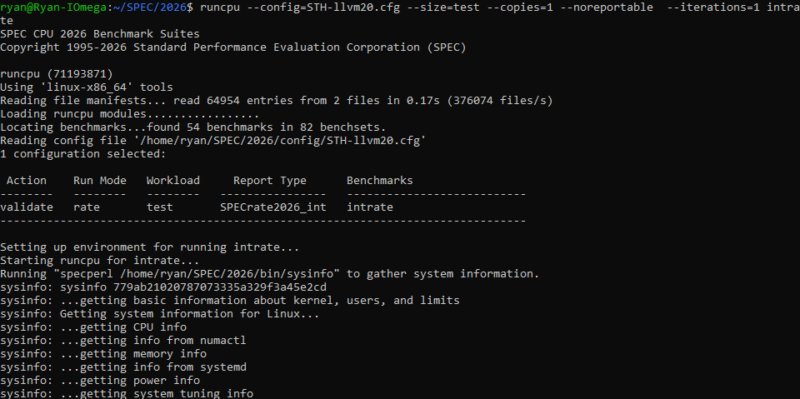
The end result is a benchmark suite that maintains the same high-level design goals as its predecessors while featuring workloads that are significantly more representative of today's software landscape. This evolution addresses the fact that the code running underneath has changed dramatically since the era of Skylake, Zen 1, and Cortex-A75—the architectures that SPEC CPU 2014 was primarily designed to evaluate.
Industry Collaboration and Validation
One of SPEC CPU's greatest strengths has always been its broad industry participation. The benchmark suite continues to be developed by a consortium that includes virtually all major CPU manufacturers:
- AMD
- Intel
- Arm
- SiFive
- And numerous academic and industry contributors
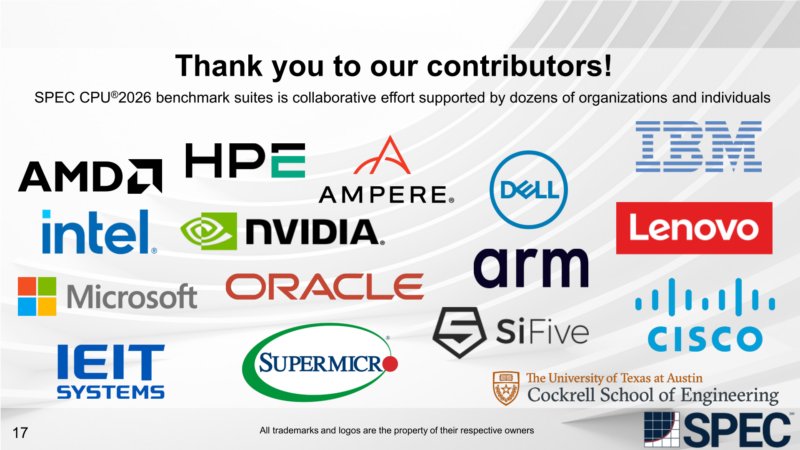
This high level of vendor involvement contributes significantly to SPEC CPU's legitimacy and acceptance within the industry. There is broad agreement that it represents a fair benchmark, with few claims to the contrary. This consensus is particularly important in an industry where benchmark methodology has often been politically charged.
The collaborative development process ensures that the benchmark is extremely well-tested and vetted before release. Each participating company has an incentive to ensure the benchmark accurately reflects real-world performance while remaining difficult to "game" through specialized optimizations.
The Unique Architecture of SPEC CPU
What sets SPEC CPU apart from nearly all other benchmark suites is its distribution as source code rather than pre-compiled binaries. This design choice has several important implications:
Portability: The benchmark can be compiled and run on any system with a standards-compliant C/C++/Fortran compiler, regardless of CPU architecture—even those that don't yet exist.
Compiler Sensitivity: SPEC CPU serves as both a hardware and compiler benchmark. Since the code contains no CPU intrinsics or architecture-specific optimizations, performance is heavily influenced by the compiler's ability to generate efficient machine code.
Fair Optimization: Compiler improvements that boost SPEC CPU scores must benefit a wider class of programs, not just the benchmark itself. This prevents vendors from creating "benchmark-specific" optimizations that don't translate to real-world performance.
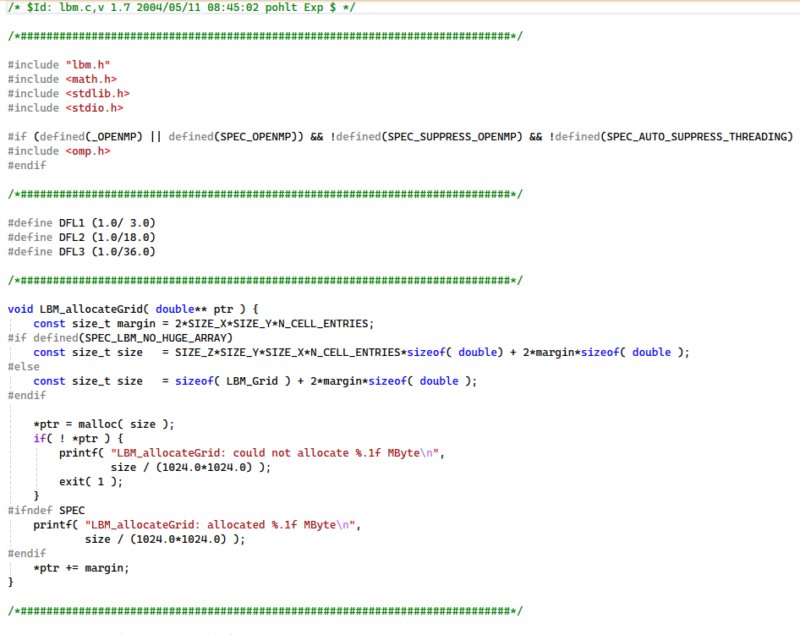
This approach makes SPEC CPU fundamentally different from most other CPU benchmarks, which measure how well a system executes a specific batch of machine code. Instead, SPEC CPU evaluates algorithms and workloads, providing a more holistic view of processor capabilities.
Design Philosophy: CPU-Focused Benchmarking
SPEC CPU is explicitly designed to be as much a CPU test as possible. This focus requires careful engineering to minimize the influence of other system components:
- File I/O Minimization: Benchmarks avoid file operations to prevent storage bottlenecks.
- Deterministic Operations: Non-deterministic inputs (like hardware random number generators) are eliminated.
- User-Land Focus: At least 95% of execution time should be spent on user code, not the operating system.
- Representative Workloads: Benchmarks reflect modern computing needs rather than academic curiosities.
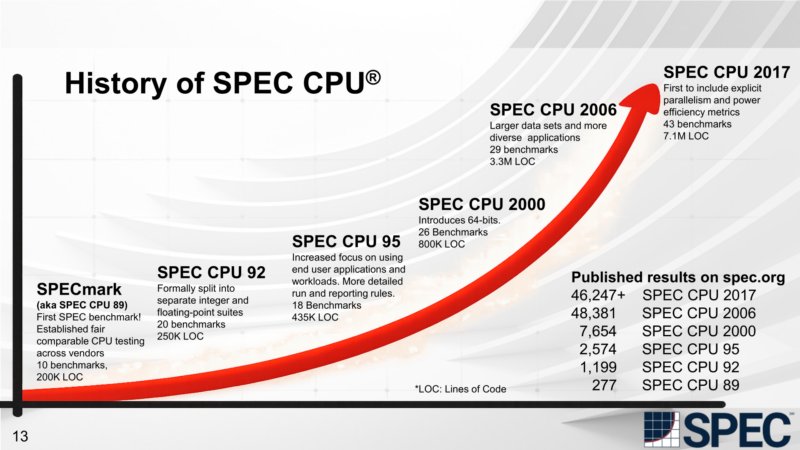
SPEC CPU 2026: Breadth and Scope
SPEC CPU 2026 represents the broadest benchmark suite yet, with 52 individual tests covering diverse computing domains:
- Programming and compilation
- Media processing
- Artificial intelligence
- Electronic design automation
- Networking
- Database operations
- Computational science
This comprehensive scope ensures that the benchmark stresses numerous different aspects of CPU architecture, from integer and floating-point performance to memory subsystem efficiency and branch prediction capabilities.
Practical Implications for Different Segments
Server Workloads
For server processors, SPEC CPU 2026 will become the primary benchmark for comparing performance-per-watt and absolute performance across different architectures. The inclusion of modern database, networking, and computational science benchmarks makes it particularly relevant for data center workloads.
Workstations and Desktops
While SPEC CPU originated as a server benchmark, it has become increasingly important for high-performance desktop and workstation comparisons. The programming and compilation benchmarks are particularly relevant for developers and content creators.
Mobile and Embedded
As mobile processors continue to gain in capability, SPEC CPU 2026 provides a standardized way to compare performance across different ARM-based designs. The benchmark's source-code distribution makes it adaptable to mobile environments with sufficient memory.
Looking Ahead: The Next Decade of CPU Evaluation
The release of SPEC CPU 2026 comes at a pivotal time for processor development. We're seeing:
- Increasing specialization with AI accelerators and NPUs
- The continued evolution of heterogeneous designs
- Growing emphasis on energy efficiency
- New memory technologies like CXL
SPEC CPU 2026 is designed to accommodate these trends while remaining relevant for years to come. Its modular design allows for the addition of new benchmarks as computing workloads continue to evolve.
Early Performance Observations
While comprehensive benchmark results will take time to compile across different platforms, initial observations suggest that SPEC CPU 2026 presents a more challenging and realistic evaluation of modern processors. The updated workloads appear to better leverage contemporary CPU features like:
- Advanced branch prediction
- Wide vector units
- Large caches
- Sophisticated prefetching
This means that raw clock speed alone will be less indicative of performance than in previous versions, placing greater emphasis on architectural efficiency.
Conclusion: The Benchmark That Matters
For enthusiasts, system builders, and enterprise buyers alike, SPEC CPU 2026 will become the reference point for CPU performance comparison over the next decade. Its combination of technical rigor, industry acceptance, and modern workloads makes it the most important benchmark suite for evaluating processors across all segments.
As we move into an era of increasingly specialized computing hardware, having a standardized, comprehensive benchmark like SPEC CPU 2026 becomes even more valuable. It provides a common language for comparing fundamentally different processor architectures and design philosophies.
For those interested in running the benchmark themselves, SPEC provides detailed documentation and support for setting up the test environment. The source-code distribution ensures that anyone with a suitable compiler can participate in the benchmarking process, democratizing access to this important evaluation tool.
For more information about SPEC CPU 2026, visit the official SPEC website or check out the SPEC CPU documentation.
Comments
Please log in or register to join the discussion