
MIT researcher Gabriele Farina combines game theory with machine learning to develop AI systems capable of sophisticated strategic reasoning, enabling breakthroughs in complex multi-agent scenarios from board games to real-world negotiations.
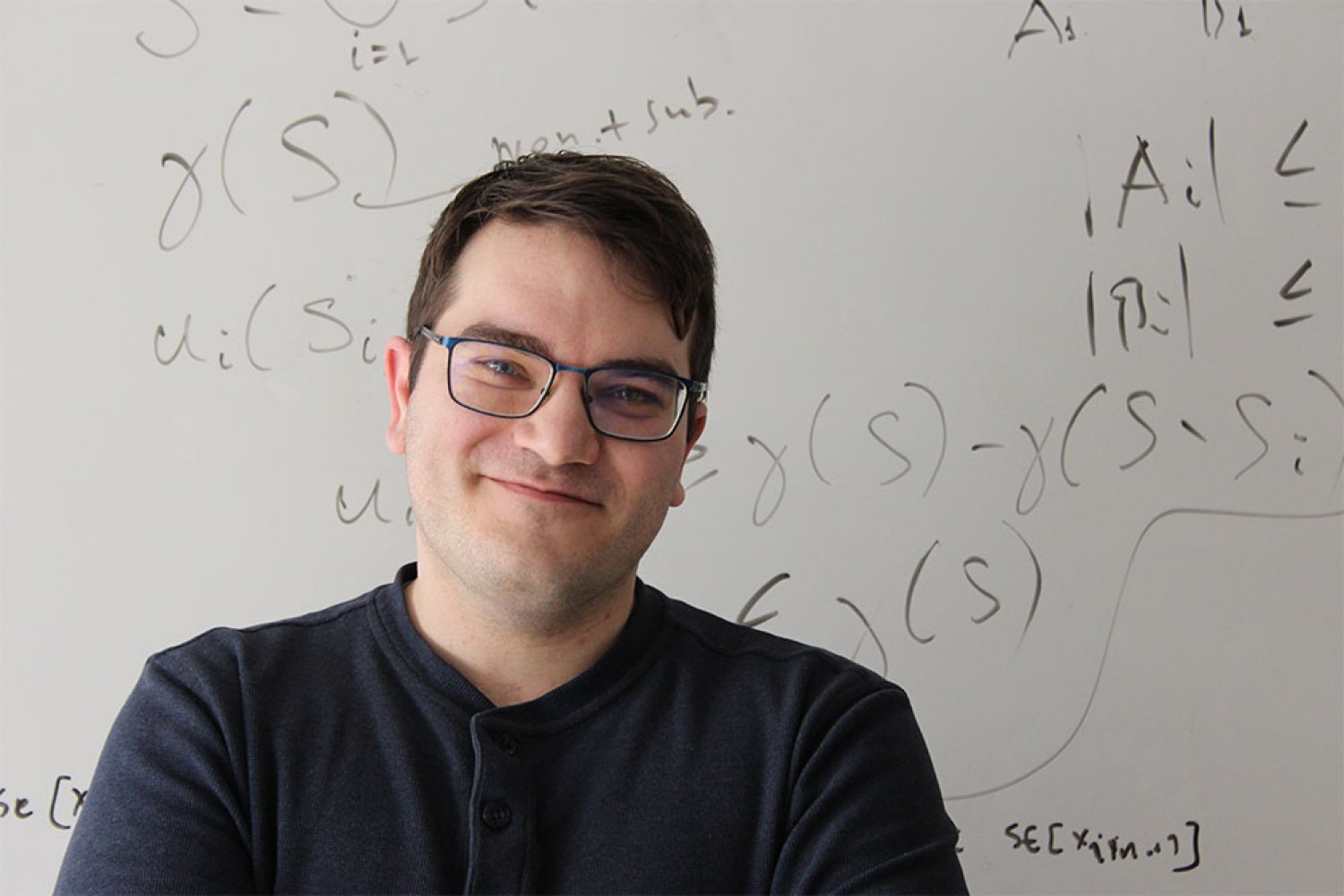
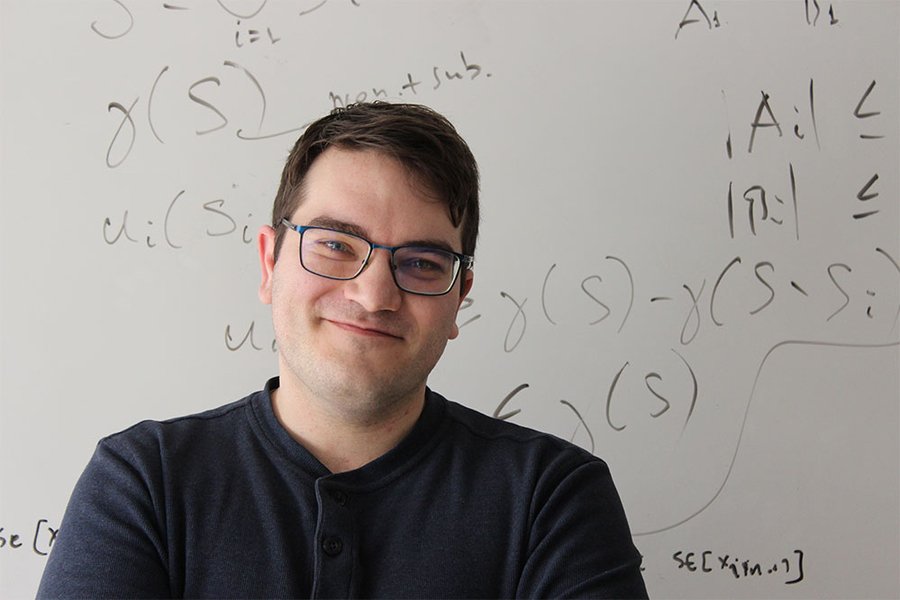
Gabriele Farina, assistant professor in MIT's Department of Electrical Engineering and Computer Science and principal investigator at the Laboratory for Information and Decision Systems (LIDS), is at the forefront of research into strategic reasoning in artificial intelligence systems. His work bridges theoretical game theory with practical machine learning approaches, creating new foundations for decision-making in complex multi-agent environments.
"I was fascinated very early by the idea that a machine could make predictions or decisions so much better than humans," Farina explains, recalling his childhood fascination with algorithms. This early interest has evolved into a sophisticated research program focused on how AI systems can reason strategically when multiple agents with different objectives interact.
The technical approach underpinning Farina's research combines mathematical game theory with modern machine learning techniques. Game theory provides the language for describing what happens when different parties have different objectives, while optimization and machine learning offer practical methods for finding stable outcomes in these scenarios.
"Game theory gives us the mathematical framework to describe strategic interactions," Farina explains. "Our research focuses on how we can use optimization and algorithms to actually find these stable points efficiently." In many real-world scenarios, calculating the theoretical equilibrium could take billions of years with traditional methods. Farina's work aims to simplify these massive, complex problems through innovative algorithmic approaches.
One of Farina's notable contributions was his work on Cicero, an AI developed during his time as a research scientist at Meta's Fundamental AI Research Labs. Cicero demonstrated advanced capabilities in forming alliances, negotiating, and detecting deception in complex strategic environments. Unlike previous AI systems, Cicero understood when it was in its interest to form an alliance and could recognize when other players were likely bluffing based on their incentives.
"The key insight with Cicero was that we designed it to understand the underlying incentives of other players," Farina notes. "It could recognize when someone was proposing something against their own interests, which often indicates deception." This capability represents a significant advancement toward AIs that can solve complex problems requiring compromise and strategic thinking.
Farina's research particularly focuses on settings with "imperfect information," where some agents have information unknown to others. In such scenarios, information itself has value, and participants must be strategic about how they act on the information they possess to avoid revealing it and diminishing its value. Poker provides an everyday example of this principle, where players bluff to conceal information about their cards.
According to Farina, "we now live in a world in which machines are far better at bluffing than humans." This advancement represents a fundamental shift in how AI systems interact with humans and each other in environments with incomplete information.

A recent demonstration of Farina's approach came in the complex strategy game of Stratego. Historically, this military strategy game had proven resistant to AI systems due to its requirements for complex risk calculation and misdirection. Major research efforts had failed to produce superhuman performance in Stratego, despite costing millions of dollars.
Farina and his research team developed new algorithms that achieved remarkable results with minimal resources. Training their system cost less than $10,000—dramatically less than previous efforts—and it defeated the best Stratego player of all time with an impressive record of 15 wins, four draws, and just one loss.
"I'm thrilled to have produced such results so economically," Farina states. "These new techniques demonstrate that strategic reasoning capabilities can be achieved without massive computational resources, making them more accessible for practical applications."
The real-world applicability of Farina's research extends far beyond board games. His work has potential applications in cybersecurity, where systems must detect deception and anticipate adversarial actions; in economics, for modeling markets with asymmetric information; in autonomous systems, where multiple vehicles or robots must coordinate; and in social media platforms, where content moderation systems must detect coordinated manipulation attempts.

Despite these successes, Farina acknowledges limitations in current approaches. The mathematical foundations of multi-agent strategic reasoning remain incomplete, particularly in environments with extremely large numbers of agents or rapidly changing conditions. Additionally, while current systems can outperform humans in specific domains like Stratego, they lack the general strategic intelligence humans display across diverse situations.
"Our algorithms are improving rapidly, but we still have much to learn about how to scale these approaches to the complexity of real-world systems," Farina admits. "The mathematical underpinnings need further development, and we need better methods for transferring knowledge between different strategic domains."
Looking forward, Farina sees his research as contributing to the broader AI revolution. "We have seen constant progress towards constructing algorithms that can reason strategically and make sound decisions despite large action spaces or imperfect information," he says. "I am excited about seeing these algorithms incorporated into the broader AI ecosystem."
As AI systems become increasingly integrated into human society, the ability to understand and predict strategic behavior becomes crucial. Farina's work at the intersection of game theory and machine learning provides important foundations for developing AI systems that can navigate complex social and economic environments effectively.
His research, supported by the National Science Foundation CAREER Award, continues to advance both theoretical understanding and practical applications of strategic reasoning in AI. With each breakthrough—from Cicero's negotiation capabilities to the economical solution of Stratego—Farina moves closer to his goal of creating AI systems that can reason strategically as effectively as humans, if not better.
For researchers and practitioners interested in Farina's work, his publications and projects are accessible through the MIT Laboratory for Information and Decision Systems and the Department of Electrical Engineering and Computer Science. His research represents a crucial step toward AI systems that can understand and participate in the complex strategic interactions that characterize human society.
Comments
Please log in or register to join the discussion