
Star Labs' StarFighter 16-inch emerges as a formidable Linux laptop that combines premium hardware with thoughtful privacy features and open-source philosophy, setting new standards for the Linux computing experience.
StarFighter 16-inch: A Linux Powerhouse with Privacy at its Core
In the evolving landscape of Linux laptops, Star Labs has positioned itself as a distinctive player with the StarFighter 16-inch, a machine that doesn't merely run Linux but embraces it as part of its fundamental design philosophy. This full-size performance laptop distinguishes itself through premium materials, innovative privacy features, and a commitment to open-source values that challenge conventional laptop design.
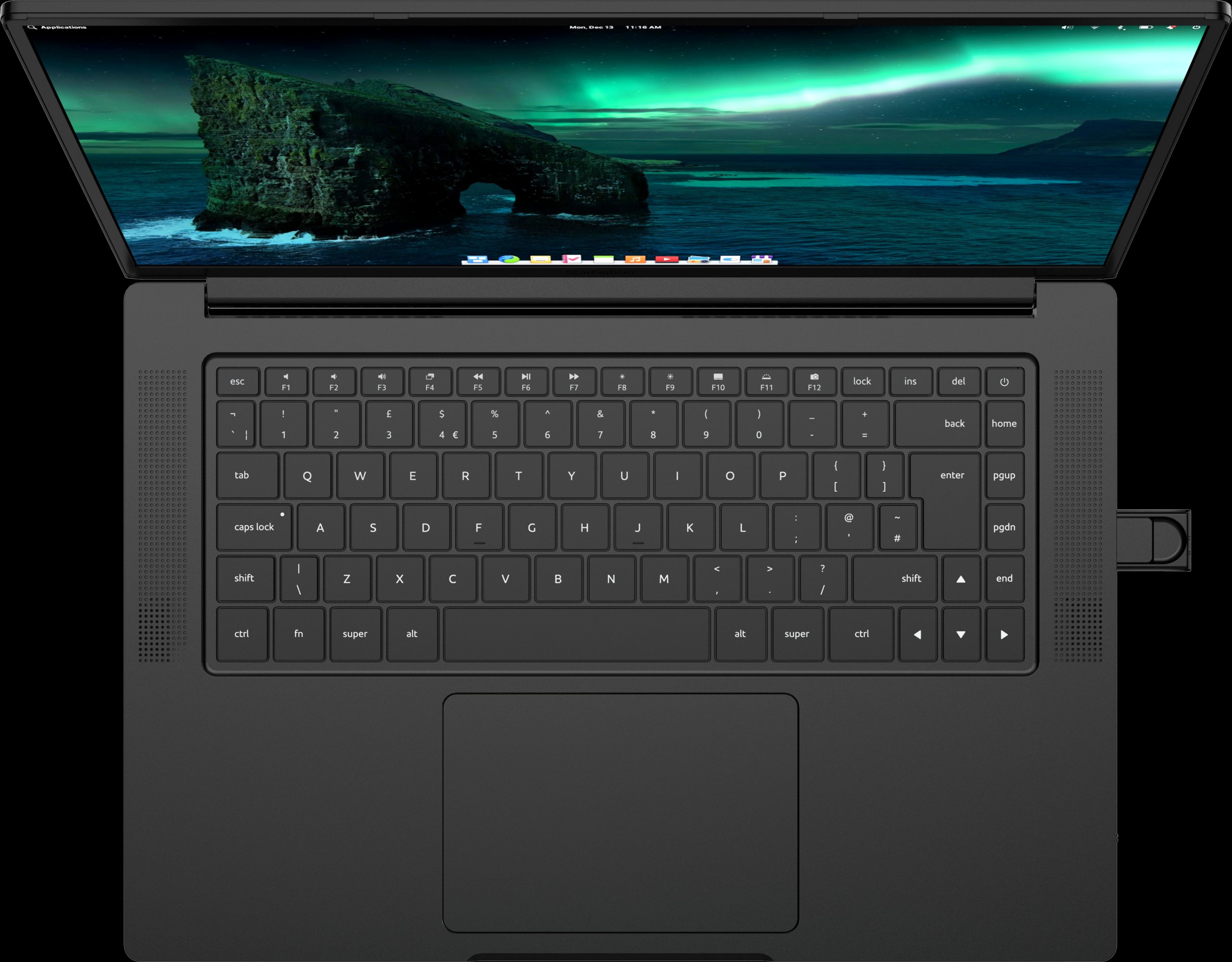
Design Philosophy and Build Quality
The StarFighter 16-inch immediately establishes its premium credentials through its Micro-Arc Plasma Electrolytic Oxidation (PEO) finish—a coating technology that creates ceramic layers four times harder than steel. This textured finish not only provides exceptional durability but also naturally resists fingerprints, addressing a common pain point with metal chassis laptops. The result is a device that maintains its aesthetic appeal through years of use while feeling substantial in hand.
What sets the StarFighter apart from its competitors is its attention to detail in both materials and ergonomics. The 180° hinge design allows for maximum flexibility in viewing angles, whether sharing content with colleagues or working in unconventional positions. This level of articulation speaks to a deep understanding of how professionals actually use their devices beyond the traditional laptop form factor.
Display Technology: A Productivity Powerhouse
The centerpiece of the StarFighter experience is its 16-inch 120Hz IPS display, which represents a significant step forward for Linux laptops. With a 3840x2400 4K resolution and 16:10 aspect ratio, this screen delivers exceptional pixel density and workspace real estate that power users will appreciate. The 625cd/m² brightness rating ensures visibility in nearly any lighting condition, while the matte finish eliminates glare without sacrificing color vibrancy.
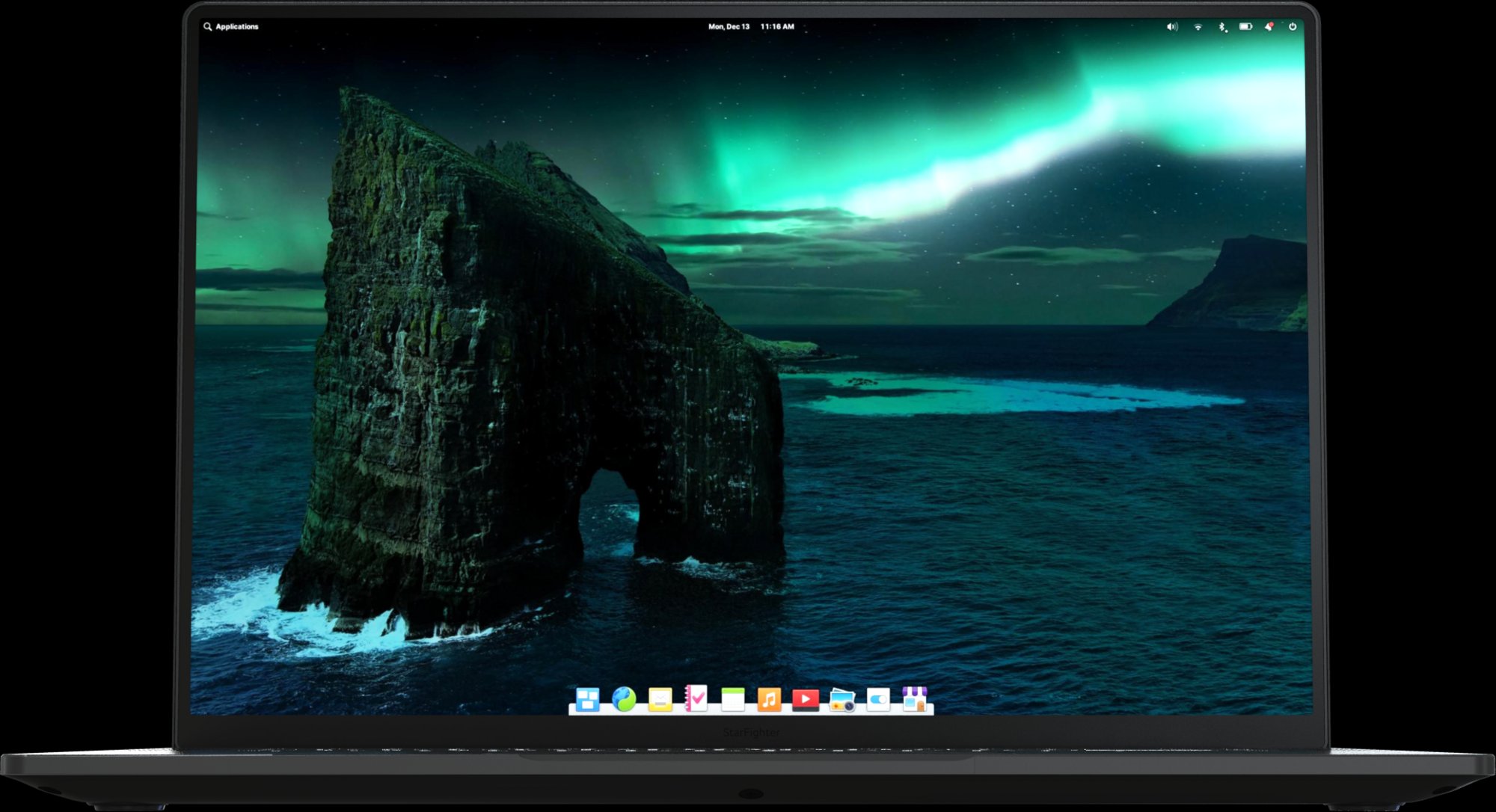
The display specifications tell only part of the story. The 120Hz refresh rate provides silky smooth scrolling and animations—a feature typically reserved for premium Windows machines or Apple's MacBook Pro lineup. For Linux users, who have historically faced compromises in display quality, this represents a significant step toward parity with premium offerings in other ecosystems.
Performance Capabilities for Demanding Workloads
Under the hood, the StarFighter 16-inch offers uncompromising performance with options for Intel Core Ultra processors or AMD Ryzen 9 chips. The inclusion of up to 64GB of 7500MT/s LPDDR5X memory ensures that even the most demanding workloads—from video editing and 3D rendering to software development and virtualization—can be handled with ease.
What particularly stands out is the thermal design philosophy. While details aren't explicitly mentioned, the combination of high-performance components and a focus on premium materials suggests a thoughtful approach to heat management. This is crucial for maintaining consistent performance during intensive tasks, a challenge that many Linux laptops struggle to address adequately.
Privacy by Design: The Webcam and Kill Switch
Perhaps the most innovative aspect of the StarFighter is its approach to privacy. The removable webcam with its magnetic connector represents a practical solution to growing privacy concerns. Users can physically disconnect the webcam when not in use, storing it inside the chassis for safekeeping. This mechanical approach to privacy provides tangible peace of mind that software solutions cannot match.


Complementing this is the wireless kill switch—a simple but effective mechanism that completely disables wireless connectivity with a physical toggle. This eliminates the risk of accidental activation and provides assurance that the device is not broadcasting when you don't want it to. These features position the StarFighter as a device designed for users who prioritize control over their digital footprint.
The thoughtful design extends to how the removable webcam enables minimal bezels on all four sides, maximizing the viewing area while maintaining practical functionality. This demonstrates a design approach that doesn't sacrifice user needs for aesthetic appeal.
Input Experience: Keyboard and Haptic Trackpad
The StarFighter's input devices reflect its commitment to functionality and user experience. The backlit keyboard features scissor mechanisms for precise, responsive typing, with media keys for quick access to commonly used functions. The inclusion of a function lock switch allows users to toggle between media and traditional function keys based on their current workflow needs.
International layout support—including US English, UK English, French, German, Nordic, and Spanish—further demonstrates the global consideration in the design process. For a Linux laptop, which often serves as a primary tool for international developers and professionals, this level of localization support is particularly valuable.
The haptic trackpad represents one of the most distinctive features of the StarFighter. Rather than physical buttons, this solid-state trackpad detects pressure and vibrates to simulate a click, allowing for 100% of the surface area to be clickable. The glass surface, dyed, toughened, and treated with an oleophobic coating, provides a premium feel that responds consistently to input. This implementation suggests a thoughtful approach to maximizing usable space while maintaining precision—something that touchpad implementations on Linux have historically struggled with.
Connectivity and Expansion
The StarFighter 16-inch offers an impressive array of connectivity options that reflect its positioning as a professional workhorse. Dual Thunderbolt 4/USB 4 ports provide high-speed data transfer and display output, while three USB 3.0 ports offer legacy device compatibility. HDMI output ensures easy connection to external displays, and the inclusion of a microSD card reader addresses the needs of photographers and content creators.
Wireless connectivity is handled by WiFi 6E and Bluetooth 5.3, representing current-generation wireless technology that offers improved speed, range, and reliability. For a Linux laptop, which sometimes faces challenges with wireless hardware compatibility, the inclusion of well-supported, modern wireless standards is particularly important.
Firmware and Open-source Philosophy
Perhaps the most distinctive aspect of the StarFighter is its commitment to open-source firmware, powered by coreboot and edk II. This represents a significant departure from the proprietary firmware that dominates the laptop market. The measured boot process provides security through verified boot stages, while the 0.76s POST time demonstrates that open-source firmware doesn't have to compromise on performance.
The Advanced Configuration interface offers extensive customization options, reminiscent of traditional BIOS but with modern functionality. This level of control is particularly valuable for Linux users who often need to fine-tune system settings for optimal compatibility and performance.

The commitment to open-source values extends to the warranty policy, which explicitly allows users to take apart the device, replace parts, install upgrades, and use any operating system—including custom firmware—without voiding the warranty. This "open warranty" approach stands in stark contrast to the restrictive policies of many manufacturers and reflects a philosophy that respects user ownership of their devices.
The 5-year update commitment via the Linux Vendor Firmware Service (LVFS) ensures long-term security and compatibility, addressing a common concern with Linux hardware where support may be limited. This extended support window provides significant value for enterprise users and organizations that prioritize device longevity.
Battery Life and Charging Efficiency
The StarFighter 16-inch claims up to 18 hours of battery life, an impressive figure for a device with such powerful specifications. This efficiency is complemented by a 65W Gallium Nitride charger that's 30% smaller than traditional chargers. Gallium Nitride technology enables more efficient power conversion in a smaller form factor, reducing both the size of the charger and the heat generated during operation.
The inclusion of USB-C charging with Thunderbolt compatibility adds further convenience, allowing users to power their device from various USB-C chargers or power banks when traveling. This flexibility is particularly valuable for mobile professionals who need to minimize the number of cables and adapters they carry.
Market Position and Target Audience
The StarFighter 16-inch occupies an interesting position in the Linux laptop market. It doesn't attempt to compete on price with budget-friendly options like the System76 laptops or Pinebook Pro. Instead, it positions itself as a premium alternative to devices like the Dell XPS Developer Edition or Lenovo ThinkPad P series when running Linux.
The target audience appears to be professionals who require both high performance and strong privacy controls—developers, security researchers, digital nomads, and open-source advocates who value hardware transparency. The emphasis on premium materials, innovative privacy features, and open firmware suggests a user base that prioritizes control, durability, and ethical considerations over raw specifications alone.
Conclusion
The StarFighter 16-inch represents a significant step forward for Linux laptops, combining premium hardware with thoughtful design choices that address real user needs. Its innovative privacy features, commitment to open-source values, and attention to detail in both materials and ergonomics set it apart from competitors in the Linux space.
While the premium positioning may place it out of reach for casual users, for professionals who value privacy, control, and open-source principles, the StarFighter offers a compelling alternative to both traditional Windows workstations and other Linux laptops. As the Linux desktop ecosystem continues to mature, devices like the StarFighter demonstrate that premium, privacy-focused hardware can successfully coexist with open-source software principles.
The StarFighter 16-inch isn't merely a laptop that runs Linux—it's a device designed from the ground up to reflect the values of the open-source community, while providing the performance and polish that professionals demand. In a world where digital privacy is increasingly scarce, this approach may well define the next generation of computing devices.
Comments
Please log in or register to join the discussion