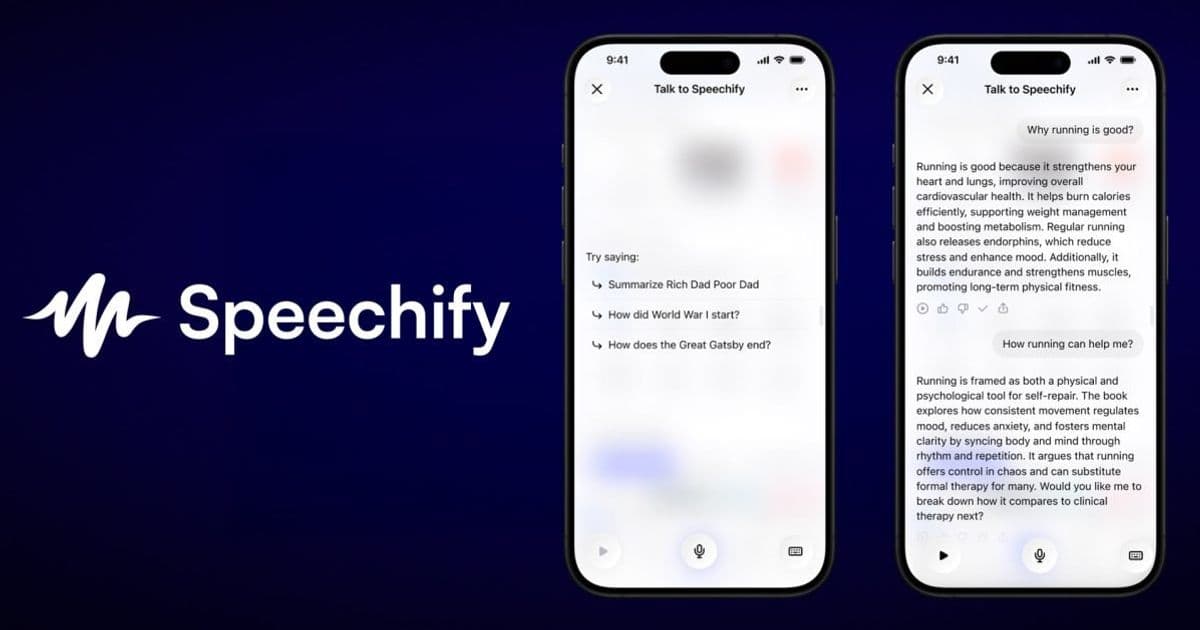
Speechify expands beyond text-to-speech with a new iOS app that combines voice-first AI interaction with document analysis, web browsing, and content creation capabilities, directly challenging established players like Siri and ChatGPT.
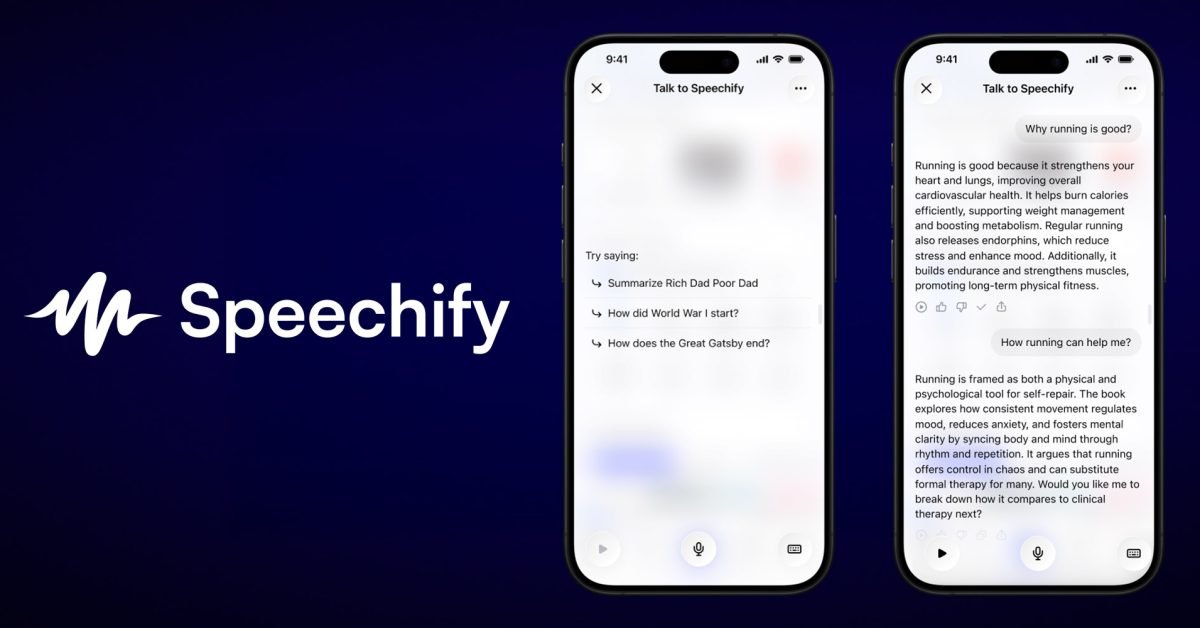
Speechify has officially launched its Voice AI Assistant on iOS, marking a significant pivot from its origins as a text-to-speech platform into the broader AI assistant market. The release, announced today, brings the company's voice-first AI technology to iPhone users after initially debuting on Chrome and web platforms last month.
From Text-to-Speech to Full AI Assistant
What started as a tool for converting written content into spoken audio has evolved into something far more ambitious. Speechify now positions itself as a direct competitor to ChatGPT, Gemini, Perplexity, Siri, and Alexa. The company claims its advantage lies in a "voice-first" approach rather than treating voice as an afterthought.
Behind the scenes, Speechify employs a hybrid model strategy. The assistant runs on a combination of third-party AI models and proprietary technology developed by their in-house applied AI research lab, which employs over 40 researchers and engineers. This dual approach allows them to leverage cutting-edge external models while maintaining control over core voice interaction capabilities.
Core Capabilities on iOS
The iOS app enables several key interaction modes that differentiate it from traditional chatbots:
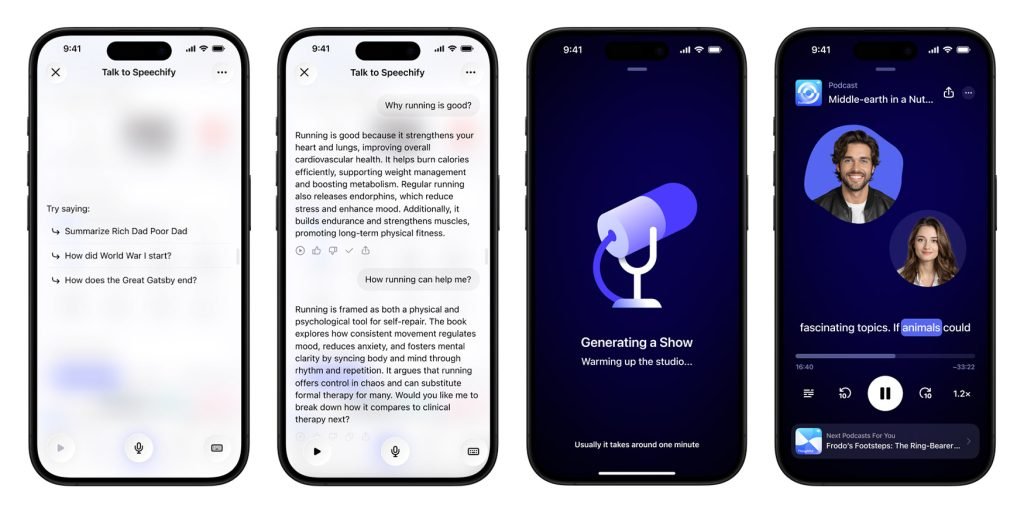
Document-Based Conversations: Users can upload files and engage in multi-turn discussions about the content. Instead of simply extracting text, the assistant maintains context across an extended conversation, allowing for follow-up questions and deeper exploration.
Content Creation Tools: The assistant can generate podcasts from uploaded documents, effectively converting static text into audio content. This builds on Speechify's audio expertise while adding AI-powered summarization and structuring.
Interactive Learning: Beyond passive consumption, users can request quizzes or lectures based on source material. The assistant can test comprehension or explain concepts in different formats, making it useful for students and professionals.
Web Browsing: The assistant can search the internet and synthesize information, similar to Perplexity's approach but with voice as the primary interface.
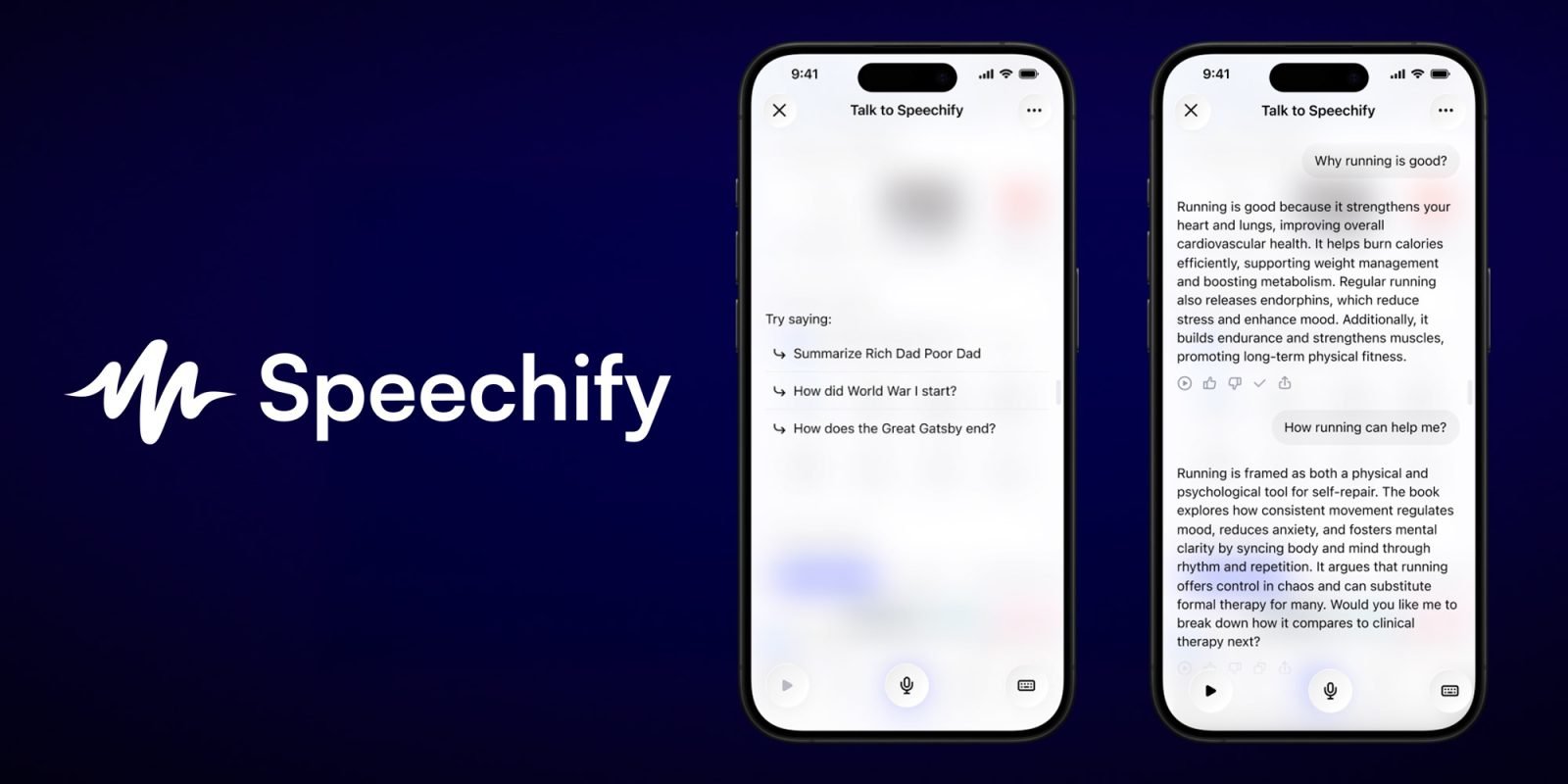
Strategic Positioning and Market Context
Speechify CFO Pankaj Agarwal frames the launch as part of a larger vision: "Speechify is now an AI Assistant that can research for you, talk to you, write for you, create for you, entertain you, quiz you, browse the internet for you, lecture you, summarize for you, and read for you."
This breadth of functionality reflects the company's goal to "serve every use case imaginable from work to learning to entertainment." However, the voice-first positioning is what Speechify believes will differentiate it in an increasingly crowded market.
The timing is notable. Apple has faced criticism that Siri has fallen behind competitors in the AI race. While Apple is expected to announce major Siri improvements at WWDC, Speechify is positioning itself as an alternative that users can adopt immediately rather than waiting for Apple's roadmap.
Technical Architecture and Future Roadmap
Currently, the Voice AI Assistant operates as a cloud-based service. This architecture enables the processing power needed for complex tasks like document analysis and multi-turn conversations. However, Speechify has indicated they are actively working on implementing on-device models in future updates.
The on-device roadmap is significant for several reasons:
Privacy: Processing sensitive documents locally rather than uploading them to cloud servers Latency: Faster response times by eliminating network round-trips Offline Functionality: Continued operation without internet connectivity Cost: Reduced server infrastructure expenses
Beyond the core assistant features, Speechify is developing support for more complex commands and system integration. Future updates will include notification management and task automation, such as answering and making phone calls based on user-defined prompts. This positions the assistant as a more integrated part of the iOS ecosystem.
Practical Implications for Mobile Developers
For developers building iOS applications, Speechify's launch highlights several trends:
Voice as Primary Interface: The success of voice-first design patterns in AI applications Hybrid AI Architectures: Combining third-party models with proprietary research Cross-Platform Expansion: Starting on web/desktop before mobile release Competition with Native Assistants: Third-party apps increasingly competing with OS-level features
The app is available for download on the App Store, representing another option for users seeking AI assistance beyond what's built into iOS. Whether Speechify can achieve its goal of becoming "the most used AI Assistant in the world" remains to be seen, but the company's substantial investment in AI research and voice technology suggests they're committed to the long-term competition.
As the AI assistant market continues to evolve, the key differentiator may indeed be how naturally users can interact with these systems. Speechify is betting that voice will be the dominant interface, not just an optional feature.
Download Speechify on the App Store Speechify Official Website Speechify AI Research
Comments
Please log in or register to join the discussion