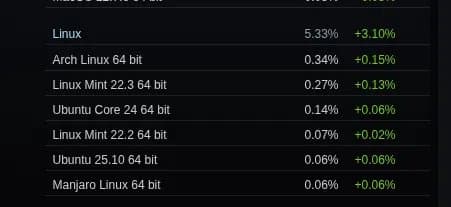
Steam on Linux reached an all-time high of 5.33% marketshare in March 2026, more than doubling its previous numbers and surpassing macOS gaming usage by more than 2 to 1.
Steam On Linux Use Skyrocketed In March - More Than Double The macOS Gaming Marketshare
Valve's latest Steam Survey results reveal a remarkable surge in Linux gaming adoption during March 2026, with Linux-based Steam clients capturing 5.33% of the total market share. This represents a dramatic 3.1% increase from February's 2.23% and marks the first time Linux gaming has crossed the significant 5% threshold on Steam.
Historical Context and Growth Trajectory
The current numbers represent a remarkable turnaround for Linux gaming. At the end of 2025, Linux held approximately 3.5% of Steam's market share, dipped slightly in January, and then fell to 2.23% in February before this extraordinary March surge. These figures stand in stark contrast to the pre-Steam Deck era when Linux gaming struggled to maintain even 1% market share.
In absolute terms, even the 2-3% market share of previous years represented a healthy number given the continued growth of the Steam user base. However, the March 2026 figures represent not just a percentage increase but a significant milestone in the mainstream acceptance of Linux as a viable gaming platform.
Comparative Platform Performance
The March results show Windows experiencing a decline of 4.28%, dropping to 92.33% of the market. Meanwhile, macOS saw a surprising increase of 1.19%, reaching 2.35% market share. The Linux growth rate was more than double that of macOS, with Linux now representing more than twice the gaming market share of macOS combined.
Potential Factors Behind the Surge
Several factors may have contributed to this sudden increase in Linux gaming adoption:
Steam China Data Correction: Valve appears to have made adjustments to Steam China numbers, with a reported 31.85% drop in Simplified Chinese language use and a 16.82% increase in English use to 39.09%. Other languages also showed gains amid this shift.
Steam Deck Ecosystem Growth: With approximately 25% of Linux gamers now running Steam OS, the continued popularity and refinement of Valve's handheld gaming PC likely contributed to the surge.
Improved Gaming Compatibility: The growing library of supported games through Proton and other compatibility layers has made Linux gaming increasingly viable for mainstream users.
Hardware Manufacturer Support: Increased support from hardware manufacturers for Linux drivers has reduced compatibility barriers for gamers.
Hardware Preferences Among Linux Gamers
The Steam Survey reveals interesting patterns in hardware preferences among Linux gamers:
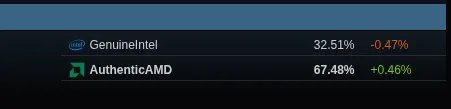
CPU Usage: AMD processors maintain strong dominance among Linux gamers, with just under 70% of Linux gamers using AMD CPUs. This likely reflects AMD's commitment to open-source drivers and the custom AMD APU used in the Steam Deck.
Steam OS Adoption: The fact that about a quarter of Linux gamers are running Steam OS indicates the significant impact Valve's hardware has had on the Linux gaming ecosystem.
Implications for the Gaming Industry
Crossing the 5% threshold represents a significant psychological and practical milestone for Linux gaming. At this scale:
- Game developers can no longer ignore Linux as a viable platform
- Valve may increase resources for Linux-specific features and optimizations
- Hardware manufacturers may prioritize Linux driver development
- The Linux gaming community may see increased investment in platform-specific tools
Build Recommendations for Linux Gamers
For those looking to join the growing Linux gaming community, here are some hardware considerations based on the survey data:
CPU: AMD processors remain the preferred choice due to their open-source driver support and strong performance in gaming workloads.
GPU: Both NVIDIA and AMD GPUs work well on Linux, though AMD traditionally has better out-of-the-box support with open-source drivers.
Storage: NVMe SSDs are highly recommended for reducing game loading times, especially important for the growing library of Linux-compatible titles.
Memory: 16GB should be considered the minimum for modern gaming, with 32GB providing better future-proofing for increasingly demanding titles.
Distribution: Steam OS offers the most streamlined experience for gaming, while distributions like Ubuntu or Pop!_OS provide more flexibility for general use alongside gaming.
The full Steam Survey results for March 2026 can be examined in detail on SteamPowered.com, providing additional insights into hardware configurations, graphics card usage, and other metrics that paint a comprehensive picture of the evolving Linux gaming landscape.
Comments
Please log in or register to join the discussion