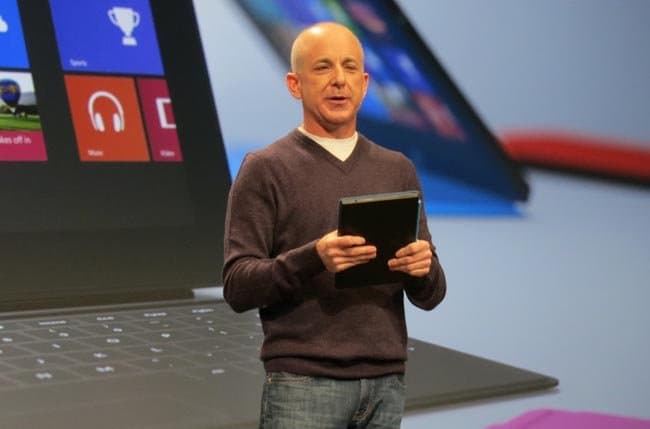
Newly released DOJ files reveal Microsoft's former Windows chief warned about Surface RT's failure before seeking advice from Jeffrey Epstein on negotiating his exit package.
Newly released Department of Justice files linked to Jeffrey Epstein have shed light on the circumstances surrounding Steven Sinofsky's abrupt departure from Microsoft in 2012, revealing that the former Windows chief not only predicted the Surface RT's failure but also sought Epstein's advice on negotiating his exit package.
The Surface RT Disaster That Was Foreseen
The documents paint a picture of a senior executive who saw disaster coming but couldn't prevent it. In November 2012, Sinofsky sent an internal email to Microsoft CEO Steve Ballmer and COO Kevin Turner warning that the Surface RT was "about to catastrophically fail in a very public way." His assessment was stark: sales were tracking at roughly one-tenth of even the lowest expectations, and once the numbers became public, there would be no hiding the failure.
"There is no long term without this," Sinofsky wrote, according to the newly released emails. The prediction proved prescient. Microsoft would later write off $900 million in unsold Surface RT inventory, more than it had originally planned for.
The Epstein Connection Emerges
Nine days after sending his warning about the Surface RT's impending failure, Sinofsky was gone from Microsoft. The timing raised questions at the time, but the DOJ files provide new context. Months after his departure, Sinofsky forwarded the same email chain to Jeffrey Epstein, highlighting the magnitude of the write-down and seeking advice on his next moves.
What followed was a series of practical, unsentimental exchanges about money, leverage, and the constraints of his Microsoft retirement agreement. Sinofsky sent Epstein his full retirement agreement, complaining that Microsoft was fixated on restrictive non-competes and reluctant to grant full vesting of stock awards. Unsure what leverage he still had, he asked Epstein directly for advice.
Epstein's counsel was consistent and specific: ask for $20 million and don't budge. "Just repeat 20," Epstein advised. "Do not let [them] talk you down."
In the end, Sinofsky walked away with a retirement package worth about $14 million in stock. When details of the deal emerged months later, Epstein sent a brief note: "You're welcome :]."
Life After Microsoft: The Legal Minefield
The emails also reveal Sinofsky's deep unease about life after Microsoft. He floated the idea of working at Samsung but immediately worried about being sued. Microsoft, he noted, had a long history of dragging former executives into court under the theory of "inevitable leakage of trade secrets," filing public, bruising, and professionally disabling cases even when defendants eventually prevailed.
"I have been part of a dozen lawsuits filed after Microsoft people went to competitors. It is nasty, public, and ultimately Microsoft prevailed in all of them," Sinofsky said. "Either the person backed down or ended up so tarnished they were ineffective."
Epstein offered to help smooth that path for a $1 million fee, suggesting he could manage internal politics and keep Ballmer from "trashing" Sinofsky in public. Sinofsky ultimately did not join Samsung.
The Aftermath and Legacy
The DOJ files don't change the fundamental outcomes: Windows 8 remained Windows 8, and Surface RT remains an expensive mistake. What they do offer is a less polished view of how a senior Microsoft exit actually played out once things started going wrong.
It was an executive calling a looming disaster, losing the argument, and then negotiating the terms of getting out, with advice from a fixer whose name now comes with baggage. The documents provide a rare glimpse at how a senior Microsoft executive sized up failure and the cost of walking away from it.
The revelations raise questions about the intersection of corporate power, personal networks, and the mechanics of high-level exits in the tech industry. While there's no suggestion of criminal behavior by Sinofsky, the emails offer an unvarnished look at the practical considerations that shape executive departures at major technology companies.
As the tech industry continues to grapple with questions of corporate governance, executive accountability, and the long-term consequences of strategic decisions, the Sinofsky-Epstein correspondence serves as a reminder that behind every public failure and subsequent exit, there are often complex negotiations and personal calculations that never make it into the official corporate narrative.
Comments
Please log in or register to join the discussion