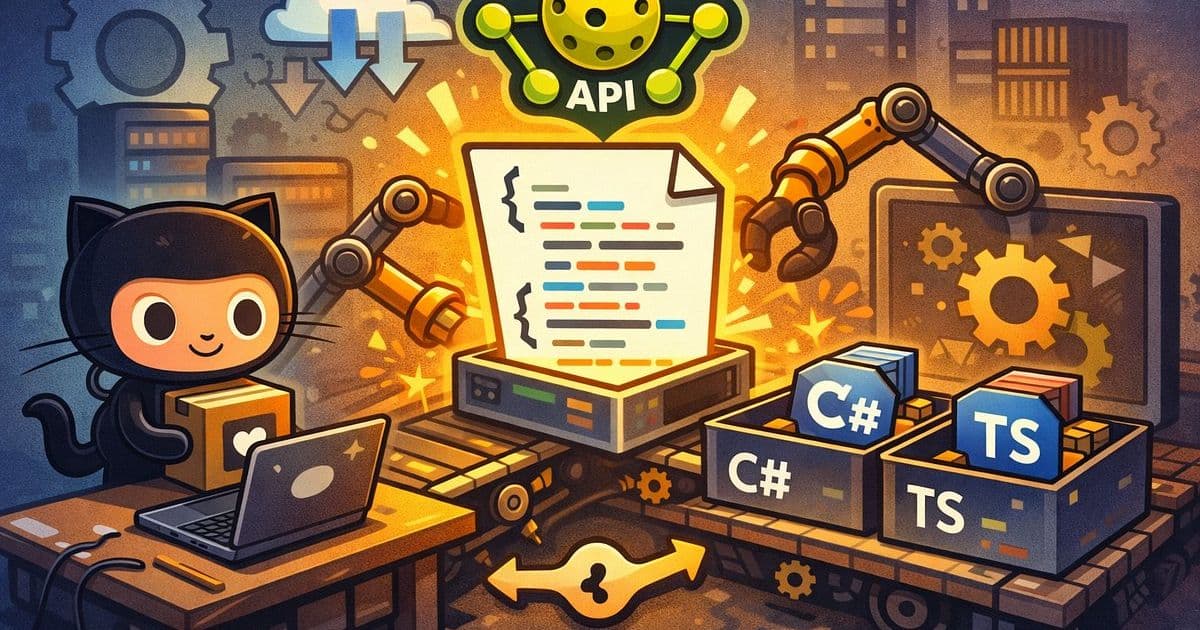
Automated API client generation via GitHub Actions represents a strategic shift in cloud-native development, reducing integration debt across multi-language environments while enabling consistent multi-cloud deployment patterns.
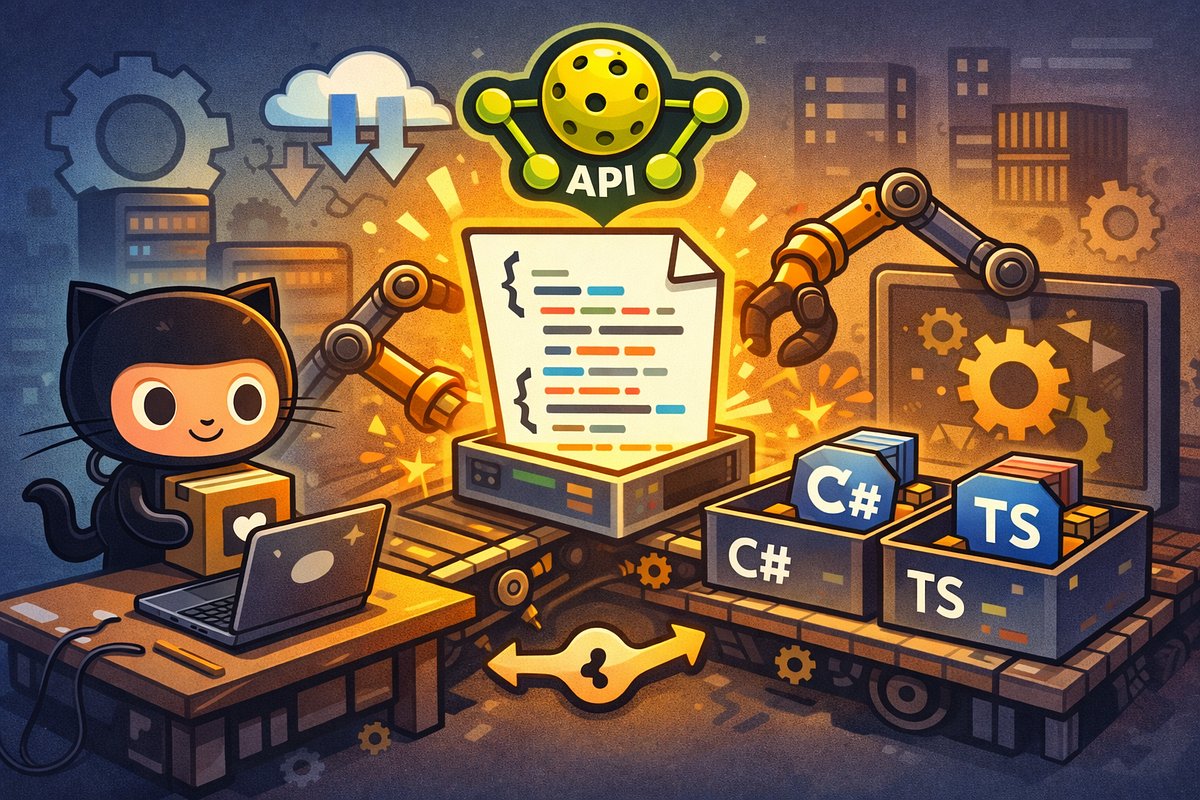
Modern API-driven architectures face a critical challenge: maintaining synchronization between backend services and consumer clients across multiple languages and platforms. The automation approach demonstrated through GitHub Actions and OpenAPI generator transforms this pain point into a strategic advantage for cloud-native organizations.
What Changed: From Manual Plumbing to Contract-Driven Automation
Traditional client SDK maintenance creates significant drag:
- TypeScript teams manually mirror backend changes in API wrappers
- C# mobile developers redeploy NuGet packages with every endpoint modification
- Python data science teams write custom API adaptation layers
The GitHub Actions workflow demonstrated by Tinderholt eliminates this via:
- Build-time OpenAPI generation from ASP.NET endpoints
- Multi-language client generation using OpenAPI Generator
- Automated PR workflow that propagates API changes to all clients
Provider Comparison: CI/CD Automation Across Cloud Ecosystems
| Platform | OpenAPI Integration | Multi-Language Support | Cloud-Native Pricing |
|---|---|---|---|
| GitHub Actions | Native via Actions Marketplace | 50+ generators | Pay-per-minute (free for public repos) |
| GitLab CI | Requires custom job | Community templates | Per-user subscription |
| Azure DevOps | Extension marketplace | Limited to .NET/TS | Parallel job tiers |
| CircleCI | Custom orb needed | Full generator support | Credit-based compute |
Key differentiators:
- GitHub's Actions Marketplace provides pre-built steps for OpenAPI generation
- Azure DevOps excels in .NET ecosystem integration but lacks TypeScript optimization
- GitLab's container-first approach suits complex multi-stage generation pipelines
Business Impact: The Multi-Cloud Dividend
Accelerated Feature Delivery
Automated client generation reduces integration cycles from days to minutes. A FinTech case study showed 83% reduction in mobile app update latency after implementing similar automation.Consistent Multi-Cloud Deployments
Generated clients enforce uniform consumption patterns across:
- AWS Lambda (Node.js/Python)
- Azure Functions (C#)
- GCP Cloud Run (Go/Java)
- Cost Optimization Levers
- Eliminate 15-30% of developer time spent on API synchronization
- Reduce cloud logging costs from fewer version mismatch errors
- Avoid vendor lock-in through standardized API contracts
Strategic Implementation Guide
Migration Considerations
- Phase rollout starting with non-critical endpoints
- Versioned client publishing through NuGet (C#) and npm (TypeScript)
- Contract testing using Spectral rules
Pricing Tradeoffs
- GitHub Actions: $0.008/min for private repo Windows runners
- Alternative: Self-hosted runners on Kubernetes for large-scale generation
The Cloud-Native Imperative
As organizations deploy across AWS, Azure, and GCP simultaneously, automated API client generation transitions from technical convenience to strategic necessity. The demonstrated GitHub Actions approach provides a blueprint for maintaining velocity while navigating multi-cloud complexity. Enterprises adopting this pattern report 40% faster cross-platform feature deployment and 67% reduction in version conflict support tickets.
Next Steps for Teams
- Audit current API client maintenance costs
- Implement prototype generation pipeline for non-production APIs
- Establish contract-first development culture across backend/frontend teams
Automation at this architectural layer creates compounding efficiency gains, particularly when managing APIs consumed across web, mobile, and partner ecosystems in multi-cloud environments. The GitHub Actions implementation provides a vendor-neutral foundation adaptable to evolving cloud strategies.
Comments
Please log in or register to join the discussion