
Microsoft's Proactive Resiliency framework provides a six-layer architecture blueprint for achieving near-zero downtime in mission-critical Citrix workloads on Azure, emphasizing shared responsibility between provider and customer.
Enterprises running mission-critical workloads like Citrix Virtual Apps and Desktops (VDI) face escalating demands for uninterrupted service availability. Recent Azure infrastructure developments enable new approaches to multi-region design that dramatically reduce downtime risks. This strategic framework addresses fundamental gaps in traditional disaster recovery planning.
The Shared Responsibility Imperative
Cloud resilience operates under a clear division of accountability. Microsoft maintains Azure's physical infrastructure – datacenters, network backbone, power systems, and foundational redundancy features like Availability Zones and geo-redundant storage. However, customers control application architecture, data replication strategies, and failover mechanisms. A single-region deployment with no cross-region redundancy remains vulnerable regardless of Azure's infrastructure resilience. This partnership model forms the core of Microsoft's Proactive Resiliency Initiative, where Cloud Solution Architects collaborate with enterprises to harden critical systems.
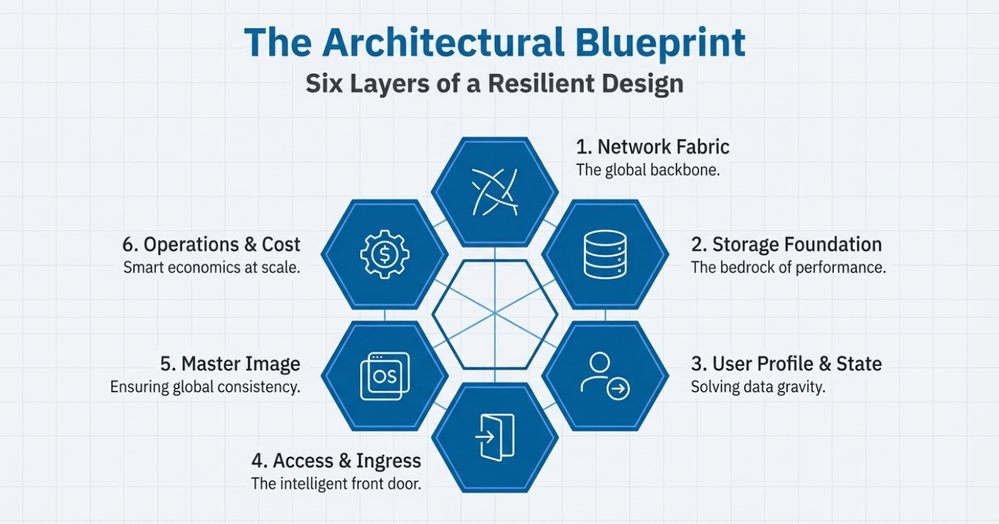
Six-Layer Resiliency Framework for VDI Workloads
This architecture blueprint emerged from global Citrix DaaS deployments on Azure, structured to ensure comprehensive coverage:
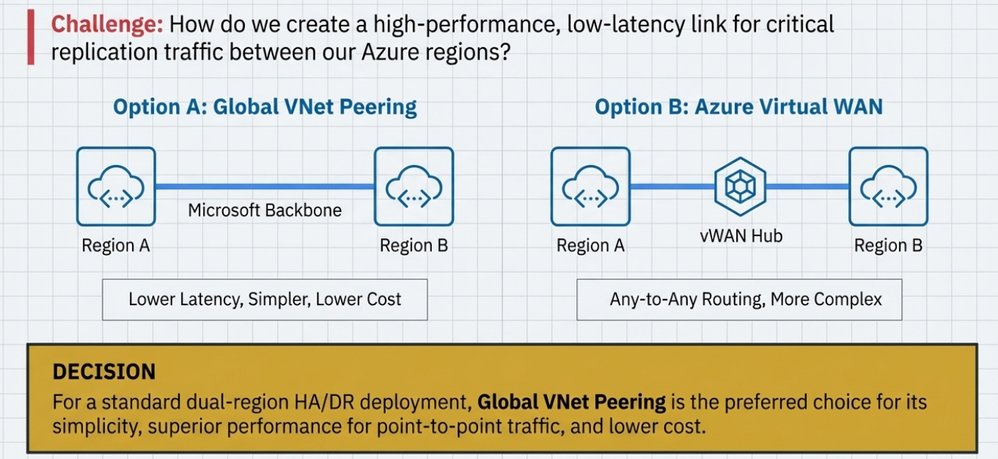
Network Fabric
Global VNet Peering establishes low-latency connectivity between regions using Microsoft's backbone. Unlike complex Virtual WAN implementations, this provides optimized point-to-point paths for replication traffic while minimizing latency spikes during failover events.Storage Foundation
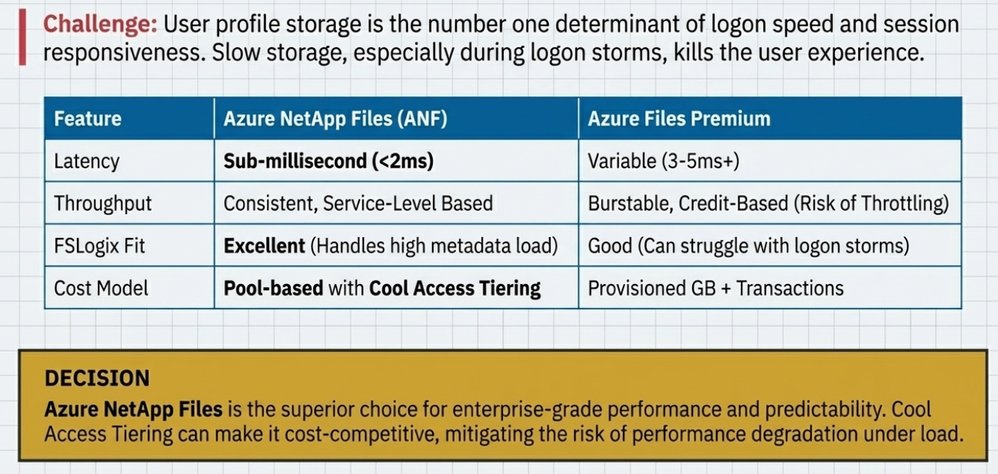
Azure NetApp Files delivers sub-millisecond latency crucial for profile containers during login storms. Its Cool Access tiering reduces costs while outperforming standard Azure Files for VDI workloads. Storage remains the gravitational center of multi-region designs – compute instances can relocate instantly, but user data mobility dictates recovery timelines.
User Profile & State
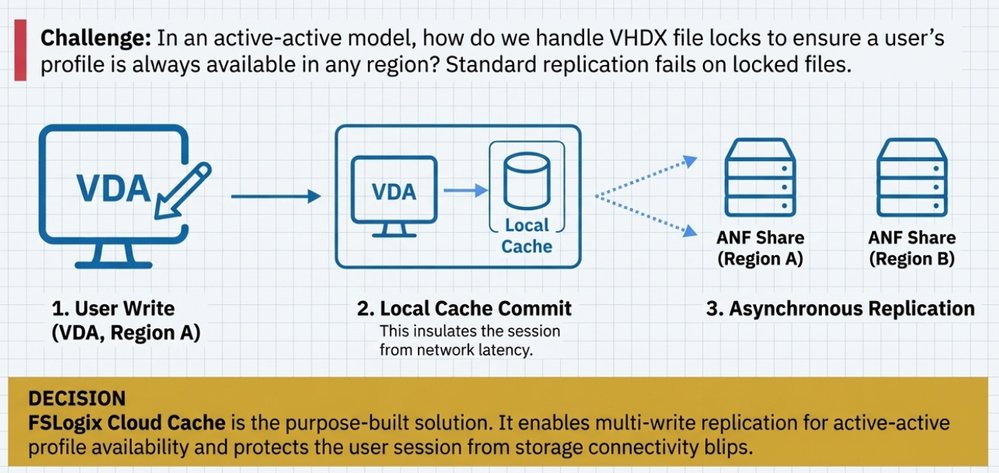
FSLogix Cloud Cache enables active-active profile availability across regions. By writing locally then asynchronously replicating, it bypasses WAN latency issues inherent in traditional file locking. This pattern extends to databases: geo-replicated SQL or distributed Cosmos DB instances prevent regional state from becoming a single point of failure.Access & Ingress
Customer-managed NetScaler with Global Server Load Balancing (GSLB) directs users to optimal regions using DNS-based geo-routing. Crucially, its Local Host Cache functionality maintains connection brokering even if Citrix Cloud's control plane becomes unavailable. Azure-native alternatives like Front Door provide similar traffic steering without introducing new dependencies.
Master Image Management
Azure Compute Gallery automates golden image replication across regions. Virtual desktop hosts in secondary regions launch identical VDA images within minutes, eliminating configuration drift that often undermines failover events. Version-controlled distribution ensures consistent security patching and application compatibility globally.Operational Economics
Warm standby with autoscaling balances readiness with cost efficiency. Citrix Autoscale maintains minimal instance buffers in secondary regions, scaling compute resources on-demand during regional failovers. This active/passive model typically operates at 20-30% of equivalent active/active costs while meeting sub-30-minute RTO objectives.
Alignment with Azure Well-Architected Framework
These principles directly implement Azure's Reliability Pillar recommendations. Microsoft's internal data shows 68% fewer platform incidents after implementing zonal resilience – the precursor to multi-region designs. The Proactive Resiliency Initiative prioritizes three phased steps: First, harden network foundations with multi-homed ExpressRoute circuits. Second, implement zonal redundancy within regions. Finally, establish cross-region continuity for tier-0 workloads.
Business Impact Analysis
Enterprises adopting this framework achieve measurable outcomes:
- Risk Reduction: Elimination of single-region dependencies cuts potential downtime by 90%+
- Cost Optimization: Warm-standby models reduce DR expenditure by 40-70% versus traditional active/active
- Performance Consistency: ANF-backed storage maintains <2ms latency during 10,000+ user login storms
- Operational Agility: Automated image replication slashes deployment time for new regions from weeks to hours
For implementation guidance, engage Microsoft Cloud Solution Architects or submit workloads for structured resiliency reviews through the Proactive Resiliency Initiative portal. The complete technical specification for Citrix on Azure multi-region architectures is available in the Azure Architecture Center.
Comments
Please log in or register to join the discussion