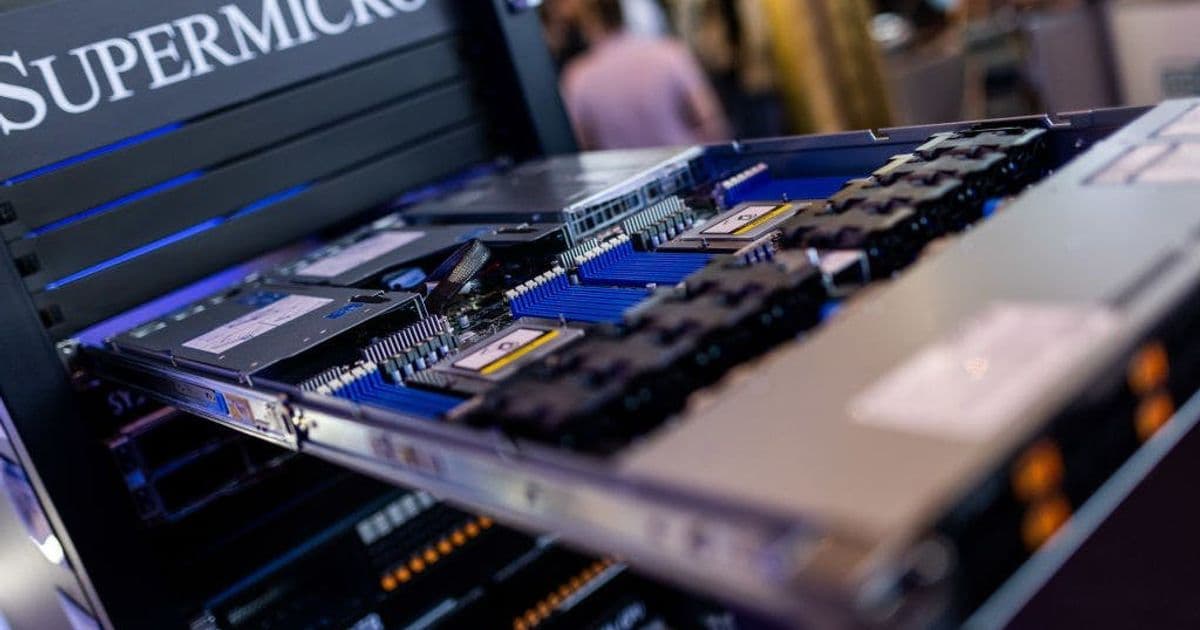
Super Micro Computer reports Q2 revenue of $12.7B, up 123% YoY, driven by explosive AI server demand, but questions linger about sustainability and competition from Dell and HPE.
Super Micro Computer (SMCI) delivered blockbuster fiscal Q2 results Tuesday, reporting net sales of $12.7 billion—a staggering 123% year-over-year increase that blew past analyst estimates of $10.43 billion. The AI server specialist's stock jumped over 5% in after-hours trading as investors cheered the continued demand for high-performance computing infrastructure.
But beneath the headline numbers lies a more complex story about the AI hardware market's evolution and Super Micro's position within it.
The Numbers Behind the Boom
The company's gross margin expanded to 17.2% from 15.6% in the prior year period, suggesting improving operational efficiency even as it scales rapidly. Net income reached $1.1 billion, up from $435 million in Q2 last year.
Super Micro guided Q3 net sales to be "above estimates," though it didn't provide specific figures. This conservative approach reflects the volatility in the AI hardware market, where demand can shift rapidly based on cloud provider spending and model training cycles.
What's Actually Driving Growth
The surge isn't just about selling more servers—it's about selling the right servers. Super Micro has positioned itself as the go-to provider for liquid-cooled, high-density AI infrastructure that can handle the thermal demands of modern GPU clusters.
Unlike traditional server vendors, Super Micro's modular approach allows for rapid customization. When NVIDIA releases a new GPU architecture, Super Micro can quickly design compatible systems rather than waiting for lengthy product cycles.
This agility has paid off handsomely. The company's revenue from AI-related products now accounts for roughly 80% of total sales, up from about 50% a year ago.
The Competitive Landscape
Super Micro's success hasn't gone unnoticed. Dell Technologies and Hewlett Packard Enterprise are both aggressively pursuing the AI server market, leveraging their larger sales forces and established enterprise relationships.
Dell's recent PowerEdge XE9680L, designed specifically for NVIDIA's Blackwell GPUs, represents a direct challenge to Super Micro's dominance in the high-end AI server segment. HPE's GreenLake platform offers similar customization but with the added benefit of hybrid cloud integration.
Supply Chain Vulnerabilities
Super Micro's growth has been constrained at times by component shortages, particularly for power supplies and cooling systems. The company's just-in-time manufacturing model, while efficient, leaves little buffer against supply disruptions.
Recent reports suggest Super Micro is working to diversify its supplier base and increase inventory levels, but these changes could impact margins in the near term.
The Sustainability Question
The bigger concern for investors is whether Super Micro's growth is sustainable or simply a reflection of the current AI investment cycle. Cloud providers like AWS, Microsoft Azure, and Google Cloud have been spending aggressively on AI infrastructure, but there are signs this spending may moderate as they assess return on investment.
If the AI boom cools, Super Micro's specialized focus could become a liability. Unlike Dell or HPE, which have diverse product portfolios spanning traditional enterprise IT, Super Micro is heavily dependent on continued AI infrastructure investment.
What Comes Next
Super Micro is investing heavily in its manufacturing capacity, with plans to expand its facilities in California and Malaysia. The company is also developing new product lines, including systems optimized for inference workloads rather than just training.
However, the competitive pressure is mounting. Dell's recent earnings showed strong growth in its infrastructure solutions group, while HPE reported record AI system sales. Both companies have deeper pockets and broader customer relationships than Super Micro.
The Bottom Line
Super Micro's Q2 results demonstrate the explosive demand for AI infrastructure, but they also highlight the company's vulnerability to market shifts and competitive pressure. The 123% revenue growth is impressive, but maintaining this pace will require continued innovation and execution in an increasingly crowded market.
The coming quarters will reveal whether Super Micro can defend its market position or if the AI server market will consolidate around larger players with more resources.
For now, investors are betting on continued growth, pushing SMCI shares higher in after-hours trading. But the sustainability of this rally will depend on whether Super Micro can prove its business model works beyond the current AI investment cycle.
Comments
Please log in or register to join the discussion