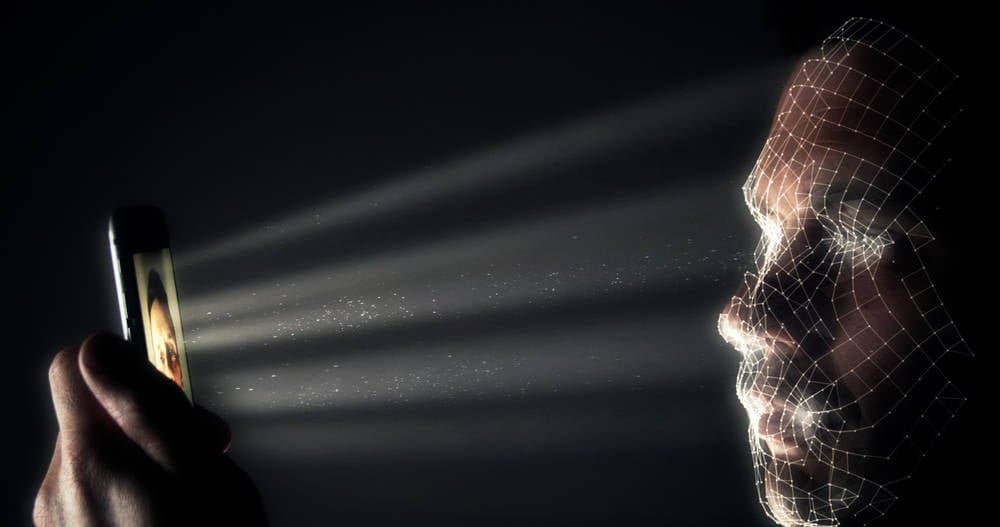
Sainsbury's apologizes after store manager ejects wrong customer when Facewatch system triggers alert, highlighting ongoing concerns about biometric surveillance accuracy and privacy implications
A British supermarket has issued an apology after a store manager mistakenly ejected an innocent shopper when facial recognition technology triggered an alert about a potential offender. The incident at Sainsbury's Elephant and Castle store has reignited debate about the deployment of biometric surveillance in retail environments.
Warren Rajah was approached by three store managers holding smartphones who told him to leave the premises after the store's Facewatch system flagged what it believed was a match with someone on its offenders' database. The managers looked at their phones, then at Rajah, and instructed him to exit the store, pointing to posters near the entrance that informed shoppers facial recognition technology was in operation.
Sainsbury's has confirmed that while the Facewatch system correctly identified a man on its database, staff approached the wrong individual. A spokesperson for the supermarket chain stated: "We have been in contact with Mr Rajah to sincerely apologise for his experience in our Elephant and Castle store. This was not an issue with the facial recognition technology in use but a case of the wrong person being approached in store."
The incident raises significant questions about the human element in automated surveillance systems. Despite the technology's reported 99.98 percent accuracy rate and its contribution to a 46 percent reduction in logged incidents of theft, harm, aggression, and antisocial behavior, the misidentification occurred during the manual review process.
Rajah, who works in sales at tech reseller CDW, expressed concern about the psychological impact of such incidents: "Am I supposed to walk around fearful that I might be misidentified as a criminal? Imagine how mentally debilitating this could be to someone vulnerable, after that kind of public humiliation."
To clear his name, Rajah had to submit a copy of his passport and headshot to Facewatch so the company could verify he was not on the offenders' database. The verification process highlights the invasive nature of these systems, where innocent individuals must provide additional personal data to prove their innocence.
Facewatch technology is currently operating in six Sainsbury's stores across the UK, with five located in Greater London. The system was first trialled in September 2025 in Sydenham and Bath Oldfield Park before being rolled out to additional locations including Dalston, Elephant and Castle, Ladbroke Grove, Camden, and Whitechapel.
The technology has led to 92 percent of identified offenders not returning to stores where Facewatch is operational, suggesting a significant deterrent effect. However, this is the first reported case of a store manager misidentifying a customer following an alert from the system.
Digital rights organization Big Brother Watch has been vocal in its opposition to facial recognition technology in retail settings. The group previously criticized Iceland's trial of similar technology, describing it as "Orwellian" and "dystopian." Jake Hurfurt, head of research and investigations at Big Brother Watch, stated that such deployments are "disproportionate and chilling," arguing that "thousands of people will have their privacy rights violated just to buy basic necessities, and Iceland will turn its shoppers into suspects."
The incident has broader implications for the use of live facial recognition technology across the UK. Big Brother Watch is currently spearheading a legal challenge against the technology, arguing that it is incompatible with human rights laws. Jasleen Chaggar, Legal & Policy Officer at Big Brother Watch, emphasized the chilling nature of such errors: "The idea that we are all just one facial recognition mistake away from being falsely accused of a crime or ejected from a store without any explanation is deeply chilling."
The case also highlights the burden placed on innocent individuals caught in these surveillance nets. Chaggar noted that "innocent people seeking remedy must jump through hoops and hand over even more personal data just to discover what they're accused of. In the vast majority of cases, they are offered little more than an apology when companies are finally forced to admit the tech got it wrong."
Facewatch technology has been rolled out across other UK retailers including B&M, Budgens, Costcutter, Southern Co-op, Spar, and Sports Direct. The widespread adoption of such systems has prompted calls for government regulation to rein in what critics describe as the "unchecked expansion of facial recognition by retailers."
The incident at Sainsbury's serves as a reminder that even highly accurate technological systems can fail at the human interface level. While the facial recognition technology itself may have performed as intended, the manual review process proved fallible, resulting in public humiliation and distress for an innocent shopper.
This case may influence future discussions about the appropriate use of biometric surveillance in public spaces, particularly in retail environments where customers have limited ability to opt out of monitoring. The balance between security measures and individual privacy rights remains a contentious issue as these technologies become increasingly prevalent in everyday life.
The apology from Sainsbury's and the subsequent media attention may prompt other retailers using similar technology to review their procedures for handling system alerts and interacting with customers. The incident demonstrates that technological accuracy alone does not guarantee appropriate outcomes when human judgment is involved in the implementation of automated surveillance systems.
Comments
Please log in or register to join the discussion