At WWDC 2026, two Swift Student Challenge Distinguished Winners built genuinely useful iOS and iPadOS apps, an offline flood navigation tool and a visual machine learning teacher, then demoed them to Apple's outgoing and incoming CEOs. Their stories say a lot about where Apple's developer pipeline and platform tooling are heading.
Apple's Swift Student Challenge has always been a useful signal for where the next wave of platform developers comes from, and the 2026 cohort delivered two standout examples. At WWDC this week, 9to5Mac sat down with Distinguished Winners Karen-Happuch P. Henneh and Aayush Mehrotra, whose apps land on opposite ends of the spectrum: one solves a life-or-death infrastructure gap, the other makes a dense technical subject approachable. Both were built natively for Apple platforms, and both winners ended up demoing their work to Tim Cook and incoming CEO John Ternus.
What the apps actually do
Karen's app, Asul (the word means "flowing water" in her language), is an offline flood navigation tool for iOS. The technical premise is sound and platform-aware: standard GPS routing and generic weather forecasts both fail in a flooding scenario because neither maps rain intensity onto specific roads. Asul combines weather data with historical flood geography to flag which areas will be underwater up to 12 hours ahead, using a red/yellow/green city overlay to mark danger zones, caution areas, and safe ground.
The offline-first design is the part worth calling out for developers. In a flood, connectivity is exactly the thing you cannot count on, so building the routing and risk model to run on-device without a live network connection is the correct architectural call. It is the kind of constraint that pushes you toward local data storage, bundled map tiles, and on-device computation rather than a server round-trip for every query.
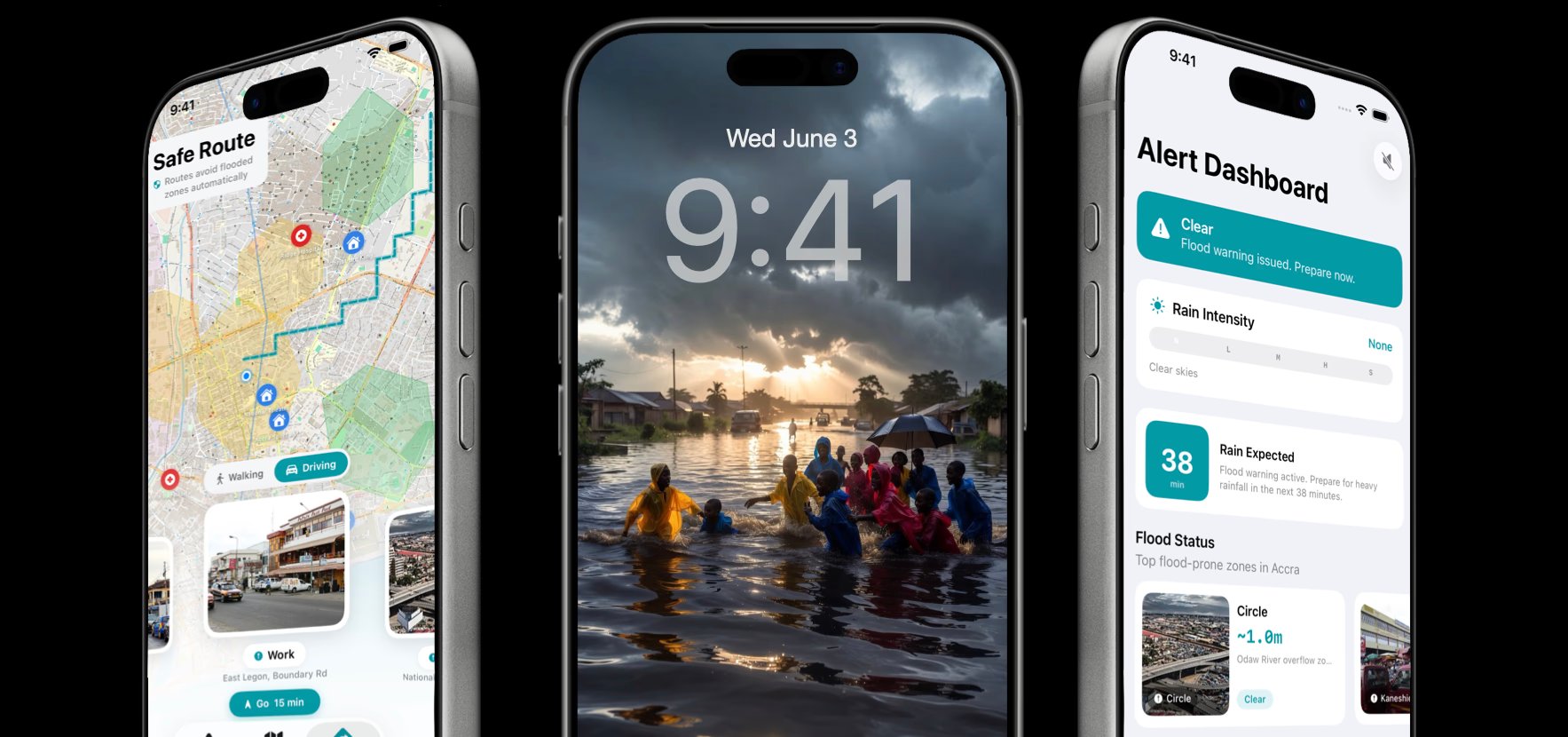
The inspiration was personal. More than 150 people died in 2015 during flooding in Accra, Ghana's largest city. "I strongly believe that the devastating outcomes of flooding are not just a weather issue. It's a lack-of-information issue," Karen said. "If people know that these areas are going to be affected, they're able to make informed decisions ahead of time and save their lives."
Aayush Mehrotra, 14, built NodeLab, an iPad app that teaches the math behind neural networks through interactive, visual explanations. The goal is to flatten the steep learning curve that scares people off machine learning before they start. "When people hear 'machine learning,' they're kind of scared or hesitant because of how complicated it sounds," he explained. "I wanted to build the app that I wish I had when I was learning."
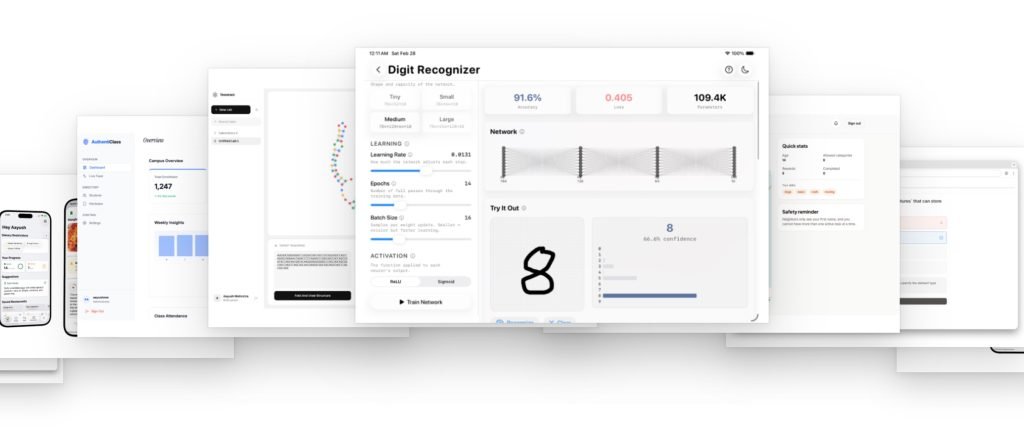
NodeLab is a good fit for the iPad specifically. Touch interaction and a large canvas make it possible to manipulate network nodes directly and watch how changes propagate, which is hard to replicate on a phone screen or in a static textbook. Learning by doing, rather than reading equations, is the whole pitch.
The surprise demo
The winners were told for a month that they would present to Susan Prescott, Apple's vice president of worldwide developer relations. Tim Cook has shown up as a surprise guest in recent years, but 2026 added a second twist: incoming CEO John Ternus also appeared.
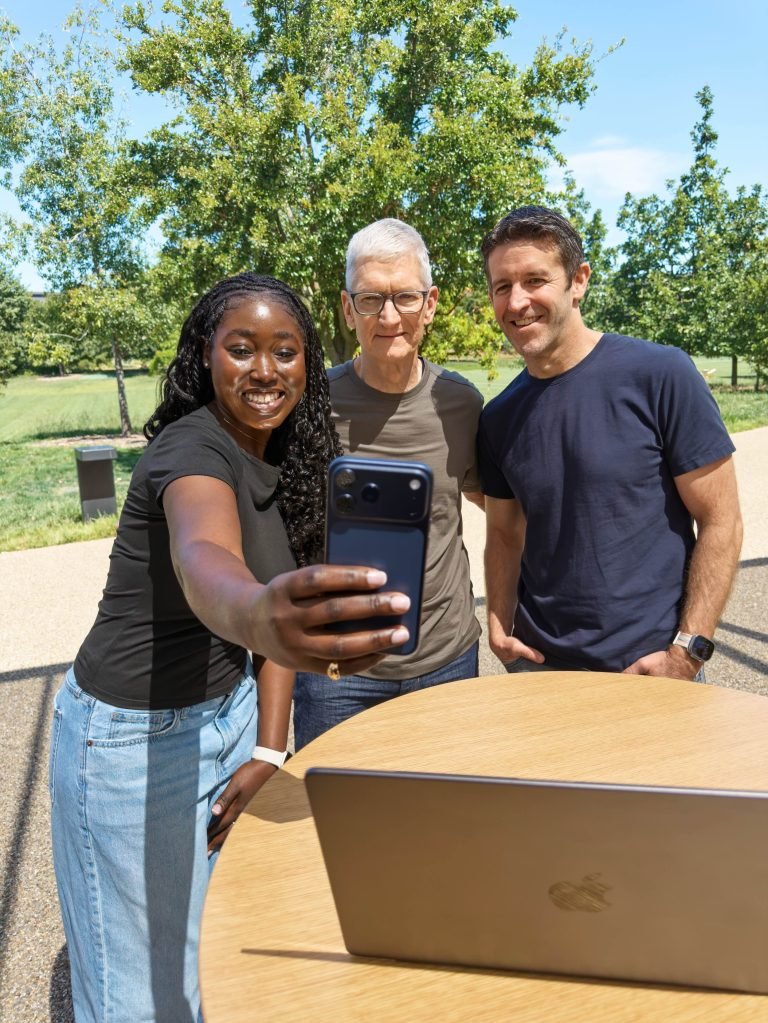
"All this time, they just told us we were going to present to Susan," Karen said. "Then we got there and suddenly saw Tim and John coming in. It was an out of the world experience. They were asking questions and seemed really interested in what we were building."
Aayush described it as surreal and nerve-wracking. "Having your friends listen to your ideas is cool and all, but having the CEO of Apple listening and being interested in what you've built is just so rewarding."
Cook praised both. On Asul, he said Karen "turned her personal experience into something that can protect and save lives." On NodeLab, he noted that Aayush, at 14, is "already building tools that make some of the world's most complex technology feel accessible."
What it signals for developers
The more interesting part for anyone shipping on Apple platforms is what the winners are excited to build next, because it maps directly onto this year's WWDC announcements. Karen pointed to the new agentic coding tools and expanded Apple Intelligence features. Aayush flagged the new Siri integration: "The idea that you can talk to Siri and have it interact directly with your app seems super cool."
That Siri-to-app interaction is the developer story to watch. If Siri can route natural language requests into your app's actions and surfaces, the design work shifts toward exposing clean, well-defined intents that an assistant can call, similar in spirit to App Intents but with a conversational front end. For anyone maintaining an app, it is worth auditing which user actions you would want exposed to that layer and structuring them accordingly.
Being named a Distinguished Winner has practical upside beyond the trip to Apple Park. Karen has been showing Asul more widely and folding feedback back into the app. "The more eyes you get on your work, the more it helps," she said. Aayush framed it as validation plus access: meeting other winners from around the world and connecting with Apple's leadership team.
The through-line across both projects is that strong platform apps still start from a real problem and a deliberate choice about where the work runs, on-device versus in the cloud, phone versus tablet, online versus offline. Asul and NodeLab are student projects, but the engineering instincts behind them are the same ones that separate good production apps from mediocre ones.
Comments
Please log in or register to join the discussion