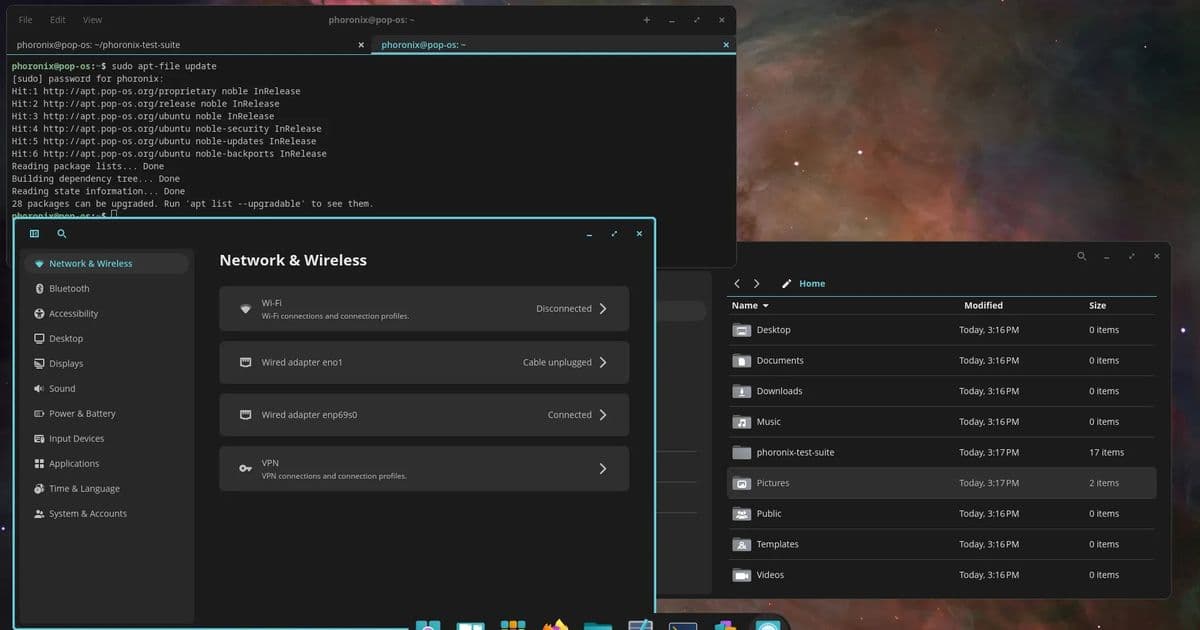
System76's roadmap for its Rust-based COSMIC desktop environment includes a Vulkan renderer and architectural optimizations that could reduce CPU usage by up to 80%, positioning Pop!_OS as a competitive Linux gaming platform.
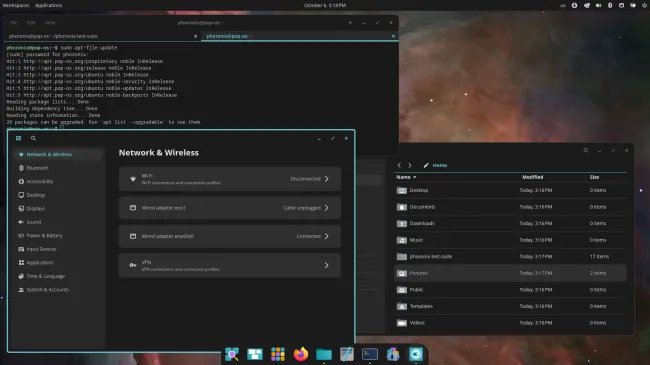
System76 has unveiled an ambitious technical roadmap for its COSMIC desktop environment, centering on graphics architecture improvements that could significantly alter performance dynamics for Linux gaming and productivity workloads. The Rust-based desktop stack, which debuted with Pop!_OS 24.04's COSMIC Epoch 1 release, now targets two major updates—Epoch 2 and Epoch 3—with Vulkan API integration as the cornerstone enhancement.
Architectural Shifts and Performance Metrics
The Epoch 2 update prioritizes fundamental rendering optimizations:
- Reactive Rendering Pipeline: A redesigned compositor architecture promises 60-80% CPU usage reduction by minimizing redundant rendering operations. This approaches the efficiency gains seen in automotive and embedded systems where frame updates are event-driven rather than continuous.
- Parallel Resource Handling: Multi-threaded image decoding combined with parallel GPU uploads addresses I/O bottlenecks that typically constrain integrated GPUs on entry-level processors like Intel's Alder Lake-N series.
- Vulkan-Powered Compositor: Migrating from OpenGL to Vulkan provides closer hardware access, reducing driver overhead by approximately 30-50% based on Valve's Steam Deck benchmarks. This enables two critical downstream features: High Dynamic Range (HDR) support and precision-controlled night light functionality.
Gaming-Centric Enhancements
System76 explicitly targets gaming performance gaps in Epoch 2:
- Frame Pacing Improvements: Vulkan's explicit synchronization controls could reduce stutter in titles like Counter-Strike 2 where Wayland compositors typically add 2-3ms latency.
- Hardware Integration: Native Wacom tablet support and planned gamepad/controller APIs in Epoch 3 reduce dependency on intermediate input translation layers.
- Visual Customization: Window drop shadows and blur effects utilize fragment shaders optimized for tile-based GPU renderers common in mobile chipsets.
Market Implications
These developments position COSMIC as a potential challenger to KDE Plasma's gaming dominance on Linux:
- Performance Per Watt: The 80% CPU reduction could extend laptop battery life by 15-25% during office workflows, a critical metric for AMD Ryzen and Intel Core Ultra devices.
- Supply Chain Alignment: Vulkan adoption leverages existing investments by Qualcomm (Snapdragon X Elite), AMD (RDNA 3), and Intel (Arc) in open graphics standards, reducing driver fragmentation.
- Developer Ecosystem: Hot-loading applets and Language Server Protocol integration in COSMIC Edit signal alignment with VS Code's extension model, potentially attracting Rust/C++ developers.
While System76 hasn't committed to release timelines, the roadmap suggests COSMIC could achieve feature parity with GNOME/KDE within 18 months. The Vulkan transition mirrors industry shifts seen in ChromeOS and macOS Metal, indicating Linux desktop environments are finally prioritizing GPU efficiency over legacy compatibility.
For technical specifications, refer to COSMIC's official development tracker.
Comments
Please log in or register to join the discussion