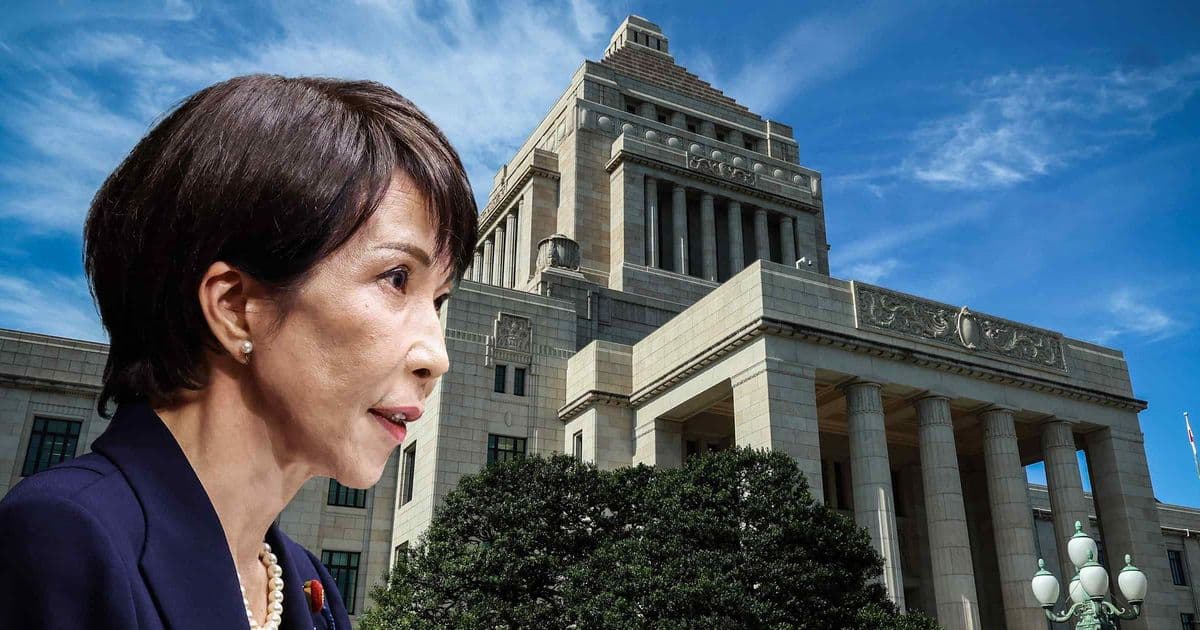
Japanese Prime Minister Sanae Takaichi dissolves parliament for a February 8 snap election, proposing sales tax cuts while markets react to surging bond yields.

Prime Minister Sanae Takaichi dissolved Japan's lower house on January 23, 2026, triggering a snap general election scheduled for February 8. This marks Japan's second national election in just 16 months, representing a calculated political gamble as Takaichi's ruling Liberal Democratic Party (LDP) seeks to regain its parliamentary majority. The announcement immediately triggered volatility in financial markets, with the 10-year Japanese Government Bond yield surging past 2.2% to a 27-year high amid investor concerns over fiscal sustainability.
The timing coincides with Takaichi's controversial proposal to cut consumption taxes on food items, a measure explicitly tied to her electoral strategy. Public finance analysts note this would reduce annual tax revenues by approximately ¥1.2 trillion ($8.3 billion) at a time when Japan's public debt stands at 263% of GDP. Moody's lead Japan analyst highlighted the contradictory pressures: "The tax cut proposal creates immediate populist appeal but directly conflicts with the government's stated goal of achieving primary budget balance by 2027. Bond markets are pricing in heightened risk of fiscal slippage."
Market reactions underscore deeper structural concerns. The yield spike reflects investor skepticism about Japan's ability to fund its record ¥112 trillion stimulus packages while managing demographic headwinds. Pension funds and insurance companies, major holders of JGBs, face immediate mark-to-market losses on their portfolios. Currency markets showed parallel strain, with the yen weakening to ¥142 against the dollar as capital outflow risks intensified.
Takaichi's gamble hinges on translating short-term economic relief into votes. Her administration emphasizes that temporary tax reductions could stimulate consumer spending, which contracted 0.9% quarter-on-quarter in Q4 2025. However, Standard & Poor's Global Ratings warned that "without corresponding spending reforms, tax cuts would exacerbate debt dynamics and potentially trigger negative rating actions." The government counters that corporate tax revenues have outperformed projections, rising 18% year-on-year in December, partially offsetting fiscal pressures.
Opposition parties seized on the bond market reaction as evidence of policy incoherence. The newly formed centrist Sanseito party announced a platform prioritizing debt containment and means-tested subsidies instead of blanket tax cuts. With polling showing 68% of voters prioritize economic stability over tax reductions, the LDP faces an uphill battle to reclaim its majority. The election outcome will determine Japan's fiscal trajectory for the next decade, with implications for monetary policy normalization and the Bank of Japan's yield curve control framework.
Strategic implications extend beyond Japan's borders. Foreign investors hold approximately 14% of outstanding JGBs, making yield volatility a global systemic concern. Treasury markets showed contagion effects, with US 10-year yields rising 12 basis points intraday. Regional trade partners monitor potential currency devaluation impacts, while China's unfilled consulate position in Chongqing signals ongoing diplomatic tensions that could influence post-election economic alignment.
Comments
Please log in or register to join the discussion