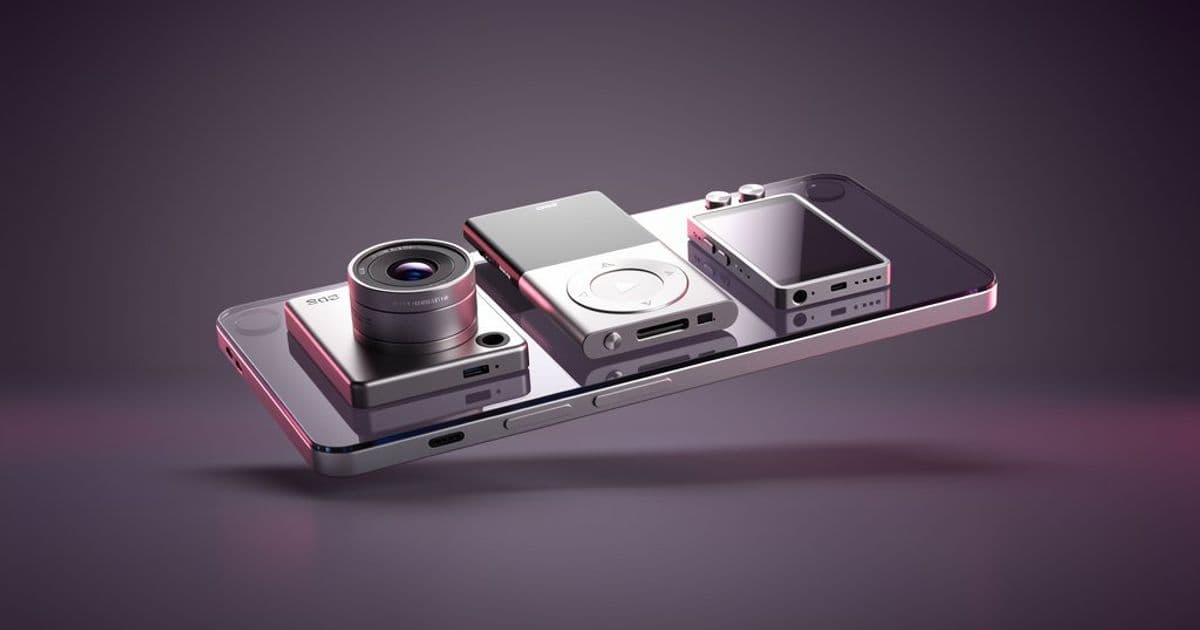
After two decades of consolidation where every device became a feature inside a smartphone or computer, the tech landscape is fragmenting again. Driven by nostalgia, burnout from bloated platforms, and lower barriers to entry, consumers and creators are embracing single-purpose devices, niche hardware, and diverse ecosystems. This isn't a return to the 90s, but a new era of variety and personality.
The author, Jason Willems, reflects on the 90s and early 2000s as a golden era of tech, characterized by physical experimentation and a wide array of distinct devices. He contrasts this with the subsequent decades of consolidation, where the smartphone absorbed the functions of cameras, GPS units, music players, and more. This convergence, while convenient, led to a homogenized, "winner-take-all" market dominated by a few platforms like iOS/Android and PlayStation/Nintendo, stripping devices of their unique personalities.
The core argument is that a significant shift began in the early 2020s. This change is driven by several converging factors:
Nostalgia and Demand for Personality: There's a growing market for devices with physical controls, intentional constraints, and distinct design. This is seen in the resurgence of film cameras (Leica, Kodak), the popularity of wired headphones, and the recreation of classic hardware like the ModRetro M64 (an FPGA-based N64 clone) and CRT monitors. The Playdate handheld, with its crank control, exemplifies this trend of unique philosophies.
Platform Alienation and Subscription Fatigue: Apple's aggressive pivot to services revenue has alienated developers and users, creating an opening for alternatives. The proliferation of subscriptions and the creep of advertising into consolidated platforms are degrading user experiences, pushing people to seek out simpler, single-purpose tools.
Lower Barriers to Entry: Modern tools have democratized creation. Software deployment is instantaneous, and 3D printing (exemplified by the author's Bambu Labs P1S printer) has revolutionized hardware prototyping. The standardization of USB-C reduces ecosystem lock-in. Even LLMs and modern development tools make side projects more feasible, allowing individuals to build alternatives for the joy of it, not just for market dominance.
New Technological Paradigms: While not yet mainstream, new categories are emerging. VR is becoming more practical, early AR is reaching consumers (e.g., Meta's Ray-Ban partnership), and wearables are diversifying into smart rings (Oura) and over-the-counter glucose monitors (Abbott Lingo).
The author's personal 2025 purchase list illustrates this fragmentation: a no-distraction e-paper display (TRMNL), Ray-Ban Meta glasses, a Leica camera, wired headphones, a dedicated Android phone alongside an iPhone, a gaming laptop, an AI vacuum, programmable lights, a 3D printer, a Kindle, a glucose sensor, and an iPad used only as a secondary display. This is a curated, à la carte selection of tools, not a monolithic ecosystem.
The conclusion is that while SaaS and centralized platforms are here to stay, the era of forced, homogenized experiences is waning. We are entering a new golden era defined not by consolidation, but by variety, personality, and consumer choice. The tech monoculture is breaking, and with it, the fun is returning.
Relevant URLs:
- ModRetro - For their FPGA-based M64 and CRT monitor projects.
- Playdate - The handheld with a crank control.
- TRMNL - The no-distraction e-paper display.
- Bambu Labs - For the P1S 3D printer.
- Oura Ring - The smart ring.
- Abbott Lingo - The over-the-counter glucose monitor.
Comments
Please log in or register to join the discussion