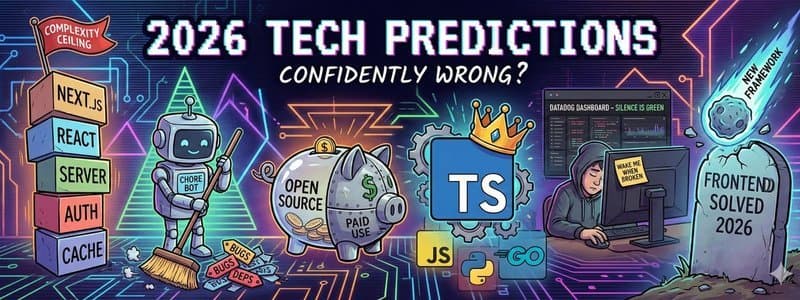
Industry expert John James forecasts pivotal shifts in software development for 2026, including a backlash against over-engineered frameworks, pragmatic AI assistants replacing hype-driven tools, and open-source projects adopting transparent funding models. These predictions highlight a broader trend toward sustainability and developer-centric solutions in response to recent industry upheavals.
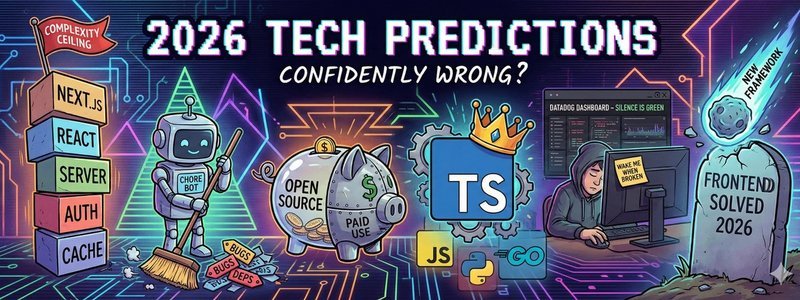
As 2025 draws to a close, tech visionary John James has released a provocative set of predictions for 2026, forecasting critical turning points in software development, AI tooling, and open-source sustainability. Drawing from emerging industry patterns, James anticipates a year where developer pragmatism overrides hype, reshaping tools and practices across the stack.
The Full-Stack Complexity Ceiling
James predicts that 2026 will mark the peak of monolithic framework dominance, as teams increasingly reject bloated tools like Next.js that bundle routing, compilation, authentication, and more into unwieldy packages. Senior developers are spearheading a shift toward leaner alternatives, questioning whether such all-in-one solutions are necessary. This backlash stems from the growing burden of configuration flags, unstable features, and maintenance overhead—signaling a broader industry realization that simplicity often trumps comprehensiveness.
AI Tools: From Magic to Mundane
In 2026, AI coding assistants will pivot from grand promises to practical utility, James asserts. Instead of tools claiming to "build your startup overnight," developers will embrace specialized bots for tedious tasks: dependency upgrades that avoid production breaks, code refactoring within established boundaries, and reliable test generation. This reflects a deeper truth: developers prioritize eliminating drudgery over chasing AI-generated spectacle. As James notes, "Devs don’t actually want magic. They want their worst tasks gone!"
Open Source’s Financial Reckoning
The licensing conflicts of 2024-2025—such as Redis vs. Valkey and HashiCorp vs. OpenTofu—will catalyze a more honest dialogue about open-source funding in 2026. Maintainers will adopt blunt "free for hobbyists, paid for companies" models, rejecting the myth that GitHub stars can sustain projects. Expect increased pushback against corporate exploitation and a cultural shift where burnout and exposure are no longer ignored. James emphasizes: "Burnout doesn’t scale, and neither does ‘exposure’!"
TypeScript’s Monoculture Triumph
By late 2026, TypeScript will cement itself as the default language for most application development, James forecasts, extending beyond frontend to backends, CLIs, and infrastructure code. Plain JavaScript will fade into legacy status, while Python and Go retain niches in ML and infrastructure. This dominance is already evident, with major tools and LLMs assuming TypeScript as the standard—a victory for type safety that reshapes coding norms.
The Revolt Against Observability Overload
Developers will openly rebel against convoluted dashboards in 2026, James predicts, favoring simpler logs and alerts that prioritize actionable insights over "observability porn." The mantra becomes "wake me up when it’s broken," as teams reduce time wasted configuring tools like Datadog. This shift underscores a core principle: if monitoring requires extensive training, it has already failed.
Frontend’s Eternal Cycle of Disruption
Despite claims of stability, James warns that 2026 will see another cycle of frontend disruption. When a premature declaration that "frontend is solved" emerges—citing mature tooling and stable stacks—a new framework or rendering model will swiftly shatter that illusion. History shows this pattern repeats, proving that frontend innovation remains fiercely unpredictable.
James closes with self-aware humor, acknowledging his predictions might earn mixed accuracy but reflect undeniable confidence. As the industry braces for 2026, these forecasts underscore a collective move toward efficiency, transparency, and resilience—though as always, the only certainty in tech is change.
Source: John James Blog
Comments
Please log in or register to join the discussion