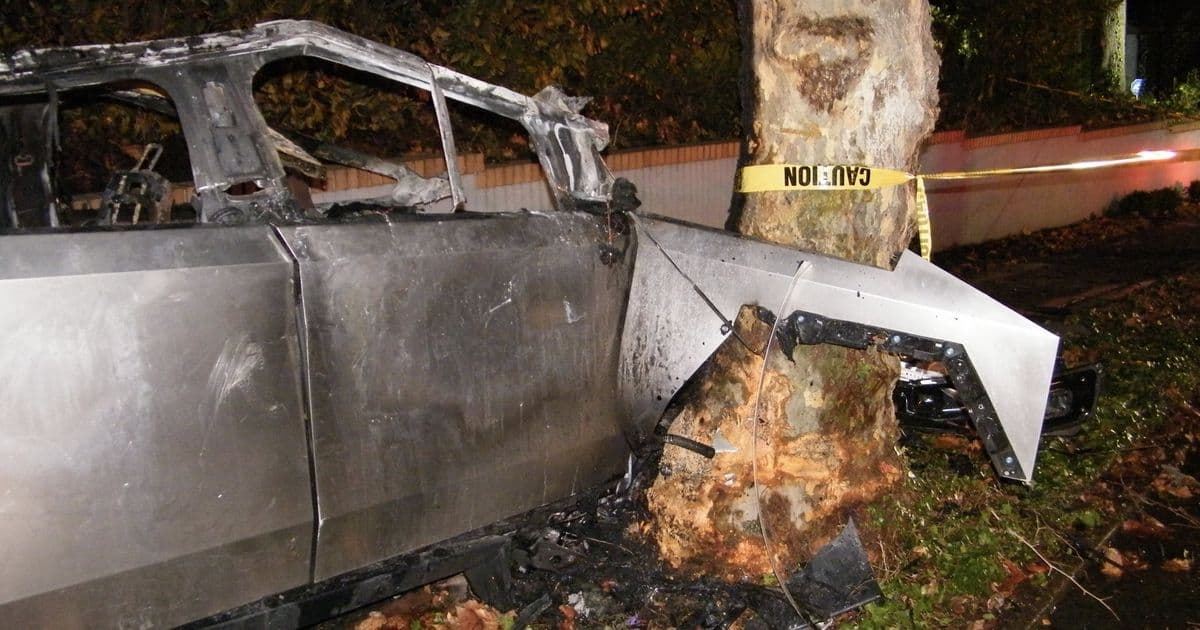
Two families are suing Tesla, alleging that the Cybertruck's electronic door handles and concealed manual releases prevented their children from escaping a post-crash fire, leading to their deaths. The lawsuits spotlight broader safety concerns amid federal investigations into Tesla's door mechanisms across multiple models. This tragedy underscores critical debates in automotive tech about balancing innovation with fail-safe design in life-threatening scenarios.
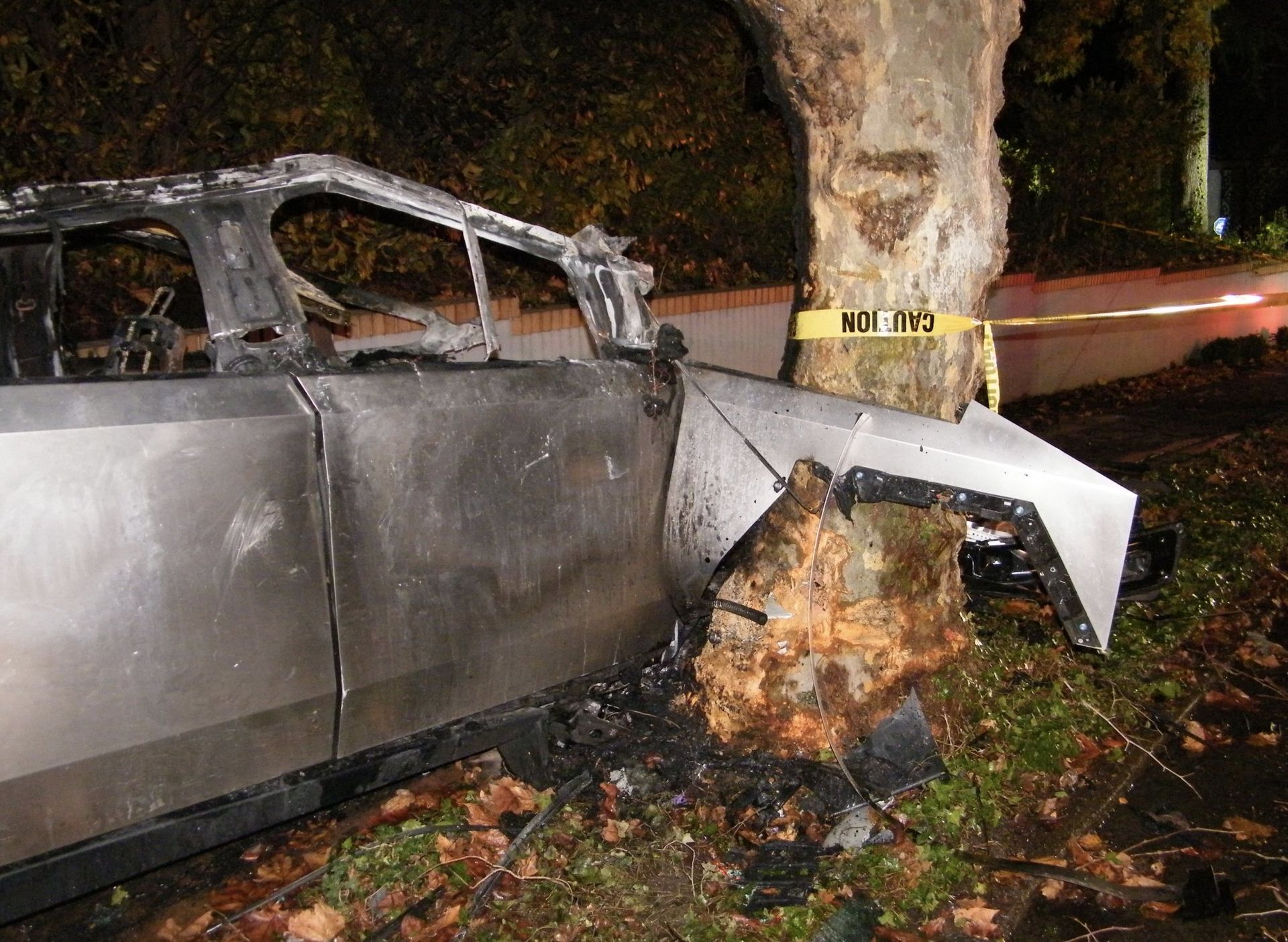
In a case that exposes the deadly intersection of automotive innovation and safety oversight, two families have filed lawsuits against Tesla over a November 2024 crash in Piedmont, California. The suits claim the Cybertruck's door design—reliant on electronic handles with poorly accessible manual backups—trapped three college students inside the vehicle as it burned, turning a survivable collision into a fatal inferno. The incident has ignited federal scrutiny and industry-wide soul-searching about the risks of prioritizing sleek design over intuitive safety in electric vehicles (EVs).
The Crash and Failed Escape
Jack Nelson (20) and Krysta Tsukahara (19), both sophomores at the University of Colorado Boulder and Savannah College of Art and Design respectively, were passengers in a Cybertruck driven by Soren Dixon, a USC student. Dixon, intoxicated and speeding, crashed into a concrete wall, wedging the truck against a tree. While front-seat passenger Jordan Miller was rescued by a friend who shattered the laminated glass, Nelson and Tsukahara—along with Dixon—perished. The Alameda County coroner confirmed Jack died from smoke inhalation and burns, not impact injuries, highlighting the doors' role in the tragedy.
Hidden Releases and Electronic Vulnerabilities
The lawsuits emphasize Tesla's controversial door mechanism. Cybertruck doors use electronic handles activated via fob, card, or app, with no external physical releases for rescuers. If power fails, interior manual releases exist but are buried in the door's map pocket—a design the Nelsons' suit calls "impractical" during emergencies. As their filing states:
"In the smoke and chaos of a post-crash fire, locating a concealed cable beneath a liner is nearly impossible... Tesla chose form over function, with fatal consequences."
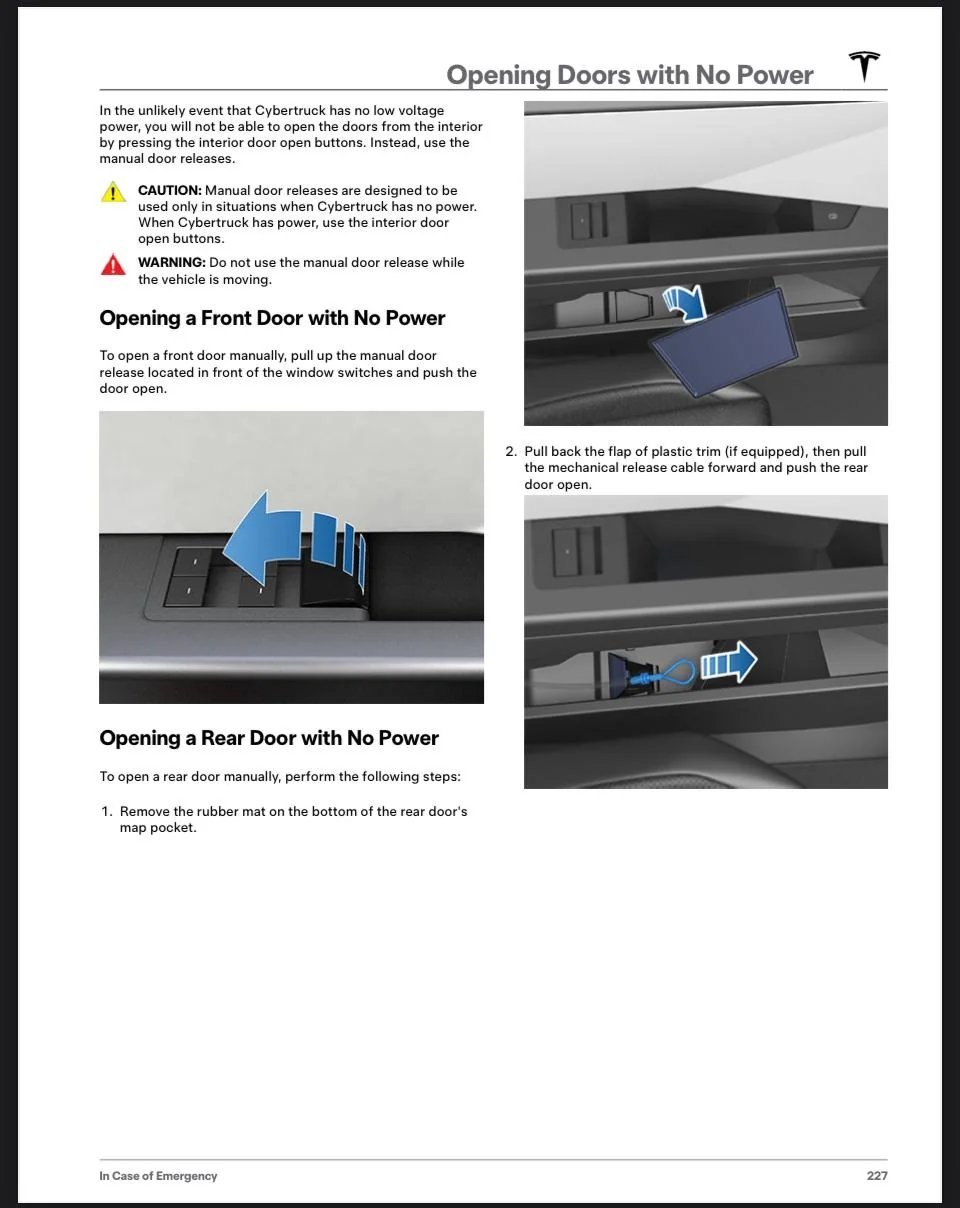 Tesla's manual shows the intricate process to access rear-door releases (Credit: Tesla)
The manual (page 227) instructs users to open a flap and pull a "noose-like" cable—a stark contrast to simpler mechanical handles in traditional vehicles. Krysta Tsukahara, conscious post-crash, allegedly couldn't escape due to electrical failure. Her parents' complaint describes "unimaginable pain and emotional distress" as flames consumed her.
Broader Safety Failures and Investigations
This isn't isolated. The National Highway Traffic Safety Administration (NHTSA) is investigating nine incidents of inoperable doors in Tesla Model Y SUVs, where children were trapped until windows were smashed. Similar Cybertruck issues emerged in an August 2024 Texas crash, where nurse Michael Sheehan burned to death. Lawyer S. Scott West, representing Sheehan's family, cites "defects in battery, structure, and door design" as culprits. Tesla has recalled the Cybertruck eight times since its 2023 debut, including for power loss and stuck accelerators.
Industry Implications and Shifting Designs
Tesla pioneered electronic entry, but rivals are backtracking. Ford recalled 200,000 Mach-E SUVs in June 2025 after battery failures locked occupants inside. Rivian, amid these lawsuits, is redesigning doors for its upcoming R2 SUV. Tech forums buzz with debates: some defend aerodynamic gains from handle-less designs, while others, like a Reddit user quoted in the source, call it "fucking wild" to ignore Tesla's "abysmal safety record."
Why This Matters for Tech and Engineering
For developers and engineers, this case is a stark lesson in ethical design. Relying on complex systems without robust, intuitive fallbacks can have catastrophic outcomes—especially when human factors like panic or impairment are involved. As federal standards evolve, EV makers must prioritize redundant, accessible safety features. The lawsuits could accelerate regulations mandating standardized mechanical releases, reshaping how automakers approach "smart" car innovation. Beyond legal liability, this tragedy reminds the tech world that elegance must never compromise the non-negotiable: preserving human life when systems fail.
Source: The Oaklandside
Comments
Please log in or register to join the discussion