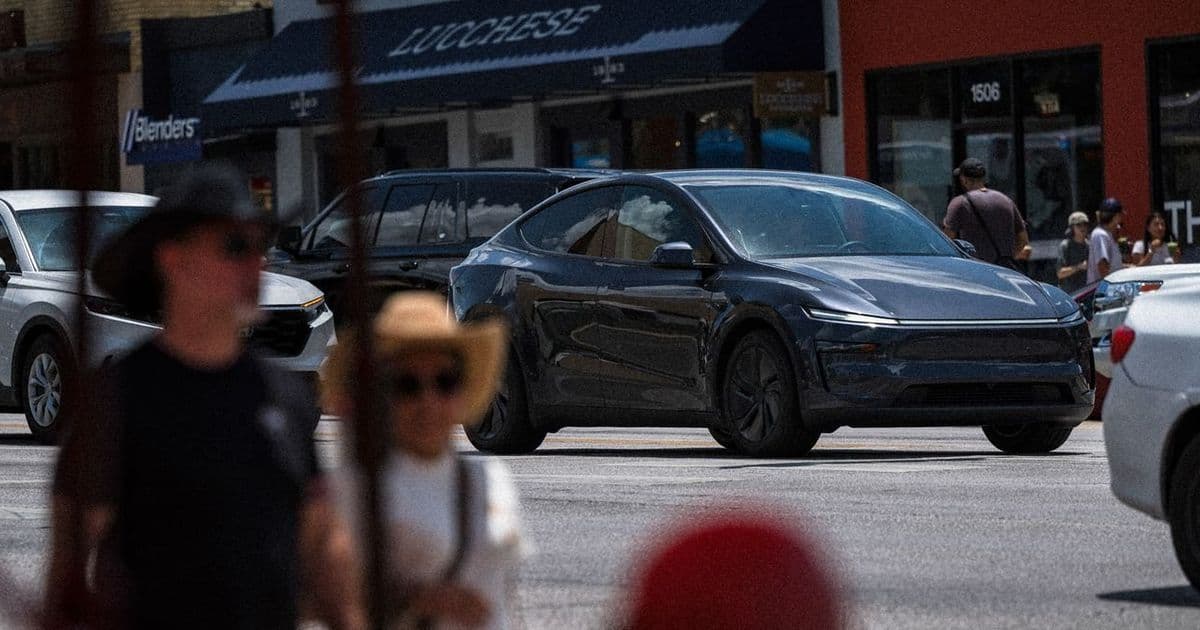
Exclusive survey data shows nearly half of US consumers wouldn't consider riding in a Tesla robotaxi after its limited Austin launch, with over half expressing reduced confidence in its safety. This cool reception poses a significant challenge as Tesla bets its future on autonomous technology, contrasting with growing competition and China's rapid AV deployment.
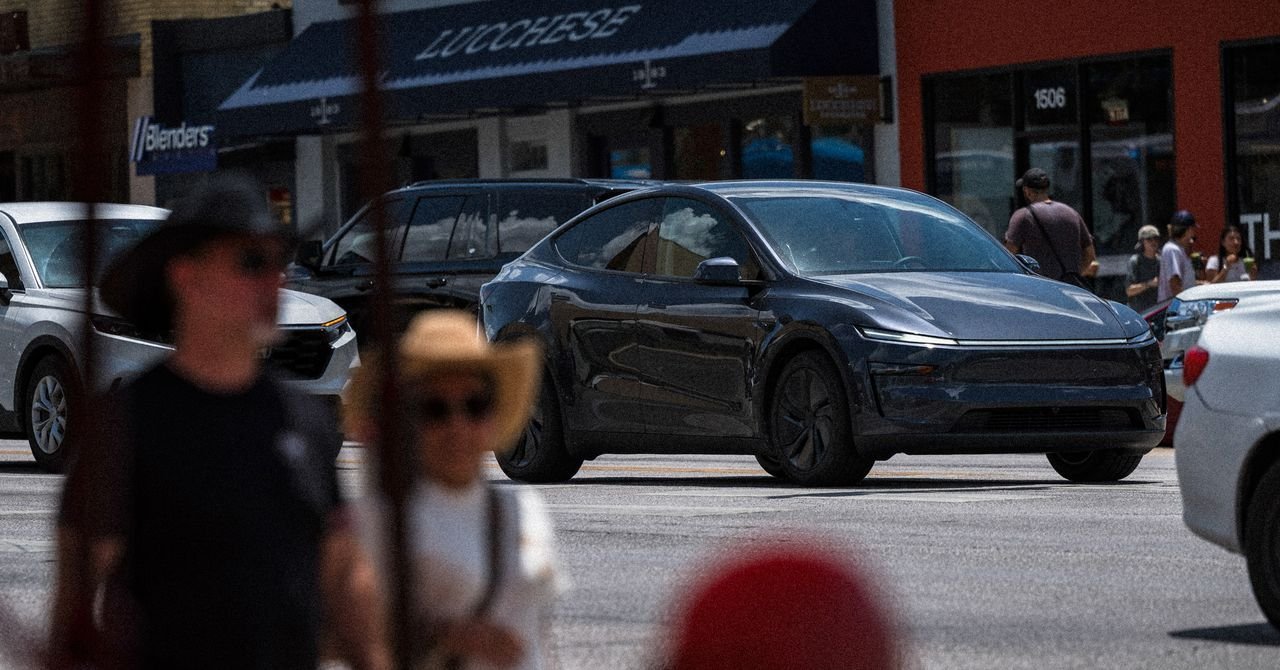
Tesla's highly anticipated robotaxi launch in Austin, Texas, intended to showcase its autonomous driving leadership, appears to have backfired with consumers. According to exclusive survey data from the market research group Electric Vehicle Intelligence Report (EVIR) shared with WIRED, a striking 42% of US consumers are now less interested in taking a robotaxi ride after reading about Tesla's service. The survey polled 8,000 US consumers.
Key findings reveal a trust deficit:
- 48% of respondents stated they wouldn't consider riding in a self-driving car at all.
- Over 50% reported being less convinced of Tesla's robotaxi safety after reviewing details of the Austin launch.
- 31% strongly believe self-driving taxis should be illegal.
- 65% hadn't even heard about Tesla's limited robotaxi launch, available only to select invited users.
The lukewarm reception is problematic for Tesla, which has staked its corporate future on autonomy. CEO Elon Musk told investors in April, "Really, we should be thought of as an AI robotics company... If somebody doesn’t believe Tesla is going to solve autonomy, I think they should not be an investor in the company." He's positioned full self-driving (FSD) technology as the key to making Tesla "the most valuable company in the world by far."
Why the skepticism? The Austin launch itself contributed:
- Safety compromises: Despite initial promises of fully driverless operation, Tesla installed human safety operators in every vehicle after technical limitations emerged.
- Technical stumbles: Early riders captured incidents like vehicles crossing double-yellow lines into oncoming traffic, prompting scrutiny from the National Highway Traffic Safety Administration.
- Limited scale & exclusivity: The service launched with only a handful of vehicles in a tiny operational zone (later expanded in a controversial phallic-shaped map), accessible solely to Tesla influencers.
This comes amid broader challenges for Tesla. Earlier EVIR surveys show Tesla is now the only EV brand with a negative consumer perception, likely influenced by Musk's polarizing political activities – 61% of Tesla investors polled believe he should focus on business over government-related activities. Vehicle deliveries dropped 13.5% this spring.
Industry implications: Consumer reluctance isn't isolated to Tesla. A major safety failure by any player could tarnish the entire autonomous vehicle sector just as Western companies finally scale:
- Waymo operates paid robotaxis in five US cities.
- Zoox plans a 2024 Las Vegas launch.
- Lyft/May Mobility and Uber/Wayve have announced upcoming services.
Kathy Winter, COO of May Mobility, argues low trust is "simply an artifact of low exposure," asserting that the "superior convenience and safety" of AVs win over skeptics. However, the survey suggests Tesla's rocky start makes that uphill climb steeper.
Meanwhile, China races ahead: Baidu's Apollo Go claims over 11 million rides across multiple cities, surpassing Waymo's milestone, with rivals WeRide and Pony.ai also expanding rapidly. As Western AV developers enter their make-or-break deployment phase, restoring public confidence isn't just Tesla's problem—it's the entire industry's imperative.
Comments
Please log in or register to join the discussion