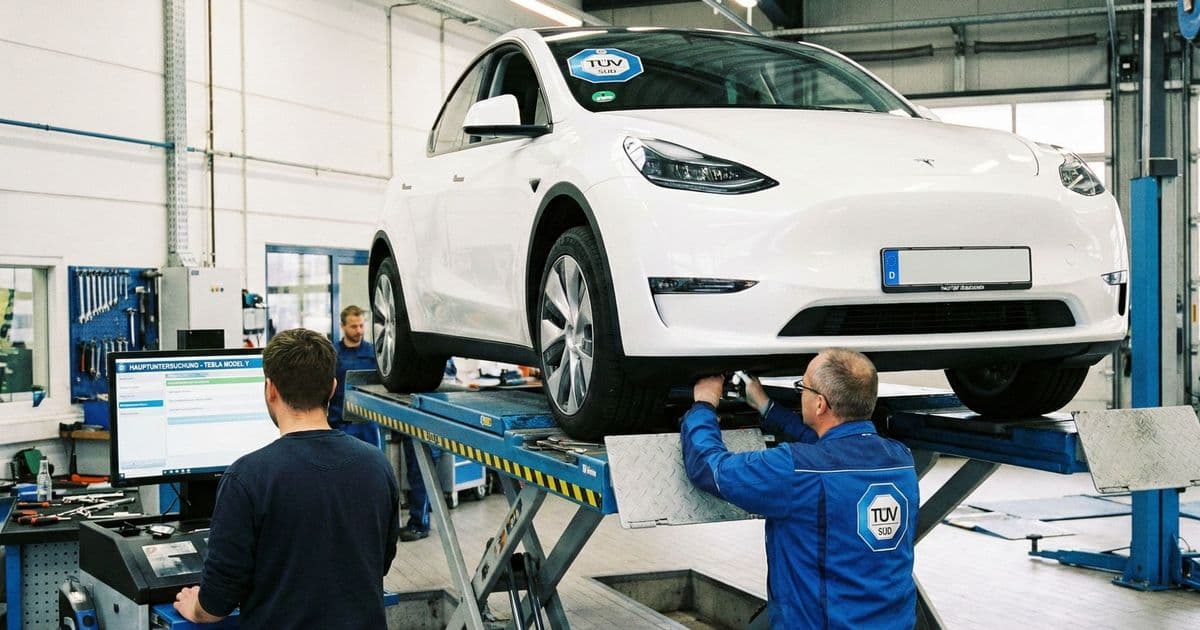
German TUV's 2026 reliability report reveals Tesla Model Y has highest defect rate among all 2-3 year old vehicles, challenging assumptions about EV reliability.
The German TUV (Technischer Überwachungsverein) has published its 2026 reliability report, and the findings for Tesla are particularly concerning. For the first time, electric vehicles were comprehensively evaluated alongside traditional combustion engines, and while most EVs proved reliable, Tesla's Model 3 and Model Y emerged as significant outliers.
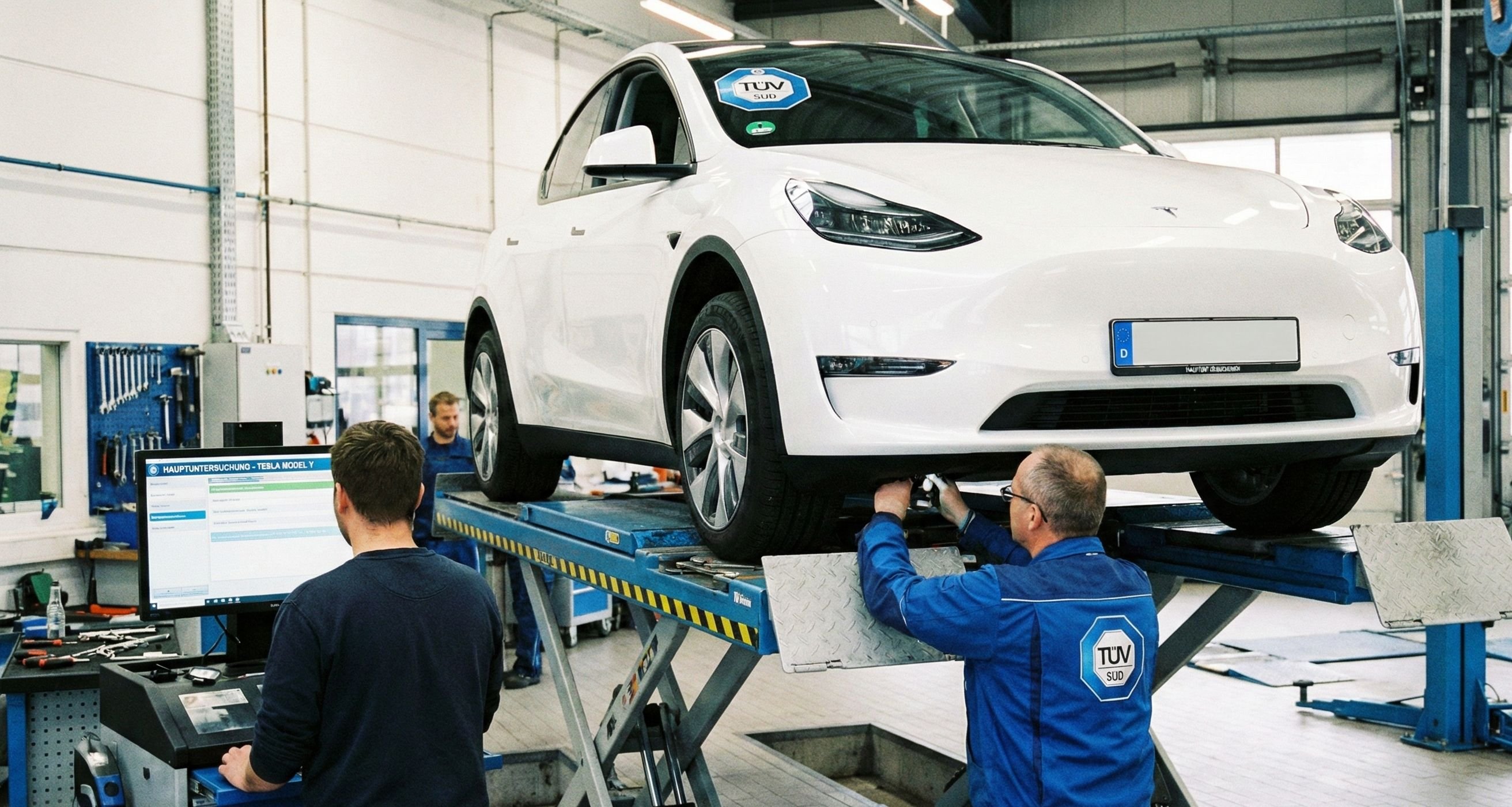
The TUV report analyzed technical inspection data from approximately 9.5 million vehicles that underwent mandatory inspections between July 2024 and June 2025 across Germany. The findings challenge the common assumption that electric vehicles should inherently be more reliable due to fewer moving parts.
The Numbers Tell a Troubling Story
The Tesla Model Y achieved the dubious distinction of having the highest defect rate among all 2-3 year old vehicles in the study, with a staggering 17.3% failure rate. This represents the highest defect rate recorded in this category over the past decade. To put this in perspective, the average failure rate for all vehicles in this age group was 21.5%, but the Model Y's performance was particularly poor compared to its peers.
The Model 3 didn't fare much better, recording a 13.1% defect rate. Both figures are worse than even budget-friendly options like the Dacia Spring, which raises serious questions about Tesla's quality control and long-term reliability.
How Tesla Compares to Other EVs
Among the 18 electric vehicles evaluated, Tesla's models ranked at the bottom:
- Mini Cooper SE: 3.5% defect rate
- Audi Q4 e-tron: 4.0% defect rate
- Fiat 500e: 4.2% defect rate
- Tesla Model 3: 13.1% defect rate
- Tesla Model Y: 17.3% defect rate
This stark contrast suggests that while electric vehicles can indeed be as reliable as their gas-powered counterparts, Tesla's implementation falls significantly short of industry standards.
What's Causing These Issues?
While the TUV report doesn't specify the exact defects affecting Tesla vehicles, Dr. Joachim Bühler, Managing Director of the TÜV Association, provided insights into common EV problems that likely contribute to these failures. "Axle suspensions suffer under the high weight of the drive battery, and the brakes are rarely used due to regenerative braking," Bühler explained to ADAC. "This can lead to defects in the brake discs, and there is a risk of reduced braking performance."
These issues are particularly relevant to Tesla's vehicles, which are among the heaviest EVs on the market due to their large battery packs. The combination of weight and the unique characteristics of EV drivetrain systems appears to be creating reliability challenges that Tesla hasn't adequately addressed.
The Broader Context
The TUV report also highlighted the best performers in the 2-3 year old category:
- Mazda2: 2.9% defect rate
- Mercedes-Benz B Class: 3.0% defect rate
- Volkswagen T-Roc: 3.0% defect rate
These traditional vehicles outperformed even the best electric vehicles, suggesting that Tesla's problems are specific to their manufacturing and design rather than inherent to electric vehicles as a category.
What This Means for Tesla Owners and Prospective Buyers
The findings raise serious concerns for current Tesla owners and those considering purchasing these vehicles. A 17.3% failure rate within just 2-3 years of ownership represents a significant reliability risk and potential financial burden. For a vehicle in this price range, such high defect rates are particularly troubling.
This data also challenges Tesla's reputation for innovation and quality. While the company has been praised for its technological advancements and software capabilities, these reliability issues suggest that fundamental engineering and manufacturing quality may be compromised in pursuit of rapid growth and production targets.
Industry Implications
The TUV report's comprehensive evaluation of EVs provides valuable data for the entire automotive industry. It demonstrates that electric vehicles can indeed match or exceed the reliability of traditional vehicles when properly engineered and manufactured. Tesla's poor performance appears to be an exception rather than the rule, with other manufacturers like Audi, Mini, and Fiat producing more reliable electric vehicles.
This data could influence consumer decisions as the EV market continues to grow and mature. Buyers may increasingly look beyond Tesla to other manufacturers who have demonstrated better reliability in their electric offerings.
Looking Forward
The 2026 TUV Report serves as a wake-up call for Tesla and a valuable resource for consumers. While electric vehicles as a category have proven their reliability potential, Tesla's performance suggests that rapid scaling and aggressive growth targets may be compromising quality control.
For Tesla to maintain its market position and reputation, addressing these reliability issues will be crucial. The company's ability to resolve these problems while maintaining its technological edge will likely determine its long-term success in an increasingly competitive EV market.
The comprehensive nature of this report, covering 9.5 million vehicles across Germany, provides one of the most robust datasets available for evaluating vehicle reliability. As more such reports emerge globally, they will continue to shape consumer perceptions and purchasing decisions in the evolving automotive landscape.
Comments
Please log in or register to join the discussion