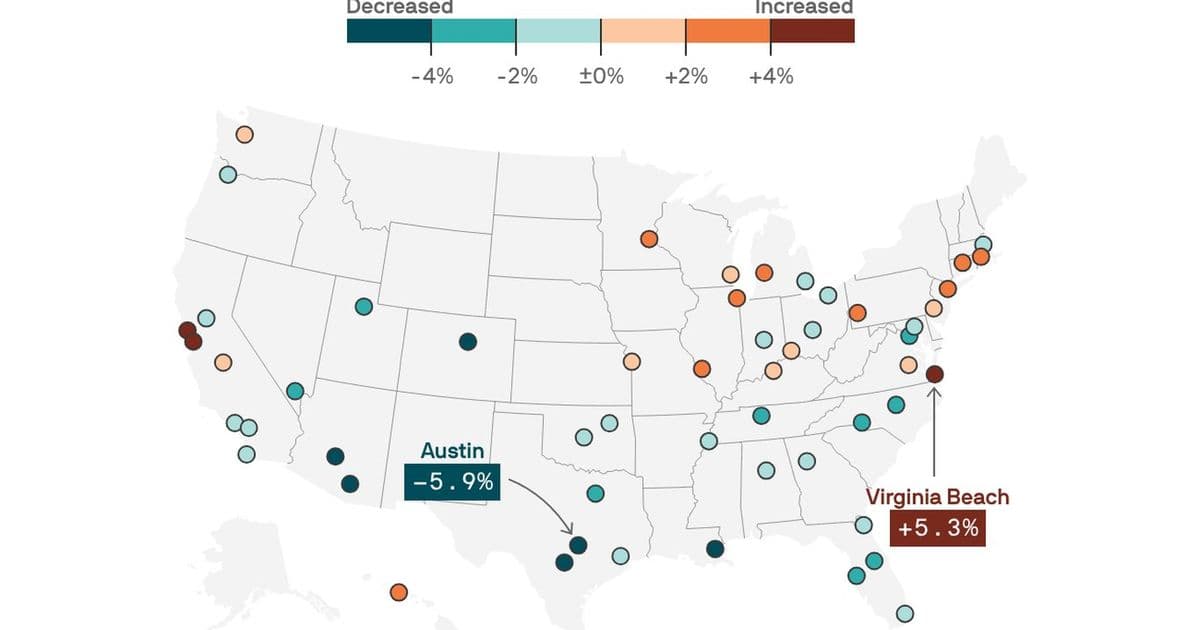
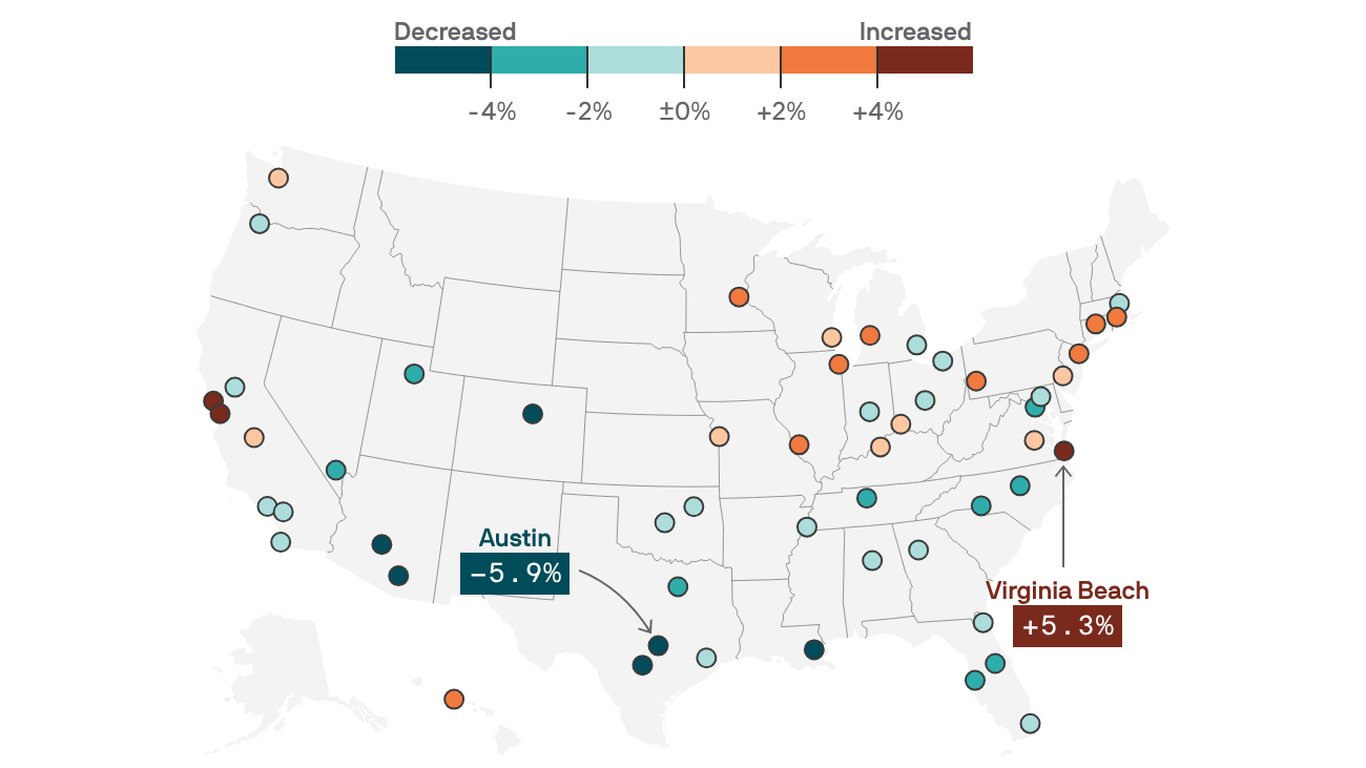
Rental prices are shifting dramatically across U.S. cities, with some markets seeing double-digit declines while others surge, creating new opportunities and challenges for renters and investors alike.
Rental markets across the United States are experiencing unprecedented volatility, with some cities seeing dramatic price drops while others continue to surge. This divergence reflects broader economic shifts, changing work patterns, and regional demographic trends that are reshaping where Americans choose to live.
The biggest rent declines
Several major metropolitan areas have witnessed substantial rent decreases over the past year. San Francisco leads the nation with rents falling by approximately 15% year-over-year, as the tech industry's remote work policies and high cost of living drive residents to more affordable regions. New York City follows closely with declines of around 12%, particularly in Manhattan, where office vacancies and reduced tourism have dampened demand for both residential and commercial space.
Other cities experiencing significant drops include Seattle (-10%), Boston (-8%), and Washington D.C. (-7%). These tech and government-centric hubs have been particularly affected by hybrid work arrangements that allow professionals to relocate without changing jobs.
Markets where rents continue to rise
Conversely, several Sun Belt cities are seeing rental prices soar as population migration accelerates. Austin, Texas, tops the list with year-over-year increases exceeding 20%, driven by an influx of tech companies and remote workers seeking lower costs and warmer climates. Phoenix follows with approximately 18% growth, while Tampa and Miami both report increases around 16%.
These markets benefit from strong job growth, relatively affordable housing compared to coastal cities, and attractive lifestyle amenities. The combination has created intense competition for rental properties, pushing prices to new heights.
Regional patterns emerging
The data reveals clear regional trends. The Northeast and West Coast are dominated by declining markets, while the South and Mountain West show consistent growth. This geographic split reflects broader economic transformations, including the decentralization of tech industries, climate considerations, and cost-of-living pressures.
Mid-sized cities in the Southeast and Texas are particularly hot, with rents rising by 10-15% annually. Cities like Charlotte, Nashville, and Raleigh are attracting both corporate relocations and individual movers, creating sustained demand pressure.
What's driving these changes
Several factors contribute to this divergent rental landscape. Remote work remains the primary catalyst, allowing workers to separate their residence from their workplace. This flexibility has particularly benefited lower-cost cities while challenging expensive urban centers.
Immigration patterns also play a role, with international migration concentrated in certain gateway cities while domestic migration flows toward Sun Belt destinations. Additionally, construction costs and housing supply constraints in some markets limit the ability to absorb demand through new development.
Implications for renters and investors
For renters, these trends create both opportunities and challenges. Those in declining markets may find better deals and more negotiating power, while renters in growing markets face increased competition and higher costs. The ability to relocate has become a valuable tool for managing housing expenses.
Investors are adapting strategies accordingly. Some are divesting from coastal markets in favor of Sun Belt opportunities, while others see value in acquiring properties in temporarily depressed markets with potential for recovery. The key is understanding local economic drivers and demographic trends.
Looking ahead
The rental market volatility appears likely to continue through 2024, though at potentially moderating rates. As remote work policies stabilize and migration patterns settle, some of the most extreme price movements may ease. However, the fundamental reshaping of where Americans choose to live suggests these regional patterns will persist.
Cities experiencing declines may see stabilization as prices become more attractive relative to other options, while rapidly growing markets could face affordability challenges that eventually cool demand. The rental market's evolution will continue to reflect broader economic and social transformations reshaping American life.
Comments
Please log in or register to join the discussion