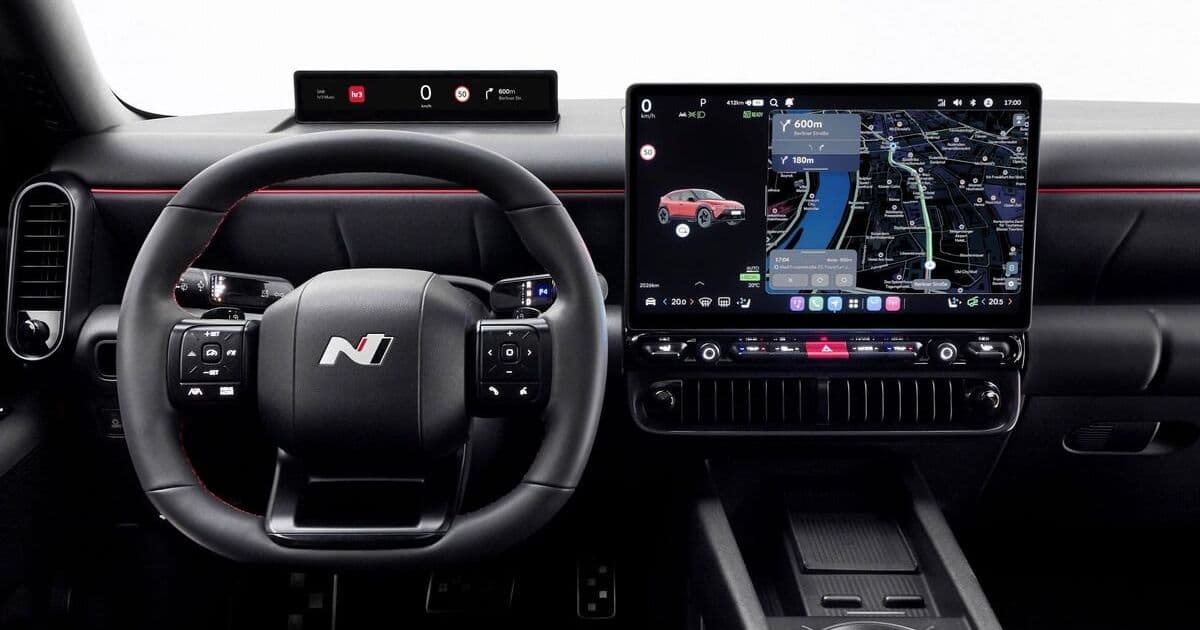
Hyundai's upcoming Pleos Connect infotainment system with the Gleo AI assistant represents a significant attempt by traditional automakers to compete with tech giants in the vehicle AI space. As the Grandeur sedan prepares for its South Korean debut in May 2026, industry observers are watching closely to see if Hyundai can bridge the gap between automotive and AI expertise.
The automotive industry has long been playing catch-up to tech companies when it comes to software and AI integration in vehicles. Hyundai's recent unveiling of the Pleos Connect infotainment system with its Gleo AI voice assistant marks a notable attempt by a traditional automaker to level the playing field. Scheduled to debut in May on the new Grandeur sedan in South Korea, this system represents Hyundai's most ambitious effort yet to create a seamless, intelligent in-car experience that can compete with offerings from Tesla, Google, and Amazon.
The Pleos Connect system appears to be Hyundai's response to growing consumer expectations for more sophisticated AI assistants in vehicles. As cars become increasingly connected and software-defined, the quality of in-car AI has become a key differentiator in the market. Hyundai's decision to develop its own proprietary AI assistant rather than licensing existing solutions from tech companies suggests a strategic bet on building unique brand value through software innovation.
What makes Pleos Connect particularly interesting is its integration with vehicle systems beyond basic navigation and entertainment. Early reports indicate that Gleo can control complex vehicle functions, adjust suspension settings, manage battery usage in electric models, and even provide maintenance reminders based on driving patterns. This level of integration suggests Hyundai is aiming for a holistic approach to in-car AI that goes beyond the voice-controlled interfaces currently offered by competitors.
Industry analysts note that Hyundai's approach with Pleos Connect reflects a broader trend of traditional automakers attempting to reclaim control of the in-car experience. Companies like Mercedes with MBUX, BMW with iDrive, and Ford with Sync have all been investing heavily in proprietary infotainment systems. However, Hyundai's entry into this space comes at a time when consumer expectations have been elevated by experiences with consumer AI products like Alexa, Google Assistant, and Siri.
The development of Gleo AI appears to be part of Hyundai's broader strategy to position itself as a technology-forward automaker. The company has been investing heavily in robotics, autonomous driving technologies, and now AI assistants. This represents a significant shift from the traditional automotive focus on mechanical engineering to a more balanced approach that emphasizes software and AI capabilities.
Community sentiment around Pleos Connect has been cautiously optimistic. Automotive enthusiasts appreciate Hyundai's apparent focus on deep integration with vehicle systems, while tech observers are interested to see how Gleo compares to established AI assistants in terms of natural language understanding and contextual awareness. Some early testers have noted that Gleo demonstrates impressive understanding of vehicle-specific commands, though its general knowledge capabilities may still lag behind dedicated AI platforms.
From a technical perspective, Pleos Connect appears to leverage Hyundai's acquisition of AI companies and partnerships with technology firms. The system reportedly runs on a custom automotive-optimized AI chip rather than relying solely on cloud processing, which could enable faster response times and better functionality in areas with limited connectivity. This hardware-software integration approach mirrors strategies employed by Tesla and other tech-forward automakers.
However, significant challenges remain for Hyundai and other traditional automakers entering the AI space. Building a competitive AI assistant requires not just technical expertise but also vast amounts of training data and continuous improvement cycles. Tech companies like Google, Amazon, and Microsoft have years of experience refining their AI assistants through billions of interactions, a learning curve that automotive manufacturers are still climbing.
Another concern is the potential for over-reliance on AI systems in critical vehicle functions. While voice assistants can enhance convenience, there are safety considerations when AI systems control vehicle systems. Hyundai will need to carefully balance innovation with reliability, ensuring that Pleos Connect enhances rather than complicates the driving experience.
Competitors are watching Hyundai's move closely. Tesla, with its over-the-air update capabilities and deep integration of software with vehicle hardware, has set a high bar for what consumers expect from in-car AI. Meanwhile, traditional luxury brands like Mercedes and BMW have been gradually improving their voice assistants but still struggle with the natural language understanding that has become standard in consumer devices.
The success of Pleos Connect may depend on Hyundai's ability to create an AI assistant that feels both intelligent and automotive-native. Unlike consumer AI assistants that need to be general-purpose, a vehicle AI can focus on automotive-specific tasks while still providing useful general information. This focused approach could give Hyundai an advantage if executed properly.
Industry observers also note that Hyundai's South Korean debut of Pleos Connect on the Grandeur sedan represents a strategic choice. The Grandeur is Hyundai's flagship sedan in South Korea, positioned similarly to the Genesis brand in other markets. By launching its most advanced AI system on this model, Hyundai is signaling its commitment to technological leadership while testing the waters before potentially rolling out Pleos Connect to other markets and models.
The automotive AI market is expected to grow significantly in the coming years, with estimates suggesting that over 70% of new vehicles will have some form of integrated AI assistant by 2030. This growth presents both opportunities and challenges for traditional automakers like Hyundai, which must balance their core competency in vehicle manufacturing with the rapidly evolving demands of software and AI.
As Hyundai prepares to launch Pleos Connect in South Korea, the industry will be watching for signs of how traditional automakers can compete with tech companies in the AI space. If successful, Hyundai's approach could influence how other automakers develop their own AI strategies, potentially leading to a new era of innovation in automotive software.
Ultimately, the introduction of Pleos Connect represents more than just a new infotainment system—it signals Hyundai's ambition to transform from a traditional vehicle manufacturer into a technology company that happens to make cars. In an industry increasingly defined by software rather than hardware, this could be the most significant shift in Hyundai's history.
Comments
Please log in or register to join the discussion