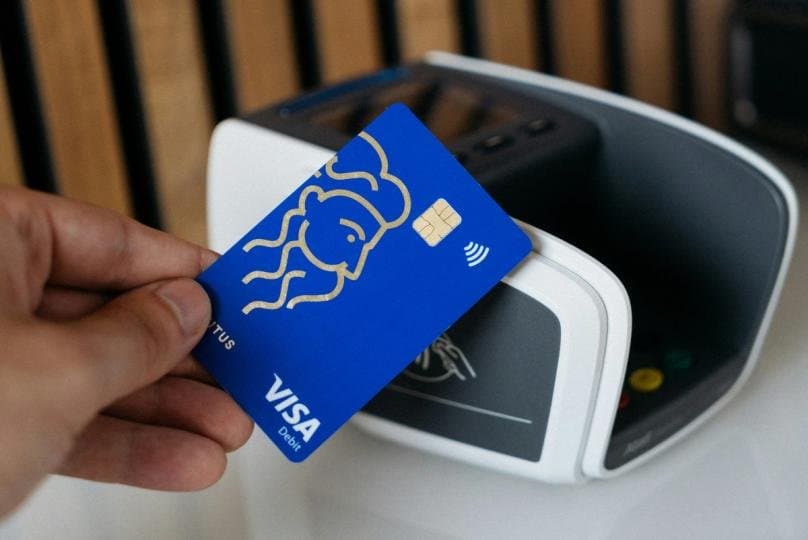
Visa expands its stablecoin settlement infrastructure to support nine blockchain networks, achieving significant transaction volume as traditional financial institutions increasingly explore digital asset settlement.
Visa has announced that its stablecoin settlement pilot now supports nine blockchain networks and has reached a $7 billion annualized run rate, signaling growing institutional adoption of digital assets for cross-border payments. The payments giant added support for several notable networks including Stripe's Tempo, Circle's Arc, Coinbase's Base, Polygon, and Canton Network.
The pilot represents Visa's continued exploration of blockchain technology for settlement purposes, leveraging the efficiency benefits of stablecoins—cryptocurrencies pegged to fiat currencies like the US dollar—for global money movement. By supporting multiple networks, Visa aims to create a more interconnected ecosystem for digital asset settlements.
Technical Implementation
Visa's stablecoin settlement infrastructure appears designed to bridge traditional finance with blockchain networks. The system likely facilitates the conversion between fiat currencies and stablecoins, enabling settlement across different blockchain environments while maintaining compliance with regulatory requirements.
The inclusion of multiple networks suggests a multi-chain approach rather than being tied to a single blockchain. This strategy provides flexibility and potentially better performance characteristics depending on the use case. For instance, Polygon might be used for faster, lower-cost settlements, while Canton Network could be leveraged for institutional DeFi applications requiring stronger security guarantees.
Network Significance
The supported networks represent different approaches to blockchain scalability and functionality:
- Base: Coinbase's Layer 2 solution built on Ethereum, offering lower fees and faster transactions
- Polygon: An established Layer 2 scaling solution with broad DeFi integration
- Canton Network: A privacy-focused permissioned blockchain designed for institutional DeFi
- Arc: Circle's solution for USDC settlement and programmability
- Tempo: Stripe's blockchain infrastructure for payments
Each network brings different technical advantages to Visa's settlement ecosystem, allowing the company to tailor solutions to specific payment requirements.
Financial Context
A $7 billion annualized run rate indicates substantial transaction volume flowing through Visa's stablecoin settlement system. This figure represents the annualized value of transactions processed if current volume were maintained over a full year.
To put this in perspective, Visa processed $3.2 trillion in payment volume in Q1 2026 alone, meaning stablecoin settlements currently represent a small but rapidly growing portion of their total payment processing. However, the $7 billion annualized run rate suggests stablecoin settlements are growing at a faster pace than Visa's overall payment volume, which grew 17% year-over-year in the first quarter.
The pilot's growth trajectory indicates that financial institutions are increasingly comfortable using digital assets for settlement, potentially driven by the efficiency gains and 24/7 settlement capabilities that blockchain technology provides.
Regulatory Considerations
Visa's entry into the stablecoin space comes at a time when regulators are developing frameworks for digital asset settlement. The company's approach appears to prioritize compliance, focusing on regulated stablecoins like USDC and settlement networks that meet regulatory standards.
The Federal Reserve's recent Project Agorathon, which explored central bank digital currencies (CBDCs), and the ongoing development of regulatory frameworks for stablecoins suggest that traditional financial institutions like Visa are positioning themselves to operate within emerging regulatory structures.
Limitations and Challenges
Despite the impressive run rate, several challenges remain for Visa's stablecoin settlement initiative:
Network Interoperability: While supporting multiple networks is beneficial, ensuring seamless interoperability between different blockchains remains technically complex.
Regulatory Uncertainty: The regulatory environment for digital assets continues to evolve, which could impact the long-term viability of the settlement system.
Adoption Barriers: Many financial institutions and merchants remain hesitant to adopt blockchain-based settlement due to concerns about volatility, security, and operational complexity.
Competition: Traditional payment networks and fintech companies are also exploring blockchain-based solutions, creating a competitive landscape that could limit market share.
Broader Implications
Visa's expansion into stablecoin settlements reflects a broader trend of traditional financial institutions embracing blockchain technology. The company's approach differs from that of some crypto-native firms by focusing on bridging existing payment systems with blockchain rather than creating entirely new financial infrastructure.
The $7 billion annualized run rate suggests that institutional adoption of digital assets for settlement is accelerating, potentially driven by the efficiency gains and reduced settlement times that blockchain technology provides. This trend could eventually lead to a more interconnected global payments system where traditional and digital asset settlements coexist and interoperate.
As Visa continues to develop its stablecoin settlement infrastructure, the company will likely face challenges in balancing innovation with regulatory compliance. However, the growing transaction volume indicates that the market is increasingly ready for blockchain-based settlement solutions, particularly for cross-border payments where traditional systems often face limitations.
For more information on Visa's blockchain initiatives, you can visit their official innovation page. Details about the specific networks mentioned are available through their respective documentation: Base, Polygon, Canton Network, Arc, and Tempo.
Comments
Please log in or register to join the discussion