
Google is breaking from its traditional model of keeping its custom Tensor Processing Units (TPUs) exclusively for internal use and Google Cloud customers, announcing plans to sell the specialized AI chips directly to select external customers. This strategic move comes amid soaring demand for AI hardware and represents a significant diversification of Google's revenue streams.
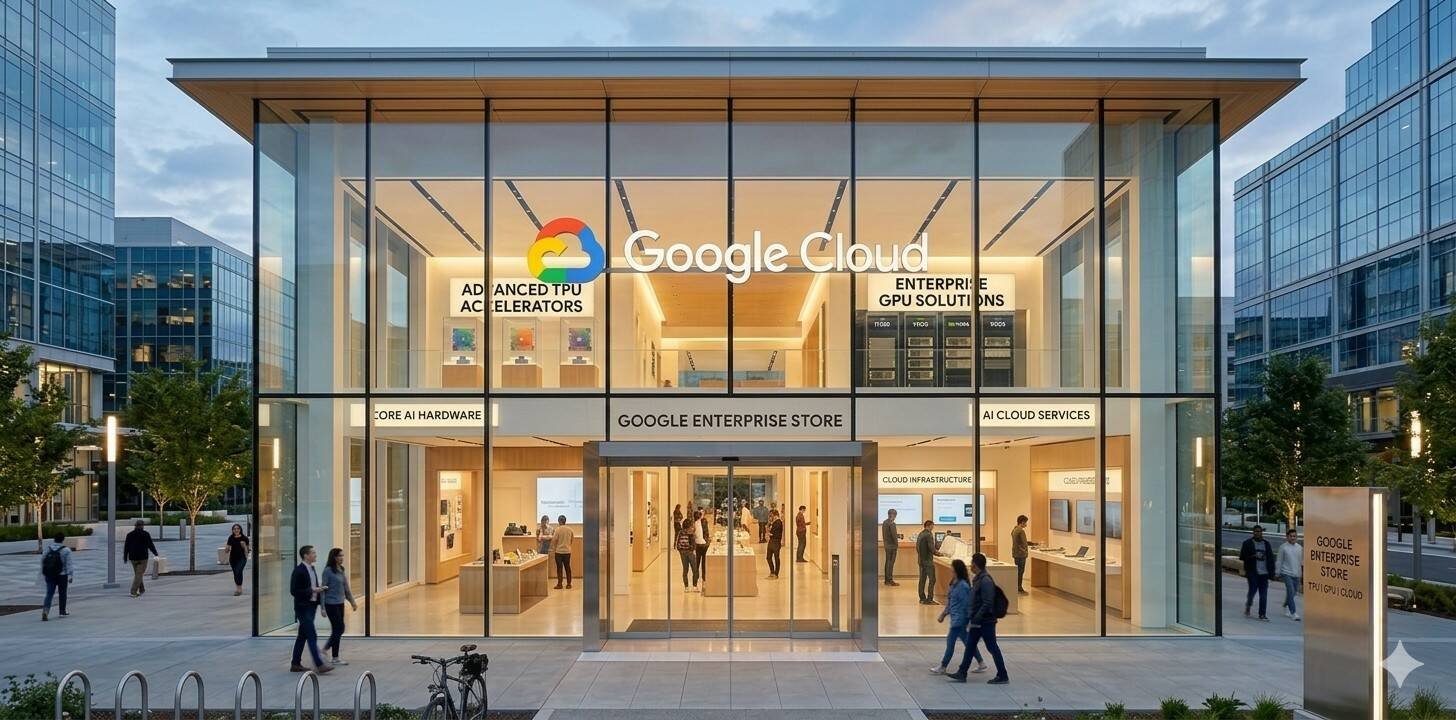
Google has announced a major shift in its hardware business strategy, confirming plans to sell its custom-designed Tensor Processing Units (TPUs) to select external customers who want to deploy the specialized AI chips in their own data centers. The decision, revealed during Alphabet's Q1 2026 earnings call, marks a significant departure from Google's previous practice of keeping its TPUs primarily for internal use and through Google Cloud services.
"We have observed growing demand for TPUs from 'AI labs, capital markets firms and high-performance computing applications' and will therefore 'begin to deliver TPUs to a select group of customers in their own data centers,'" CEO Sundar Pichai stated during the earnings call. The announcement comes as artificial intelligence continues to drive unprecedented demand for specialized computing hardware.
The move positions Google to compete more directly with other chip manufacturers and cloud providers in the rapidly expanding AI hardware market. Pichai noted that some customers have shown "massive interest in our GPU offerings as well," suggesting Google may be planning a broader expansion of its hardware sales beyond TPUs.
Financial Implications and Strategic Rationale
While the direct revenue from TPU sales may be modest initially, Chief Financial Officer Anat Ashkenazi confirmed that Google will record some revenue from TPU sales in 2026, with more significant impact expected in 2027. She cautioned, however, that "revenues from TPU hardware sales will fluctuate from quarter to quarter depending on when TPUs are shipped to customers."
Beyond immediate revenue concerns, Pichai outlined the strategic benefits of selling TPUs directly to customers. The move will help fund research on next-generation silicon and create economies of scale that make it easier for Google to build hardware for its own use. This dual-purpose approach—serving both external customers and internal needs—represents a sophisticated evolution of Google's hardware strategy.
The timing of this announcement is particularly noteworthy. Amazon Web Services recently teased the possibility of selling its homegrown chips to third-party customers, suggesting a potential industry shift toward cloud providers monetizing their custom silicon innovations. Given the intense demand for AI processing power, the market likely has room for multiple players, including both Google and AWS.
Google Cloud's Strong Performance Despite Limited Hardware Sales
The decision to sell TPUs externally comes as Google Cloud continues its strong performance trajectory. For Q1 2026, Google Cloud reported revenue of just over $20 billion, representing 63% growth compared to $12.26 billion in the same quarter of 2025. Pichai acknowledged that the cloud division could have performed even better if Google had been able to build sufficient infrastructure to meet customer demand.
The company currently holds a $460 billion backlog of undelivered contracts, nearly doubling quarter over quarter. Ashkenazi indicated that Google expects to recognize just over half of this backlog as revenue within the next 24 months. If achieved, this would translate to annual revenue exceeding $130 billion—bringing Google Cloud closer to AWS's $150 billion annual revenue run rate.
Massive Infrastructure Investment for AI Expansion
Google's commitment to AI extends beyond chip sales. The company reported capital expenditure of $35.7 billion for the quarter, with the "overwhelming majority" allocated to "technical infrastructure to support the AI opportunities we see across the company." According to Ashkenazi, approximately 60% of this investment went to servers, while 40% was allocated to data centers and networking equipment.
The company has also revised its capital expenditure forecast upward, from $175 billion to $185 billion to a new range of $180 billion to $190 billion. Ashkenazi attributed part of this increase to the needs of Intersect, an energy and infrastructure business that Google acquired earlier in 2026.
AI-Driven Growth Across Google's Business
Contrary to early concerns that generative AI might divert users away from traditional search, Google is experiencing the opposite effect. Pichai highlighted "AI experiences driving usage, queries at an all-time high, and 19 percent revenue growth" in search. The integration of AI has also improved the relevance of ads served to users, leading to increased engagement from advertisers.
Overall, Alphabet reported quarterly revenue of $109.9 billion, up 22% year-over-year, with net income reaching $62.6 billion. These strong results pleased investors, who sent Alphabet shares 3.7% higher in after-hours trading.
Implications for Users and Organizations
For organizations requiring specialized AI processing capabilities, Google's decision to sell TPUs directly offers an alternative to traditional cloud-based AI services or other hardware solutions. However, the "select group of customers" language suggests that availability may be limited initially, potentially favoring large enterprises with substantial AI workloads and the resources to deploy and maintain specialized hardware infrastructure.
The expansion of TPU sales to external customers represents a significant evolution in Google's business strategy. By monetizing its custom silicon innovations directly, Google is not only creating new revenue streams but also potentially reshaping the competitive landscape of AI hardware. As demand for specialized AI processing continues to grow, this move could position Google as a major player in both the cloud services and semiconductor markets.
As the AI arms race intensifies among tech giants, Google's TPU sales strategy could become a key differentiator in the competition to dominate both AI infrastructure and the applications built upon it. The coming years will likely see further innovation in specialized AI chips as companies like Google, AWS, and others continue to invest heavily in the hardware that powers artificial intelligence.
For more information about Google's TPUs, you can visit the Google Cloud TPU documentation.
Comments
Please log in or register to join the discussion