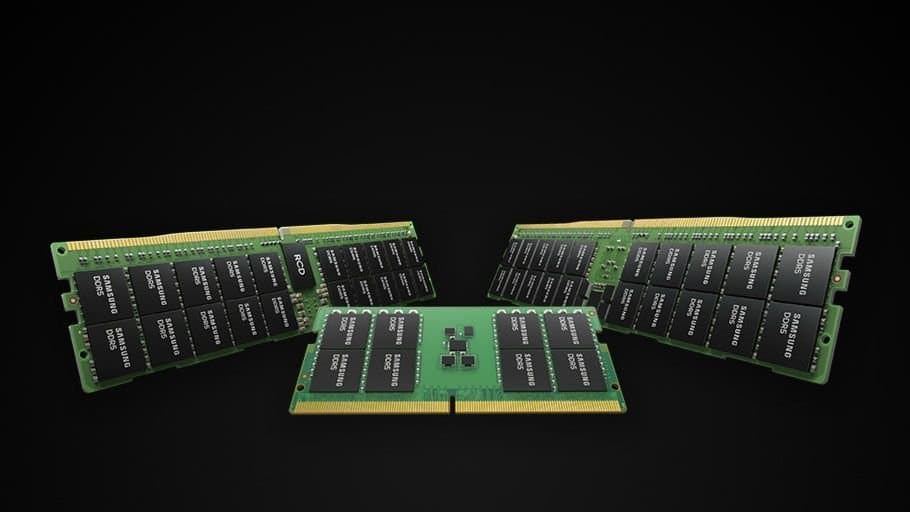
The world's two largest memory manufacturers project multi-year shortages as AI infrastructure drives unprecedented demand for high-bandwidth memory, with customers already reserving supply years in advance.
Samsung and SK hynix have issued stark warnings that memory product shortages will continue through at least 2027, with some projections extending even further as artificial intelligence infrastructure drives unprecedented demand for specialized memory components.
In Samsung's full earnings report released on April 30, 2026, the company's memory chief Kim Jaejune stated that "significant shortages" across memory products are expected to persist for the foreseeable future. According to the company, demand fulfillment rates have fallen to record lows as customers scramble to secure future supply. This warning closely mirrors comments made by rival SK Hynix during its earnings call just a week earlier.
Together with US-based Micron Technology, Samsung and SK hynix control well over 90% of the global DRAM market. When two of the world's three biggest memory suppliers simultaneously warn of multi-year shortages, the implications for the entire tech industry are substantial.
The AI Memory Revolution
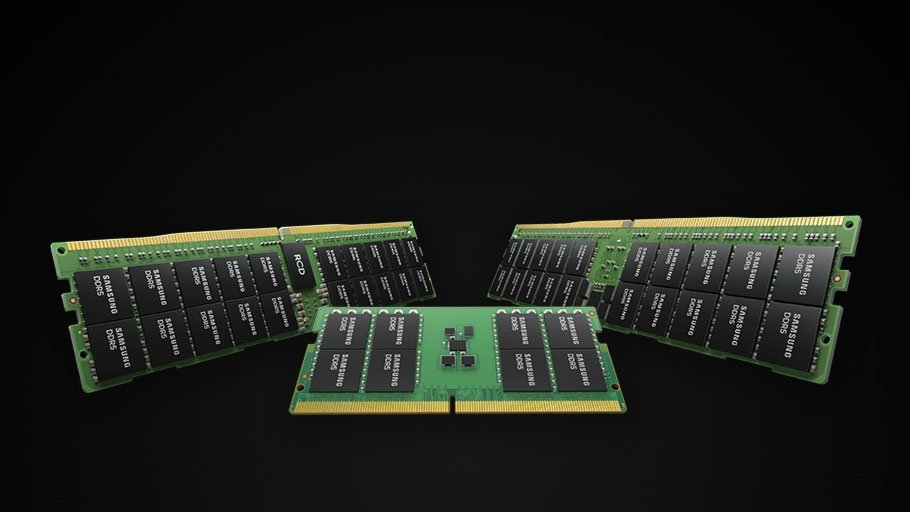
The shortages are being driven largely by the explosive growth of artificial intelligence infrastructure. Modern AI systems require enormous amounts of high-speed memory to continuously feed data to GPUs and accelerators. At the center of this demand surge is HBM (high-bandwidth memory), a vertically stacked form of DRAM designed to deliver extremely high bandwidth while remaining physically close to processors.
HBM has become critical for AI accelerators, with NVIDIA's H100 and AMD's Instinct MI300X processors relying heavily on this technology. However, the manufacturing process is exceptionally complex and expensive, requiring advanced die stacking, precision bonding, and sophisticated packaging techniques. As a result, supply is severely limited, and demand is far outpacing manufacturers' ability to build capacity.
"The transition to AI has fundamentally changed memory demand patterns," said Kim Jaejune during Samsung's earnings call. "We're seeing customers requesting capacity that extends beyond our current planning horizons, which is unprecedented in our industry's history."
Supply Chain Reallocation and Market Tightening
While the shortage is driven primarily by HBM demand, its effects are beginning to spill over into the broader memory market. Because HBM itself is a form of DRAM, manufacturers are increasingly reallocating manufacturing capacity, engineering resources, and investment toward high-margin AI memory products.
That shift risks tightening supply for more conventional DRAM products used in servers, PCs, and mobile devices. Enterprise SSD demand is also rising as AI data centers require massive storage infrastructure alongside compute hardware. The result is a cascading effect across the entire memory ecosystem.
"We're seeing demand pressure across all memory segments," explained an SK Hynix executive during their earnings presentation. "While HBM is clearly the primary driver, the entire industry is feeling the strain as capacity gets redirected to support AI infrastructure."
Customer Response and Market Dynamics
Samsung reportedly stated that some customers have already secured supply allocations through 2027, effectively reserving capacity years in advance. Earlier this year, SK Group chairman Chey Tae-won suggested that AI-related memory demand pressure may persist even toward 2030.
The shortages are not necessarily bad news for the memory manufacturers themselves. Samsung's semiconductor division posted 53.7 trillion won ($36.1 billion) in operating profit during the first quarter of 2026, accounting for roughly 94% of the company's total quarterly profit as soaring AI memory demand drove record sales. Meanwhile, SK hynix reported record quarterly revenue of 52.6 trillion won ($35.5 billion), and operating profit of 37.6 trillion won ($27.8 billion), fueled largely by booming HBM sales for AI infrastructure.

Manufacturing Challenges and Investment
Part of the problem is cyclical. The memory industry has historically swung between oversupply and shortages. However, analysts increasingly believe this cycle is different, as growth in AI infrastructure is consuming hardware at unprecedented rates.
To address the crisis, the companies are aggressively expanding production capacity and increasing investment in advanced packaging and memory fabrication. According to the Korea Times, recent regulatory filings show that Samsung Electronics invested 465.4 billion won in its Xi'an memory chip plant in 2025, a 67.5% year-over-year increase. SK hynix also significantly increased spending, investing 581.1 billion won into its Wuxi facilities and 440.6 billion won into its Dalian operations.
However, semiconductor fabrication plants and advanced memory packaging facilities take years to expand and ramp up. Building new fabs can take 2-3 years from planning to full production, while advanced packaging facilities require specialized equipment and highly trained technicians. This means supply growth cannot catch up to the pace of AI-driven demand.
"The lead times for memory capacity expansion are measured in years, while AI deployment is happening in months," noted an industry analyst. "This fundamental mismatch is why we're seeing such extended shortage projections."
Broader Impact on the AI Ecosystem
The memory crunch is joining a growing list of resource shortages emerging from the AI explosion. GPU shortages have already become severe across parts of the industry. Earlier this month, we reported Intel's confirmation that extreme demand had become so intense that customers were even buying chips that might previously have been discarded or treated as low-value products.
Power is becoming another major bottleneck. AI data centers are consuming enormous amounts of electricity, forcing technology companies to seek increasingly unconventional energy solutions. Earlier this month, Meta Platforms backed plans involving space-based solar power systems that could theoretically beam solar energy back to Earth to help support future AI infrastructure demands.
As the industry searches for alternatives, researchers are developing next-generation memory technologies such as 3D X-DRAM and ZAM (Z-Angle Memory), which aim to reduce power consumption and ease scaling limitations. Yet despite massive investment into future alternatives, demand for existing memory technologies remains overwhelming.
For now, the memory industry appears to be entering a new era of sustained high demand, with AI infrastructure serving as the primary driver. As companies like Samsung and SK hynix work to expand capacity, the tech industry at large will need to adapt to a reality where memory resources are increasingly scarce and valuable.
Comments
Please log in or register to join the discussion