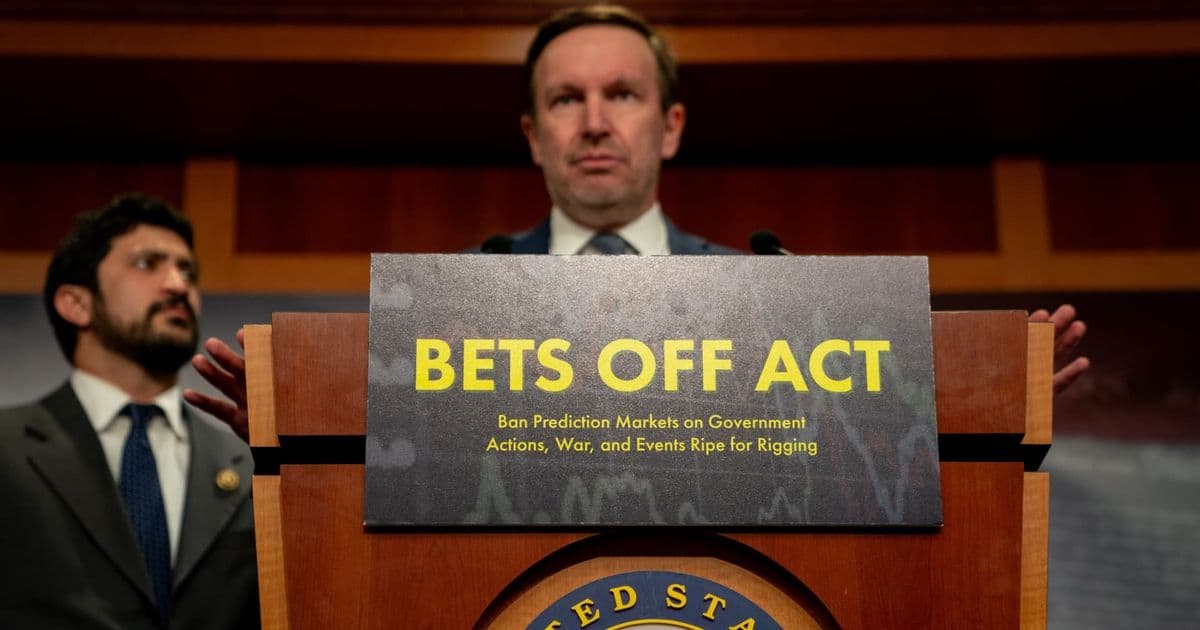
The US Senate unanimously passed a rule prohibiting senators from trading on prediction platforms like Kalshi and Polymarket, citing concerns about insider trading and market integrity in these AI-driven prediction systems.
The US Senate on Thursday unanimously passed a rule barring senators from trading on prediction markets effective immediately, marking a significant regulatory move in the rapidly evolving landscape of AI-powered prediction platforms.
Prediction markets like Kalshi and Polymarket use sophisticated algorithms and machine learning models to aggregate information and predict outcomes of various events, from political elections to policy decisions. These platforms have gained significant attention in recent years for their ability to forecast events with surprising accuracy, often outperforming traditional polling methods.
"The Senate's action reflects growing concerns about the intersection of political insider information and AI-driven prediction markets," said Dr. Elena Rodriguez, a technology policy expert at the Brookings Institution. "When individuals with access to non-public information trade on these platforms, it undermines the fundamental premise of prediction markets as information aggregators."
The rule specifically targets senators who might have access to confidential information that could influence predictions on these platforms. Prediction markets operate by allowing users to buy and sell shares based on their belief that a particular event will or won't occur. The market price then reflects the collective wisdom of participants, with AI algorithms constantly adjusting predictions based on new information and trading patterns.
"These platforms represent an interesting case study in how AI is being applied to financial markets," noted Michael Chen, a machine learning researcher at Stanford. "They combine elements of prediction algorithms, game theory, and market dynamics in ways that weren't possible before the advent of modern machine learning."
The regulation comes amid increasing scrutiny of AI systems that influence financial markets. Unlike traditional stock markets, prediction markets often operate in regulatory gray areas, with platforms like Kalshi operating under specific regulatory exemptions while others like Polymarket have faced legal challenges over their compliance with securities laws.
"The Senate's action is a recognition that these markets, while technologically innovative, require appropriate guardrails," said Sarah Jenkins, a former SEC commissioner now at a tech policy think tank. "The challenge will be crafting regulations that protect market integrity without stifling innovation in this emerging field."
The ban raises questions about how other government officials and political figures might be regulated in their use of prediction markets. Some experts suggest this could be the first step toward broader regulatory frameworks for AI-powered prediction platforms as they continue to grow in popularity and influence.
For now, the Senate's unanimous vote sends a clear message that political figures cannot leverage their position to profit from information asymmetry in these increasingly sophisticated AI-driven prediction systems.
Comments
Please log in or register to join the discussion