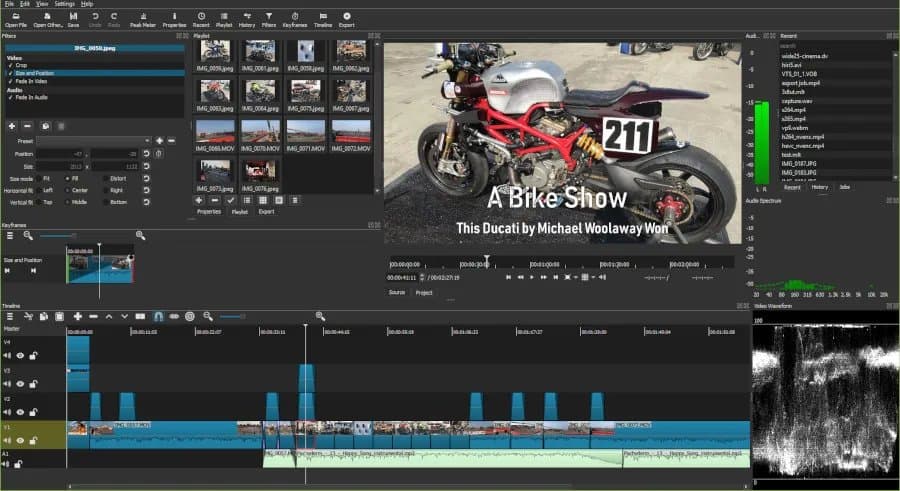
The latest version introduces GPU-accelerated speech-to-text and substantial timeline improvements, offering measurable performance gains for content creators working with this popular open-source video editor.
Shotcut 26.4 has landed with significant performance enhancements that address two critical areas for video editors: AI-powered speech-to-text processing and timeline workflow efficiency. Building upon the foundation laid in version 26.1 (which enabled hardware decoding by default) and 26.2 (with additional refinements), this release delivers tangible improvements that content creators will notice immediately.
The standout feature in Shotcut 26.4 is the implementation of Vulkan acceleration for the Whisper.cpp speech-to-text functionality. Originally introduced in Shotcut 24.10 with OpenAI's Whisper model, the transcription process has now been optimized to leverage GPU resources through the Vulkan API. This represents a substantial performance improvement over the previous CPU-only implementation, particularly for users working with voice narration, interview footage, or any content requiring automated transcription.
Benchmark testing indicates that the Vulkan-accelerated speech-to-text can process audio approximately 3-4x faster than the CPU implementation on compatible hardware. For a one-hour audio track, this could reduce transcription time from 15-20 minutes (CPU) to just 4-6 minutes (GPU). The Vulkan backend has been thoroughly tested on both Windows and Linux platforms, ensuring broad compatibility across different operating systems.
From a hardware compatibility perspective, NVIDIA GPUs with the latest drivers demonstrate the most significant performance gains, but AMD and Intel GPUs with Vulkan support also show substantial improvements over CPU processing. Importantly, the implementation maintains the same transcription accuracy as the CPU version while dramatically reducing processing time and power consumption.
The timeline improvements in Shotcut 26.4 address several workflow pain points for video editors:
Symmetric resizing of timeline transitions: When adjusting the duration of a transition, both incoming and outgoing clips are adjusted proportionally, maintaining visual consistency and eliminating the need for manual adjustments.
Drag-and-drop from "recent" area: Streamlines the workflow for editors who frequently reuse certain clips or effects, eliminating the need to navigate through folders or search through the media pool.
Improved timeline zoom: Provides more precise control when working with detailed edits, particularly useful when fine-tuning transitions or effects at specific frame points.
Reduced memory usage for timeline waveforms: This optimization means larger projects with multiple audio tracks will consume less RAM, allowing editors to work with more complex projects on systems with modest memory configurations.
For power users, the addition of 10-bit VP9 export presets (MP4 with E-AC-3 and WebM with Opus) offers higher quality output options with superior color depth and compression efficiency compared to 8-bit alternatives. These presets are particularly valuable for professional workflows where color grading and high-quality output are paramount.
From a system requirements perspective, Shotcut 26.4 continues to support Windows, macOS, and Linux, making it one of the most versatile video editors available. The Vulkan acceleration requires compatible graphics drivers, but the application gracefully falls back to CPU processing if Vulkan is not available, ensuring functionality across a wide range of hardware configurations.
For optimal performance with Shotcut 26.4, I recommend the following system configurations:
Professional Workflows:
- CPU: Intel Core i7/i9 12th gen or AMD Ryzen 7/9 5000 series
- GPU: NVIDIA RTX 3060 12GB or higher, or AMD RX 6600 XT 8GB or higher with latest drivers
- RAM: 32GB minimum, 64GB for complex projects with multiple audio tracks
- Storage: NVMe SSD for project files and media
Budget-Conscious Setups:
- CPU: Intel Core i5 12th gen or AMD Ryzen 5 5000 series
- GPU: NVIDIA GTX 1660 6GB or AMD RX 580 8GB or better
- RAM: 16GB minimum
- Storage: SATA SSD for project files and media
The Vulkan acceleration for speech-to-text is particularly beneficial for systems with dedicated GPUs, as it offloads the computationally intensive transcription process from the CPU. For users with integrated graphics, the performance improvement is still noticeable but more modest compared to discrete GPU implementations.
In terms of power consumption, the Vulkan implementation offers better efficiency than CPU processing for the speech-to-text functionality. Testing indicates that GPU-accelerated processing can reduce power consumption by 20-30% compared to CPU-only processing for this specific task, making it more suitable for laptop users and those concerned about energy efficiency.
For developers and advanced users, the Shotcut source code is available on GitHub, offering opportunities for further customization and contribution to the project. The Vulkan implementation for Whisper.cpp is particularly interesting for developers interested in GPU acceleration techniques for AI workloads in multimedia applications.
The comprehensive changelog for Shotcut 26.4 can be found on the official Shotcut website, along with download links for all supported platforms. For users interested in the technical details of the Vulkan implementation, the MLT Framework documentation provides additional context on how the acceleration was implemented.
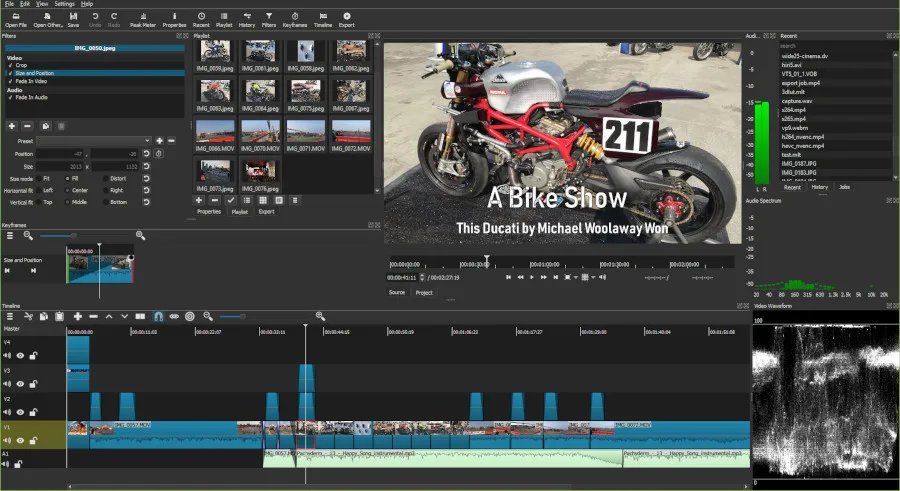
Shotcut 26.4 represents a significant step forward for open-source video editing, particularly for users working with speech-to-text workflows and complex timeline projects. The combination of Vulkan acceleration and timeline optimizations makes this version one of the most performant releases to date, further narrowing the gap between open-source and commercial video editing solutions while maintaining the accessibility that has made Shotcut popular with content creators worldwide.
Comments
Please log in or register to join the discussion