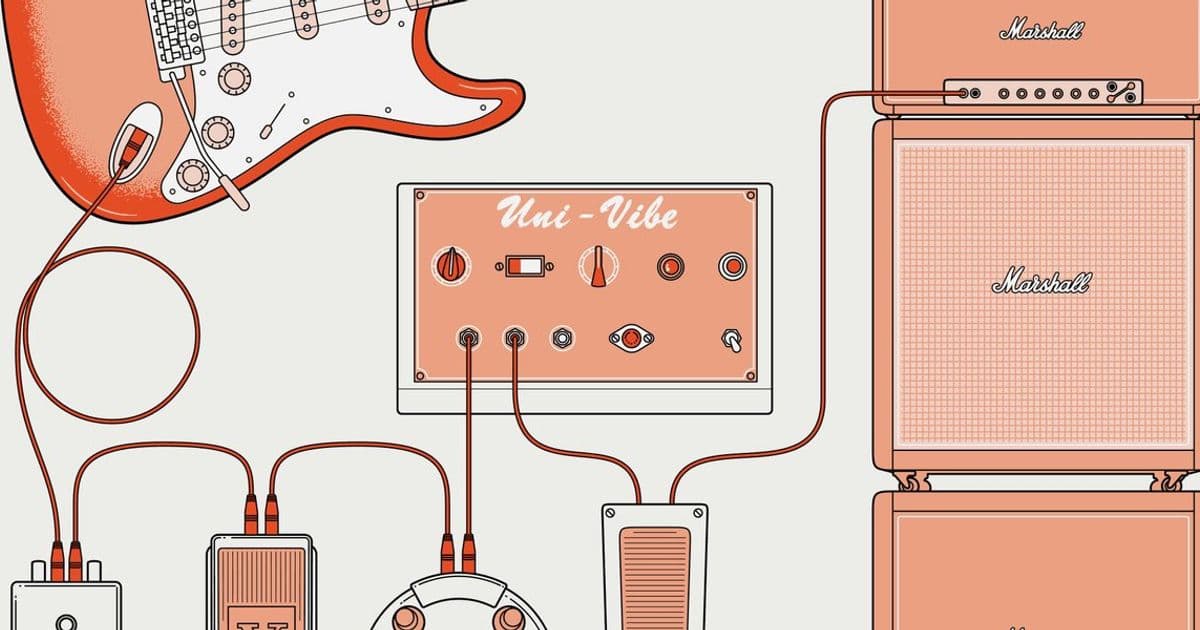
How Jimi Hendrix revolutionized electric guitar through innovative use of analog effects and amplification techniques.
When Jimi Hendrix took the stage at Woodstock in 1969, few could have predicted that his performance would become one of the most iconic moments in rock history. But what made Hendrix's sound so revolutionary wasn't just his virtuosic playing—it was his mastery of analog electronics that transformed the electric guitar into an entirely new instrument.
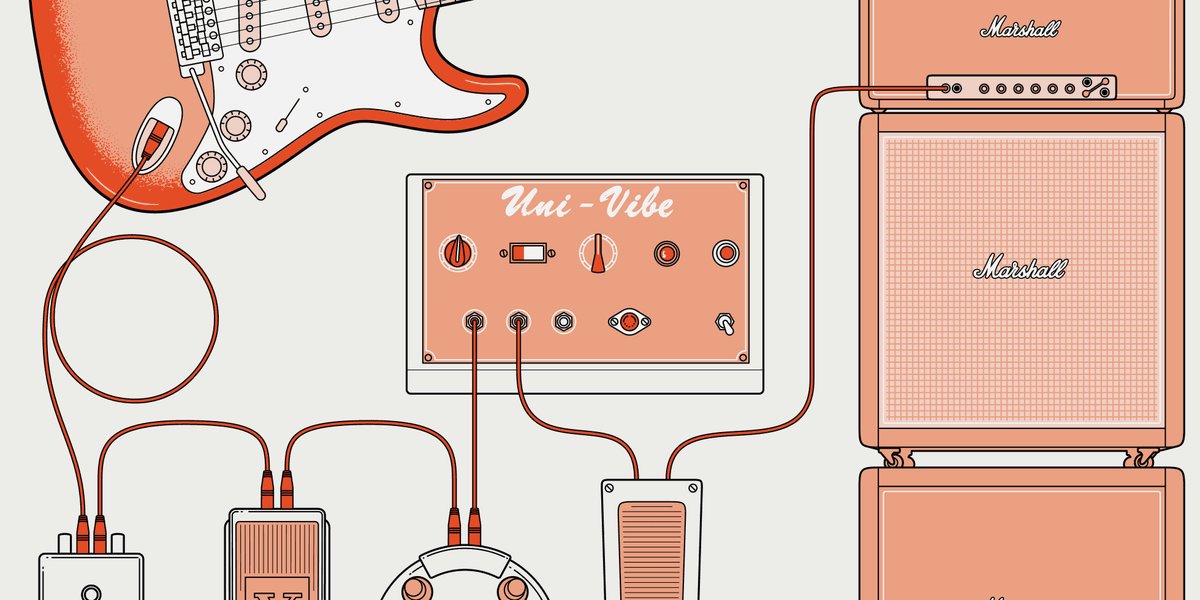
The Science of Feedback and Distortion
At the heart of Hendrix's sound was his innovative use of feedback and distortion. While distortion had been used by blues and rock musicians before him, Hendrix took it to new extremes. By deliberately pushing his amplifiers into their nonlinear regions, he created harmonic overtones that gave his guitar a singing, almost vocal quality.
This technique relies on the physics of vacuum tubes, which were the primary amplification technology in the 1960s. When a tube amplifier is driven hard, the waveform of the signal becomes clipped, creating new frequencies that weren't present in the original input. Hendrix understood this principle intuitively and used it to create sounds that were both aggressive and expressive.
The Fuzz Face and Wah-Wah Pedals
Hendrix's signature sound was also shaped by his use of effects pedals, particularly the Arbiter Fuzz Face and the Vox Wah-Wah pedal. The Fuzz Face, introduced in 1966, used germanium transistors to create a thick, saturated distortion. Unlike modern digital effects, the analog circuitry of the Fuzz Face responded dynamically to playing dynamics, creating a more organic sound.
The Wah-Wah pedal, which Hendrix used extensively on tracks like "Voodoo Child (Slight Return)," works by using a bandpass filter that sweeps across the frequency spectrum as the pedal is rocked back and forth. This creates the characteristic "wah" sound that mimics the human voice. Hendrix's innovative use of the pedal—often in combination with distortion—created sounds that were both rhythmic and melodic.
The Stratocaster's Role
Hendrix's choice of the Fender Stratocaster was also crucial to his sound. The guitar's three single-coil pickups and floating tremolo bridge allowed him to create a wide range of tones and effects. By manipulating the tremolo arm while playing, Hendrix could create pitch bends and vibrato effects that were impossible on other guitars of the era.
The Marshall Stack Revolution
Perhaps no piece of equipment was more important to Hendrix's sound than the Marshall stack. By using multiple 100-watt amplifiers and 4x12" cabinets, Hendrix created a wall of sound that was both powerful and responsive. The high power output allowed him to drive the amplifiers into distortion at high volumes without losing clarity.
This setup also enabled Hendrix to use feedback as a musical element. By standing close to his amplifiers and manipulating his guitar's position relative to the speakers, he could control the pitch and intensity of the feedback, turning what was once considered a nuisance into a powerful expressive tool.
The Legacy of Analog Innovation
Hendrix's approach to the electric guitar was revolutionary because it treated the instrument as a complete system—guitar, effects, and amplification—rather than as separate components. This holistic understanding of analog electronics allowed him to create sounds that were impossible to achieve with the technology of the time.
Today, many of Hendrix's techniques have been digitized and incorporated into modern effects processors. However, many guitarists still prefer the sound of analog effects and tube amplifiers because of their unique characteristics and responsiveness. The subtle variations in tone and the way analog circuits interact with each other create a complexity that is difficult to replicate digitally.
Understanding the Technology
For those interested in exploring Hendrix's techniques, understanding the underlying technology can be helpful. The key components include:
- Vacuum tubes: Create warm, natural distortion when driven hard
- Germanium transistors: Provide a softer, more compressed distortion than silicon
- Analog filters: Create the sweeping effects of wah-wah and other modulation effects
- Feedback loops: Allow the guitar to interact with the amplifier in real-time
By understanding these principles, modern musicians can appreciate not just the artistry of Hendrix's playing, but also the technological innovation that made it possible. His work continues to influence guitarists and audio engineers, demonstrating how creative use of analog electronics can push the boundaries of musical expression.
For those interested in learning more about the technical aspects of Hendrix's sound, resources like Fender's official Stratocaster guide and Marshall's amplifier history provide valuable insights into the equipment that shaped rock history.
Comments
Please log in or register to join the discussion