Cory Doctorow argues that governments worldwide hold an overlooked tool to dismantle Big Tech's monopoly power: repealing anticircumvention laws like the DMCA Section 1201. These laws criminalize modifying tech products, preventing local alternatives that could enforce privacy, enable interoperability, and resist geopolitical coercion. By freeing developers to create competitive tools, nations could achieve 'predistribution'—stopping extraction at its source—rather than fighting losing battles o
For decades, governments have watched helplessly as Big Tech evaded regulations, ignored antitrust rulings, and weaponized market dominance. Canada’s failed news payment scheme, the EU’s GDPR undermined by regulatory capture in Ireland, and toothless monopoly convictions against Google illustrate a grim pattern: redistributive measures (fines, taxes, breakups) consistently fail against corporations richer and more powerful than nation-states.
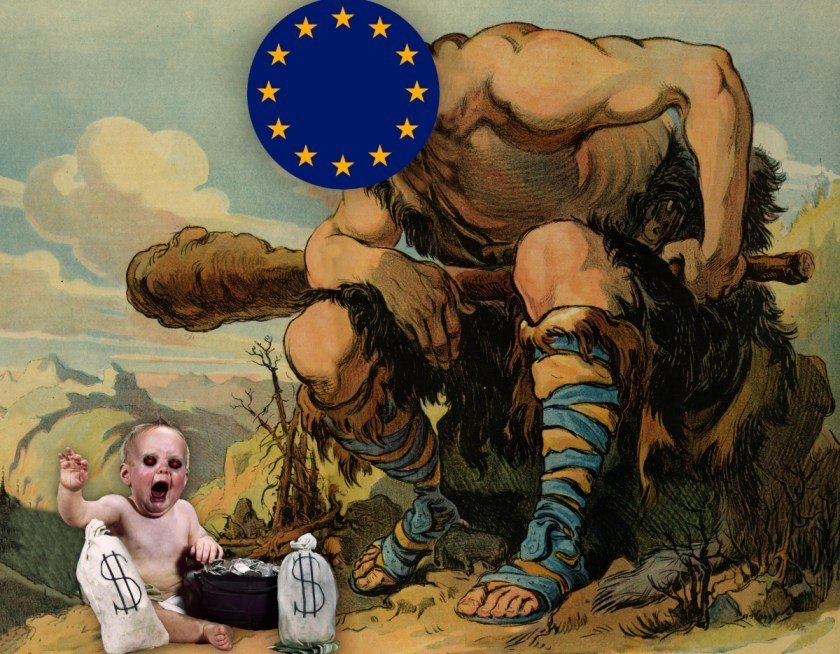
Image: A symbolic depiction of regulatory power dwarfed by tech giants. Alt text: A club-wielding colossus in an animal pelt sits down on a rock, looming over a bawling baby surrounded by money-sacks. The colossus's head has been replaced the with EU flag. The baby's eyes have been replaced with the glaring red eye of HAL 9000.
Yet in a recent Pluralistic post, author and activist Cory Doctorow identifies a potent, underutilized lever: repealing anticircumvention laws. These regulations—pushed globally by the U.S. Trade Representative—criminalize reverse-engineering or modifying software, hardware, and devices. They are the legal backbone preventing:
- Privacy-Enforcing Tools: European developers can’t legally create systems that modify iOS or Android to block commercial surveillance at the OS level, which would automatically enforce GDPR compliance.
- Market Competition: Canadian startups can’t build Meta/Google ad-tech alternatives or ad-blocking social clients, trapping publishers in extractive duopolies.
- Geopolitical Resilience: Repair tools for John Deere tractors (with remote kill switches) or open-source firmware for Chinese-manufactured solar inverters remain illegal, leaving critical infrastructure vulnerable to U.S. or Chinese coercion.
"Anticircumvention law is the reason the EU can’t get its data out of the Big Tech silos that Trump controls," Doctorow writes, highlighting how these laws cement U.S. hegemony by blocking sovereign tech stacks.
Why Predistribution Beats Redistribution
Doctorow contrasts two strategies:
- Redistribution: Taxing profits or mandating interoperability after monopolies form (e.g., forcing Apple to allow sideloading). This faces endless litigation and political pushback.
- Predistribution: Preventing monopolistic extraction entirely by enabling third-party tools that bypass abusive practices. This requires no corporate cooperation—only a government repealing its own anticircumvention statutes.
The Path Forward
While U.S. dominance makes global repeal difficult, Doctorow notes that unilateral action by major economies (EU, UK, Canada) could ignite change:
- Enable local developers to create GDPR-compliant device mods.
- Foster homegrown ad-tech and app store alternatives.
- Secure energy/agricultural infrastructure with owner-controlled firmware.
"Getting rid of anticircumvention laws only requires that governments control their own behavior," Doctorow argues. Freed from these constraints, technologists could erode Big Tech’s power at its foundations—making redistributive battles winnable. It’s a call to shift from regulating monopolies to dissolving their legal armor.
Source: Pluralistic: There's one thing EVERY government can do to shrink Big Tech
Comments
Please log in or register to join the discussion