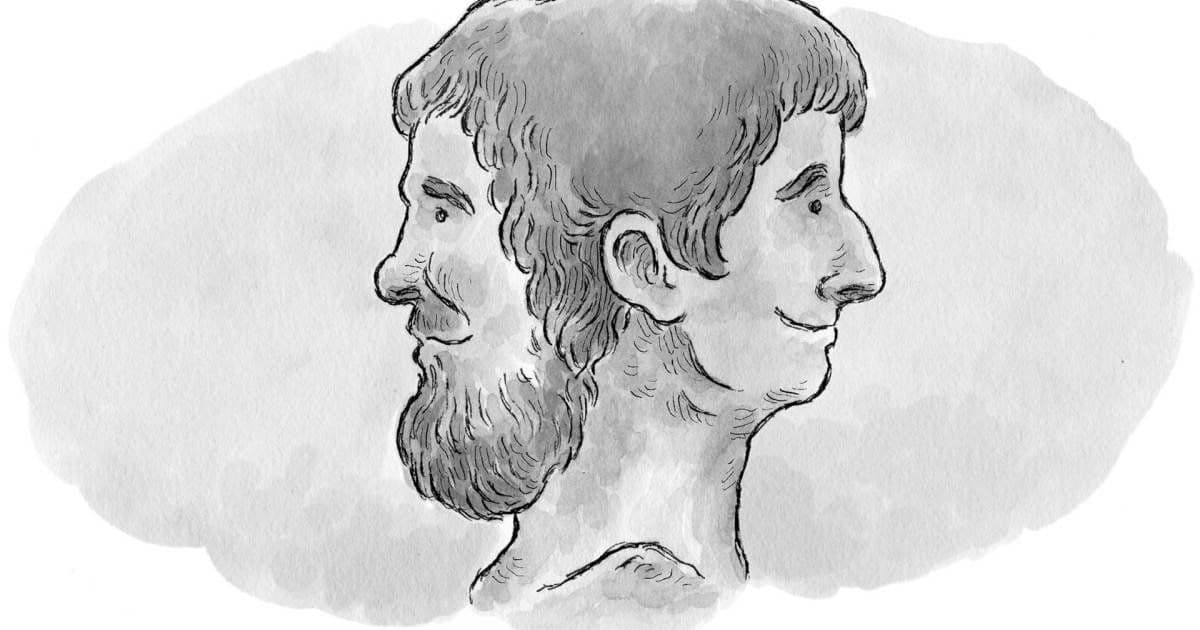
A biological framework transforms design leadership by framing Design Managers and Lead Designers as complementary caretakers of team nervous, muscular, and circulatory systems.

The persistent tension between Design Managers (focused on people) and Lead Designers (focused on craft) represents one of modern tech's most productive paradoxes. Where traditional org charts demand rigid separation of duties, a more compelling model emerges when we embrace the inherent overlap through a biological lens. This framework reimagines design teams as living organisms requiring three interdependent systems to thrive, fundamentally shifting leadership from territorial division to symbiotic partnership.
The Biological Blueprint
At the organism's core lie three vital systems, each with primary and supporting caretakers:
1. Nervous System (People & Psychology)
Primary caretaker: Design Manager
Responsible for psychological safety, career growth, and feedback loops. The Manager monitors team morale like neural pathways, ensuring healthy communication flows. Supporting role: Lead Designer provides crucial sensory input on skill development gaps and craft-specific mentorship opportunities invisible to management alone.
2. Muscular System (Craft & Execution)
Primary caretaker: Lead Designer
Builds design muscle through standards, quality control, and technical direction. They ensure solutions meet user needs with architectural precision. Supporting role: Design Manager removes resource obstacles and scales systems, functioning as the connective tissue enabling craft excellence.
3. Circulatory System (Strategy & Flow)
Shared caretaking
Both leaders jointly maintain strategic circulation—the Lead Designer pumps user insights and experience quality while the Design Manager oxygenates stakeholder alignment and cross-functional communication. This shared responsibility for priority-setting and decision flow prevents organizational anemia.

Symbiosis in Practice
Successful organisms thrive through explicit coordination:
- Lens declaration clarifies perspective during discussions ("I'm viewing this through a nervous system lens regarding team capacity")
- Feedback loops between systems convert observations into action (muscular system signals skill advancement → nervous system creates growth challenges)
- Graceful handoffs at system intersections ("I've defined these standards—help me socialize them across the team")
The framework deliberately rejects zero-sum thinking. A Lead Designer concerned solely with craft (isolated muscular system) creates brittle output, while a Manager ignoring execution (neglected nervous system) breeds disengagement. True health emerges when both caretakers exhibit cross-system curiosity: "How will this decision impact craft quality?" complements "What does this mean for team morale?"
Pathologies and Treatments
Common dysfunctions reveal system failures:
| Failure Mode | Symptoms | Treatment |
|---|---|---|
| System Isolation | Mixed messages, quality drops | Reconnect through shared outcomes |
| Poor Circulation | Priority confusion, duplication | Assign explicit flow responsibilities |
| Autoimmune Response | Territorial behavior, distrust | Reframe as co-caretakers of one organism |
The Evolutionary Advantage
This model transforms perceived role overlap from liability to superpower. When vacation or overload strikes, the supporting caretaker maintains system integrity. Strategic decisions benefit from simultaneous people/craft perspectives. Scaling challenges like design system adoption become distributed efforts—Lead Designer architects components (muscular) while Design Manager drives adoption (nervous), with both aligning stakeholders (circulatory).
Ultimately, the organism metaphor transcends design teams, offering a template for any tech organization balancing specialized expertise with collaborative delivery. By rejecting artificial silos in favor of biological interdependence, we acknowledge that the most innovative work emerges not from segregated functions, but from nourishing the whole system.

Illustration by Tom Shannon depicting Janus, the two-faced Roman god of transitions—an apt symbol for dual-perspective leadership.
Comments
Please log in or register to join the discussion