As AI giants pour billions into training ever-larger models, enterprises and open-source communities are turning to distillation to stay competitive. This technique allows smaller models to capture 95% of the performance of their massive counterparts at a fraction of the cost. Here's why distillation is becoming the go-to strategy for practical AI deployment.
The Great AI Distillation Shift: How Smaller Players Compete in a GPU-Rich World
The staggering scale of modern AI training has reached unprecedented levels: OpenAI alone reportedly spends over $50 million daily on large language model (LLM) training. For organizations without nation-state-level resources, competing in the superintelligence race has become a near-impossible feat. As Michael Ryaboy of Inference.net observes, "Working to compete on superintelligence without country-scale resources is pretty much futile." This reality is reshaping the AI landscape, forcing a strategic pivot toward a more sustainable approach: model distillation.
The Era of Wasteful Spending and Rapid Obsolescence
2024 witnessed a wave of expensive but ultimately wasteful enterprise AI initiatives. Fortune 500 companies invested tens of millions to train their own state-of-the-art (SOTA) models, only to see them rendered obsolete within weeks or months by newer releases from giants like OpenAI or Anthropic. These new models often outperformed the bespoke corporate versions on the very tasks they were designed for, turning massive investments into sunk costs.

The GPU disparity is staggering: Leading AI labs command fleets exceeding 200,000 H100/H200-class GPUs, creating a barrier to entry that's almost insurmountable for open-source initiatives or smaller enterprises.
Open Source's Secret Weapon: Creative Distillation
Despite the resource gap, open-source models have demonstrated remarkable agility. Projects like Deepseek showcase how creativity under constraint – particularly through distillation – can yield impressive results. Distillation involves leveraging the outputs of a large, powerful (often proprietary) model to train a smaller, more efficient model via Supervised Fine-Tuning (SFT). This process captures the "knowledge" of the expensive model, typically preserving over 95% of its performance on specific tasks while drastically reducing computational costs and latency.
"Even with the generosity of Meta and Alibaba (Qwen), who have spent hundreds of millions just to release model weights, open source simply cannot compete with the hegemony of superintelligence labs when it comes to general intelligence," notes Ryaboy. Distillation offers a viable path forward for specialized applications.
2025: The Rise of the Application Layer and the "Good Enough" Model
The lessons of 2024 are clear: For most enterprises, training massive foundational models is no longer a viable strategy. Instead, 2025 is becoming the year of agents and the application layer. The focus has shifted towards identifying the smallest, most efficient LLM capable of solving a specific business task acceptably well.
This pragmatic approach allows companies to:
- Serve users effectively without exorbitant costs.
- Preserve margins by minimizing inference expenses.
- Deploy faster by building on available, proven small models.
- Iterate strategically, waiting for advancements to trickle down before tackling harder problems.
Why Distillation is the Cornerstone of Efficient AI
Most applications don't require the raw power of a frontier model. They need:
- Low Latency: Fast response times for user interactions.
- Cost Efficiency: Affordable inference at scale.
- Task-Specific Competence: High performance on a defined set of functions.
Distillation delivers precisely this. By training a smaller model using data generated by a much larger "teacher" model, organizations achieve:
- ~95% Performance Retention: Near parity on targeted tasks.
- 10x Cost Reduction: Dramatically lower inference expenses.
- Significant Speed Improvements: Reduced latency for real-time applications.
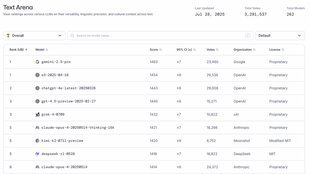
Benchmarks like LMArena highlight the performance gap between open-source and proprietary models. Distillation helps bridge this gap for practical use cases.
The Distillation Challenge: Expertise and Deployment
Implementing distillation effectively isn't trivial. It requires significant expertise in:
- Model Selection: Choosing the right teacher and student models.
- Dataset Curation: Generating high-quality training data from the teacher.
- SFT Optimization: Fine-tuning the distillation process.
- Rigorous Evaluation: Ensuring the distilled model meets performance targets.
- Scalable Deployment: Efficiently serving the distilled model in production.
This complexity has spurred the emergence of specialized platforms aiming to streamline the process. Companies like Inference.net offer end-to-end distillation and inference solutions, allowing application developers to offload the complexities of model optimization and focus on building their core product. "Distillation is the second step after product market fit," explains Ryaboy. "Once you have users and significant costs, distillation can expand margins and reduce latency without impacting quality."
Embracing the Distilled Future
The AI landscape is bifurcating. On one side, GPU-rich labs push the boundaries of raw capability in an arms race for superintelligence. On the other, the vast majority of businesses and developers are finding immense value in distillation – a technique that democratizes access to powerful AI by making it efficient, affordable, and deployable at scale.
For engineers and tech leaders, the message is clear: Mastery of distillation techniques and the ecosystem around them is no longer a niche skill, but a core competency for building sustainable, high-performance AI applications in the modern era. The future belongs not just to those with the most GPUs, but to those who can extract the most value from every cycle.
Comments
Please log in or register to join the discussion