Past performance alone won't get you promoted—you need to make the business case for timing and potential impact.
When my client told me she was working closely with her manager and skip-level on her promotion package, documenting impact and gathering cross-functional support, I had to ask: "What am I missing?"
This is the exact scenario I see play out over and over with ambitious professionals. They've done everything "right"—documented accomplishments, gathered endorsements, built relationships—yet still get passed over.
The uncomfortable truth? Past performance is necessary but insufficient.
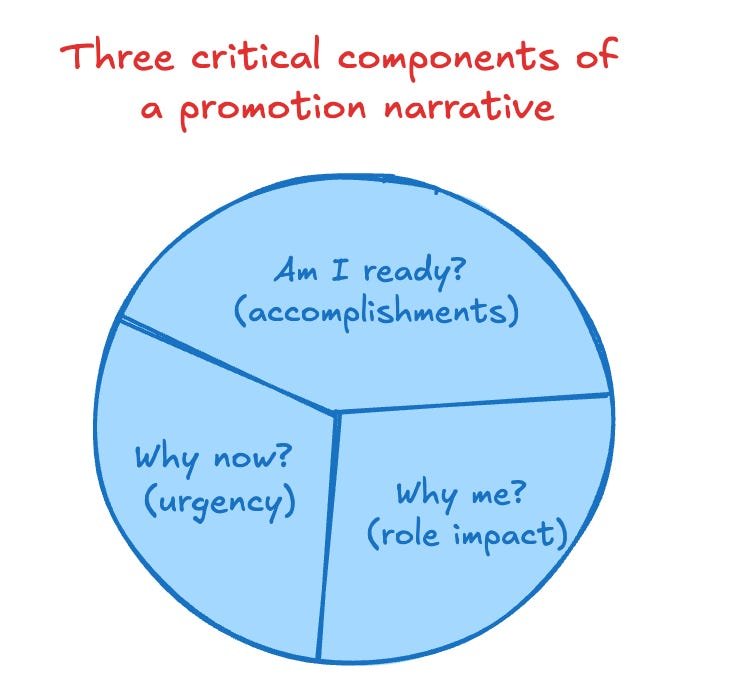
The Three-Legged Stool of Promotion Success
Most people build their promotion case on a single leg: what they've accomplished. But senior-level promotions require three components:
1. Past Performance (Capability)
- What you've done
- The impact you've created
- Your track record of success
2. Timing (Criticality)
- Why now, not six months from now
- What the business gains by acting immediately
- Why delaying would cost more than acting now
3. Potential (Business Impact)
- Will you succeed at the next level?
- How critical is your success to the business?
- What outsized value can you deliver?
The Timing Trap Most People Fall Into
The irony is brutal: the harder you work after missing a promotion, the weaker your case becomes. When you demonstrate you can do senior-level work without the title, you remove the business's incentive to promote you.
Instead, frame your promotion around what the business additionally gains:
Role Evolution Factors:
- Leading more senior team members
- Representing the company externally with higher authority
- Default invitations to leadership forums
- Building an external brand (critical for VP+ roles)
The Retention Angle: Make it clear you're committed, but establish that attractive alternatives exist. This isn't about ultimatums—it's about business reality. Companies promote to retain top talent.
Making the Case: "Why Your Role?"
In any company over 50 people, multiple people vie for limited promotion budgets. You need to articulate why your promotion is essential for business success.
Write Your Future Performance Review:
- How does this role connect to critical business metrics?
- What happens to other teams if you're slowed down by politics?
- How does the promotion accelerate your impact?
- What capacity does it free up through delegation?
- How does it increase your effectiveness?
Relative Importance:
- Is your role tied to revenue and top-line growth?
- Does it support higher-priority company goals?
- Are you on a high-visibility project?
This explains why certain functions see faster promotions than others, and why high-visibility projects create faster promotion paths.
The Bottom Line
Businesses don't promote because you "deserve" it. They promote those who have the highest potential to deliver outsized impact and value.
Your promotion case needs to answer three questions:
- Can you do the job? (Past performance)
- Why now? (Timing and business gain)
- Why you over others? (Relative criticality)
Master all three, and you'll give your leadership the ammunition they need to pound the table for your promotion to go through.
Comments
Please log in or register to join the discussion