An analysis of a subtle GPU rendering bug that exposed the complexities of perspective-correct interpolation in graphics programming.
In the intricate world of graphics programming, even the most seemingly straightforward implementations can harbor subtle complexities that manifest as perplexing bugs. Robin Allen's recent experience with Blackshift, their tile-based puzzle game, provides a compelling case study in how GPU behavior can defy expectations, particularly when dealing with floating-point precision during interpolation. This article delves into the technical nuances of the bug, the systematic approach to diagnosis, and the broader implications for cross-platform graphics development.
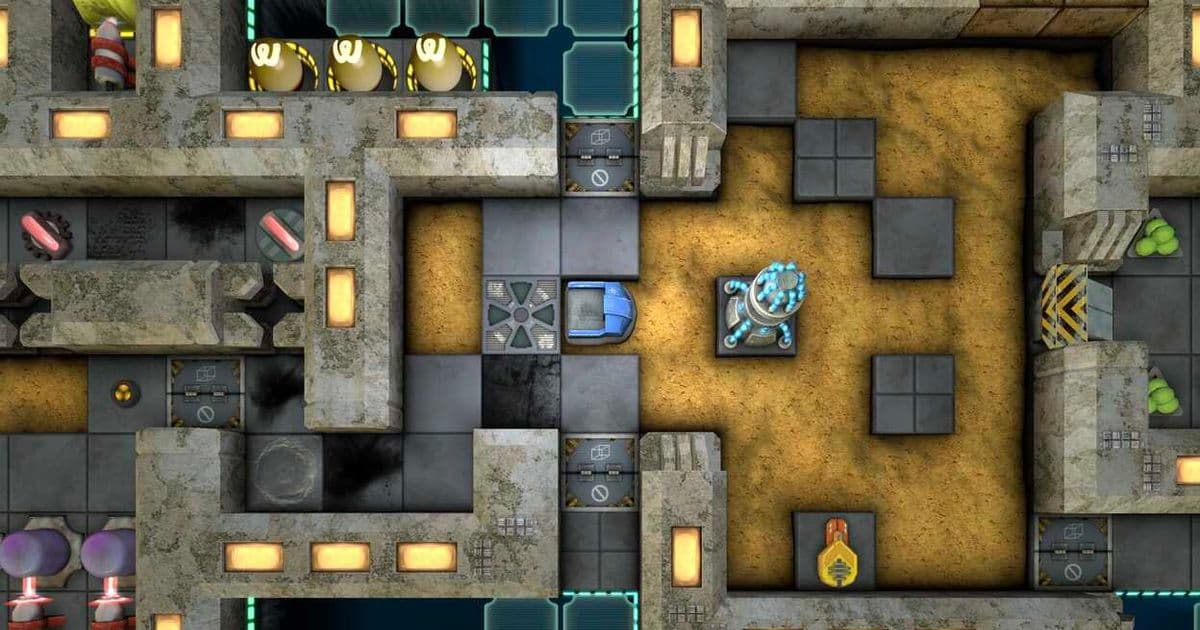
The core issue emerged as visual artifacts in sand tiles that appeared only on specific hardware configurations and exclusively during the main game rendering, not in preview modes. Each sand tile utilized a subdivided plane with a vertex shader creating a bumpy surface and a fragment shader adding shadows based on adjacency information. The adjacency data, an 8-bit integer representing neighboring tiles, was transmitted to the GPU as a float due to API limitations, then converted back to an integer in the fragment shader to determine shadow placement.
The debugging process demonstrates a methodical approach to eliminating potential causes. Initial suspicions of Z-fighting were quickly dismissed when the artifacts persisted with z-buffering disabled. The investigation then turned to the differences between preview renders and main game renders, with the former using GPU instancing disabled and employing an orthographic camera. This led to a thorough examination of instancing code, which ultimately proved to be a red herring.
The breakthrough came from recognizing that the critical difference between the working previews and the buggy main render wasn't instancing but the camera projection: orthographic versus perspective. The root cause lay in how GPUs perform perspective-correct interpolation of varying variables. When the same float value (238.0f) was written to all three vertices of a triangle, the GPU would interpolate this value across the triangle's surface. On some hardware, this interpolation involved perspective correction calculations that introduced minute precision errors. When these interpolated values fell even slightly below their intended integer boundary, they would be interpreted as the next lower integer, resulting in completely different shadow patterns and the observed visual artifacts.
The elegant solution involved a simple yet effective modification to the data sent to the GPU: adding 0.5f to the adjacency value before casting it to a float. This created a safety buffer that ensured interpolation artifacts would not cross integer boundaries, effectively resolving the issue across different GPU architectures.
This case highlights several important considerations for graphics programmers. First, it underscores the importance of understanding that GPU behavior is not always consistent across different hardware implementations. What works flawlessly on one GPU may exhibit unexpected behavior on another. Second, it demonstrates the value of systematic debugging processes that methodically eliminate potential causes rather than jumping to conclusions.
The article also reveals the broader challenge of maintaining compatibility with older graphics APIs. The author's need to support "Old OpenGL" limited their options, such as using the "flat" qualifier for varying variables, which would have prevented interpolation but isn't available in older OpenGL versions. This constraint forced a more creative solution that works across a broader range of hardware.
From a theoretical perspective, this bug illustrates a fundamental aspect of how GPUs process data. The expectation that identical values at all vertices of a triangle would remain constant across the entire surface is valid in a mathematical sense but doesn't account for the practical realities of floating-point arithmetic and the specific implementations of GPU hardware. The discrepancy between mathematical expectations and real-world GPU behavior represents a gap that graphics programmers must constantly navigate.
The incident also raises questions about the trade-offs in graphics programming approaches. The author considered using a texture to store adjacency information but rejected it due to complexity and API limitations. This decision, while reasonable at the time, ultimately led to a bug that wouldn't have occurred with a texture-based approach. It serves as a reminder that architectural decisions can have unforeseen consequences that may manifest much later in the development process.
For developers working with similar technologies, this case study offers valuable insights. The importance of testing on diverse hardware cannot be overstated, as bugs that are invisible on one platform may be glaringly apparent on others. Additionally, the solution demonstrates how a small adjustment to data representation can resolve issues that might otherwise require significant architectural changes.
In conclusion, Robin Allen's experience with the Blackshift sand tiles provides a compelling example of how subtle aspects of GPU behavior can lead to perplexing bugs. The systematic approach to diagnosis and the elegant solution highlight the importance of both technical knowledge and methodical problem-solving in graphics programming. As hardware continues to evolve and APIs become more abstract, understanding these fundamental aspects of how GPUs process data remains crucial for creating robust, cross-compatible graphics applications.
Comments
Please log in or register to join the discussion