
The final installment of the Witches of Hebden Bridge trilogy delivers a satisfying but familiar conclusion, trading some of the series' earlier rage for a more polished, if slightly repetitive, pop-culture-infused finale.
The third book in a series often carries the weight of expectation. It must resolve lingering plot threads, satisfy character arcs, and provide a sense of closure. For Juno Dawson's Witches of Hebden Bridge trilogy, concluding with Human Rites, there's an additional layer: the series established a specific, vibrant voice—a blend of modern witchcraft, biting satire, and a deep affection for 90s pop culture. The question for Human Rites is whether it can maintain that voice while bringing the story to a definitive end.
The series began with Her Majesty's Royal Coven, a sharp take on a magical Britain where a secret coven of witches, including a former Prime Minister, navigates political and personal power. It was followed by The Shadow Cabinet, which expanded the world and deepened the conflicts. By the time we reach Human Rites, the reader is fully immersed in the lives of Leonie, Niamh, and Siân, and the magical threats facing their community. The stakes are personal and political, and the narrative has consistently used magic as a lens to examine contemporary issues.
Human Rites picks up where The Shadow Cabinet left off, with the witches facing a new, formidable threat. The plot is, as the review notes, "a little twisty." Dawson is skilled at weaving multiple perspectives and timelines, creating a narrative that feels expansive. However, this complexity can sometimes feel like a narrative device rather than a necessary component of the story. The twists are effective at generating suspense, but they occasionally risk feeling contrived, as if the story is bending to accommodate a surprise rather than the surprise emerging organically from the characters' choices.
The series' signature style remains firmly in place. The chapter titles are wry and often humorous, a hallmark of Dawson's writing. The dialogue is sharp, and the characters, while sometimes archetypal (the "Bitchy-Witches" as a recurring motif), are given enough depth to feel real. The pop-culture references, particularly to Buffy the Vampire Slayer, are a core part of the series' identity. They serve as a shared language for the characters and a wink to the reader. In Human Rites, however, this element can feel overdone. The references are frequent and sometimes blunt, pulling the reader out of the narrative to acknowledge the reference itself. It's a stylistic choice that worked well in the earlier books as a way to ground the magical world in a recognizable cultural landscape, but in the final book, it risks feeling like the author is trying too hard to maintain a brand rather than letting the story breathe on its own terms.
The emotional core of the series has always been the friendship and rivalry between the main characters. Human Rites delivers on this, providing moments of genuine connection and conflict. The ending is powerful and provides a sense of finality. Dawson resists the temptation to leave the door open for a fourth book, which is a commendable choice. It gives the story a definitive conclusion and respects the reader's investment in the characters' journeys. The world is closed off, and the characters' futures, while not fully detailed, feel earned.
Where Human Rites feels slightly diminished compared to its predecessors is in its emotional and thematic punch. The earlier books, particularly The Shadow Cabinet, were charged with a palpable sense of rage—anger at systemic injustice, at the abuse of power, at the ways society fails its most vulnerable. That rage fueled the narrative and gave it a sharp, urgent edge. Human Rites is more of a controlled burn. It's still angry, but the anger is channeled into resolution rather than rebellion. The inventiveness of the magic system and the world-building is still present, but it feels more like a refinement of what came before rather than a bold new exploration.
This shift makes Human Rites a different kind of reading experience. It's less of a provocative, challenging read and more of a satisfying, comfortable one. It's the literary equivalent of a well-made, familiar television series finale. It ties up the loose ends, gives the characters their moments, and provides a sense of closure. It's competent, entertaining, and does exactly what a final book in a trilogy should do.
For readers who have followed the series from the beginning, Human Rites is a necessary and enjoyable conclusion. It's a chance to spend more time with characters they've come to know and to see their stories reach a meaningful end. The pop-culture references, while sometimes heavy-handed, are part of the series' charm, and the ending is satisfyingly final.
For new readers, however, Human Rites is not the place to start. The book relies heavily on the emotional and narrative groundwork laid in the first two installments. The relationships, the history, and the stakes are all products of the previous stories. Jumping in here would be like starting a television series in its final season—you might understand the plot, but you'd miss the nuance and the depth that makes the conclusion meaningful.
In the end, Human Rites is a solid, if not spectacular, conclusion to a very good trilogy. It fulfills its primary function: it ends the story. It does so with style, humor, and a sense of care for its characters. It may not have the same raw energy as the books that came before it, but it provides a fitting and final chapter for the Witches of Hebden Bridge. It's a good book, a worthy successor, and a satisfying end. It's a ★★★☆☆ read—decent, enjoyable, and ultimately, a fitting farewell.
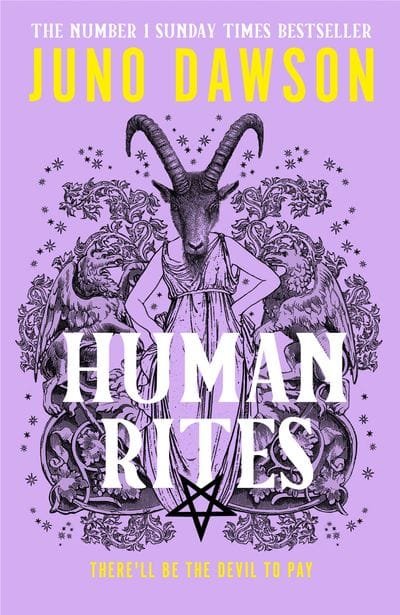
Human Rites is available from all major booksellers. You can find it on Amazon, Kobo, and Audible. For those who prefer physical copies, check with your local independent bookshop or use Ethical Book Search to find a copy. The author's official website is juno-dawson.com, and the publisher's details can be found on the HarperCollins UK page. Remember, you can also borrow a copy from your local library using the ISBN: 9780008478629.
Comments
Please log in or register to join the discussion