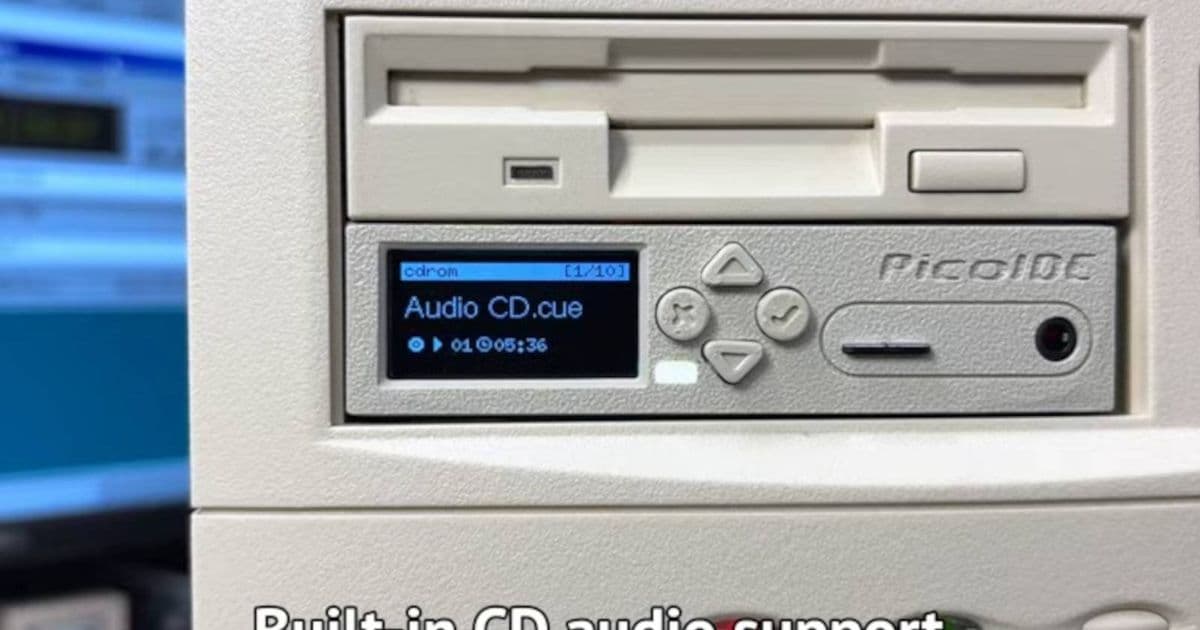
PicoIDE uses a Raspberry Pi to emulate IDE/ATAPI drives, letting vintage PC owners replace failing hard drives and CD-ROMs with microSD card storage.
As vintage computers age, their mechanical components become increasingly unreliable. Hard drives develop bad sectors, CD-ROM drives fail to read discs, and the hunt for replacement parts becomes more difficult and expensive. The PicoIDE offers a modern solution to this preservation challenge by using a Raspberry Pi to emulate IDE/ATAPI drives, replacing failing hardware with solid-state microSD storage.
How the PicoIDE Works
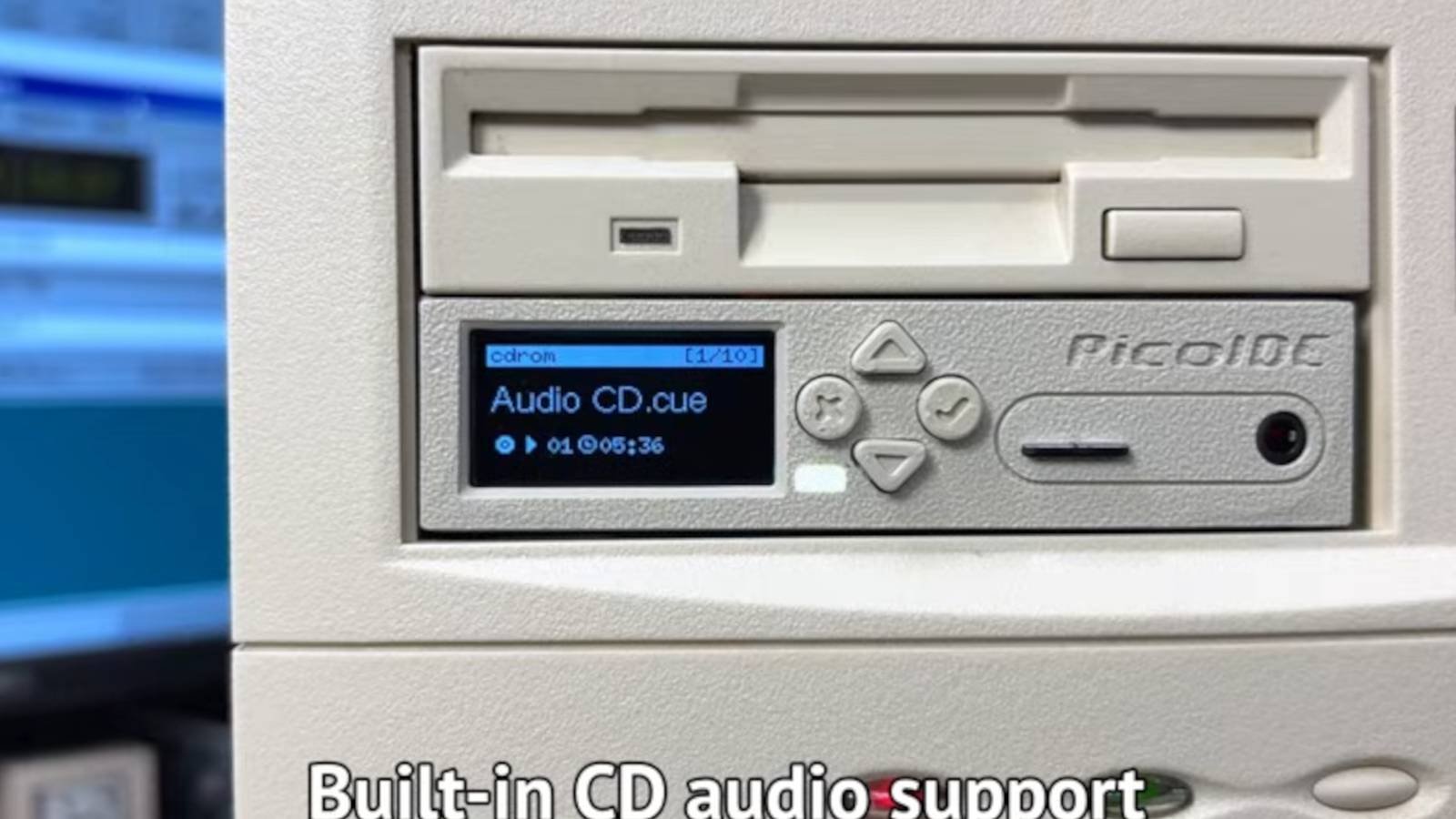
The PicoIDE is an open-source IDE/ATAPI drive emulator that connects to vintage computers through standard IDE or ATAPI interfaces. Instead of relying on mechanical components that degrade over time, the device uses a Raspberry Pi to present microSD card storage as a standard hard drive or CD-ROM drive to the host system.
The setup process is straightforward: users load disk images or CD images onto a microSD card, insert it into the PicoIDE, and the vintage computer recognizes it as a normal storage device. This eliminates the need for burning optical discs, dealing with worn-out laser mechanisms, or worrying about crashed hard drive heads and bad sectors.
Technical Implementation
The device leverages the Raspberry Pi's GPIO pins and software emulation to create a transparent interface between modern storage media and legacy hardware. The open-source nature of both the hardware design and software means that enthusiasts can modify and improve the system as needed.
Key technical features include:
- Support for both IDE hard drive and ATAPI CD-ROM emulation
- Hot-swappable microSD card storage
- Multiple image selection through front panel controls
- Compatibility with a wide range of vintage computer systems
- Open-source firmware for customization
Crowdfunding Success and Availability
The PicoIDE campaign on Crowd Supply has been remarkably successful, raising $94,509 against its original $35,000 goal with over a month remaining in the campaign. This strong support indicates significant demand from the vintage computing community for practical preservation solutions.
Pledges are available at two levels:
- Full device: $110 for the complete PicoIDE unit, available in both black and beige color options
- Shell only: $69 for the enclosure without front buttons, allowing for custom modifications
Why This Matters for Vintage Computing
Vintage computer preservation faces a fundamental challenge: mechanical components have limited lifespans, and replacement parts become increasingly scarce as time passes. The PicoIDE addresses this by replacing failure-prone mechanical systems with solid-state storage that can last for decades.
For collectors and enthusiasts, this means:
- Reduced risk of data loss from failing drives
- Elimination of the need for physical media like floppy disks and CDs
- Ability to store multiple disk images and switch between them easily
- Preservation of software and data without relying on deteriorating hardware
Practical Considerations
While the PicoIDE represents a significant advancement in vintage hardware preservation, potential backers should understand that crowdfunding involves risks. Projects can encounter delays or complications that prevent fulfillment. However, the open-source nature of the PicoIDE means that even if the commercial project faces challenges, the underlying technology remains accessible to the community.
The device represents a practical middle ground between maintaining original hardware and accepting that some components simply cannot be preserved indefinitely. Rather than watching valuable vintage systems become unusable due to mechanical failures, the PicoIDE offers a path to continued operation using modern, reliable technology.
For vintage computer enthusiasts looking to preserve their systems for the long term, the PicoIDE provides a compelling solution that balances authenticity with practicality. The strong crowdfunding response suggests that many in the community see value in this approach to hardware preservation.
Comments
Please log in or register to join the discussion