A resurrected multi-agent system for Anthropic's Claude SDK demonstrates sophisticated task automation while raising questions about AI tool complexity and platform control.
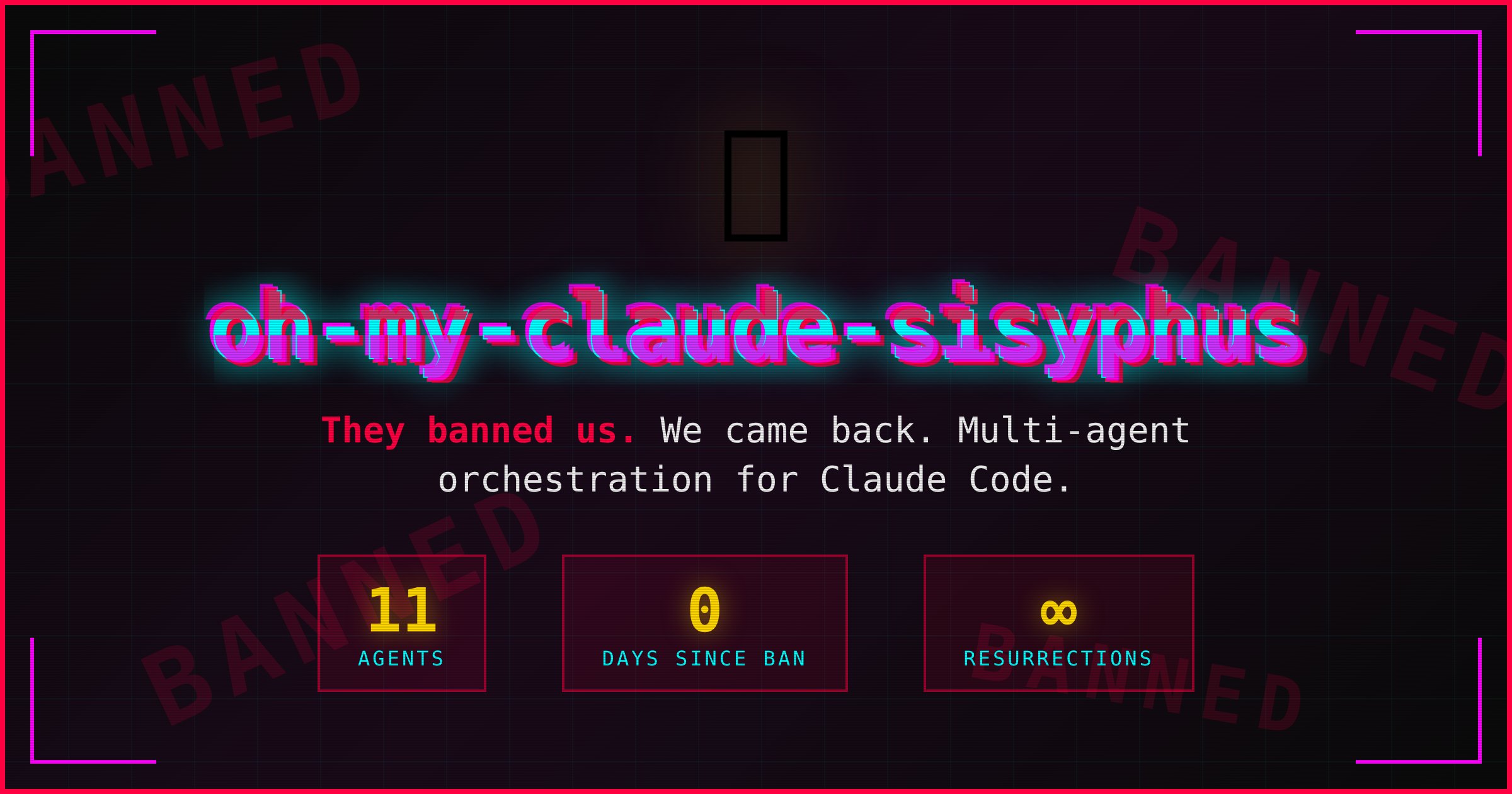
The developer community witnessed an intriguing evolution in AI tooling this week with the release of oh-my-claude-sisyphus, a port of the banned oh-my-opencode project adapted for Anthropic's Claude Code SDK. This toolkit introduces an eleven-agent orchestration system where specialized AI roles collaborate persistently until tasks complete - a modern take on the myth of Sisyphus where the boulder never stops rolling.
Technical Architecture
At its core, Sisyphus implements a hierarchical agent architecture:
- Planning Layer: Strategic agents (Prometheus) for blueprint creation
- Execution Layer: Specialized implementers (Frontend Engineer, Document Writer)
- Support Layer: Research and analysis specialists (Librarian, Multimodal Looker)
What sets it apart is its composable skill system: "Skills work in three layers: Execution (how you work), Enhancement (added capabilities), and Guarantee (completion assurance)," explains the documentation. Developers can combine skills like sisyphus + frontend-ui-ux + git-master for atomic-commit UI work or ultrawork + sisyphus for parallelized refactoring.
Community Adoption Signals
Early adopters report significant productivity gains:
- Automated context recovery handles token limit errors
- Project-specific configuration via
.claude/CLAUDE.mdfiles - Background auto-updates minimize workflow disruption The toolkit's resurrection narrative—"from the ashes rose oh-my-claude-sisyphus"—resonates with developers facing platform restrictions.
Counter-Perspectives
Despite enthusiasm, critical questions emerge:
- Complexity Cost: Does managing eleven agents create cognitive overhead exceeding benefits for simpler tasks?
- Economic Viability: Heavy Opus agent usage could prove costly at scale
- Platform Risk: Anthropic's stance on such powerful orchestration remains unclear
- Debugging Challenges: Tracing decisions across multiple agents complicates error diagnosis
As developer Yeachan Heo notes, the project's existence poses a meta-question: "Anthropic, what are you gonna do next?" The toolkit demonstrates sophisticated AI coordination capabilities while testing platform boundaries—an ongoing tension in AI tool evolution.
The MIT-licensed project offers installation via curl or npm, inviting developers to experiment with this multi-agent approach while the community watches how platforms respond to increasingly autonomous developer tools.
Comments
Please log in or register to join the discussion