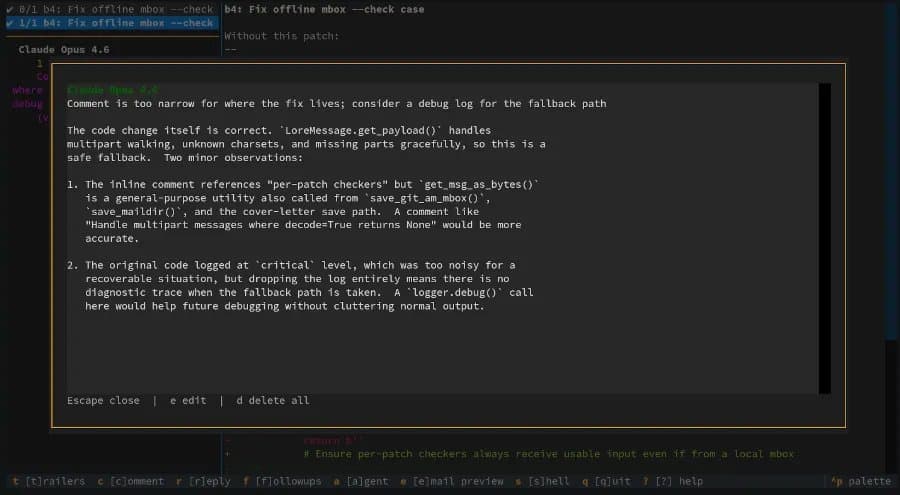
The b4 tool's new TUI for Linux kernel patch review is approaching pre-alpha with Claude Code AI integration
The b4 tool used for managing patch workflows to the Linux kernel has been seeing a lot of work recently on b4 review as the text user interface (TUI) to help expedite the patch review process for the Linux kernel. The b4 review TUI has been integrating AI agent code review helpers powered by the likes of Claude Code too for trying to help enhance the efficiency for Linux kernel patch reviews.
That b4 review work is quickly approaching a pre-alpha state. The AI-assisted code review handling within b4 review has been progressing a lot in recent weeks. This effort was previously covered at the start of the month in Linux's b4 Kernel Development Tool Now Dog-Feeding Its AI Agent Code Review Helper.
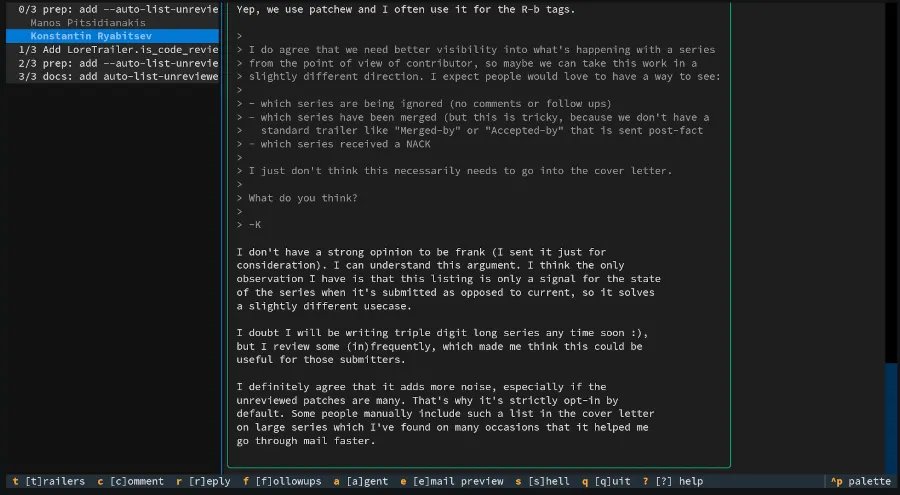
The b4 lead developer Konstantin Ryabitsev of the Linux Foundation has been leading the effort and today shared via Mastodon that it's approaching a pre-alpha state. For showing off the current state is this recording that from the TUI shows patchwork integration, reviewing patch series, accepting patch series, and more. Complete with Claude Code integration.
The AI integration is strictly opt-in for those that want it. The b4 review functionality is advancing rapidly and will be interesting to see how feature rich it becomes over the weeks or months ahead.
Technical Implementation Details
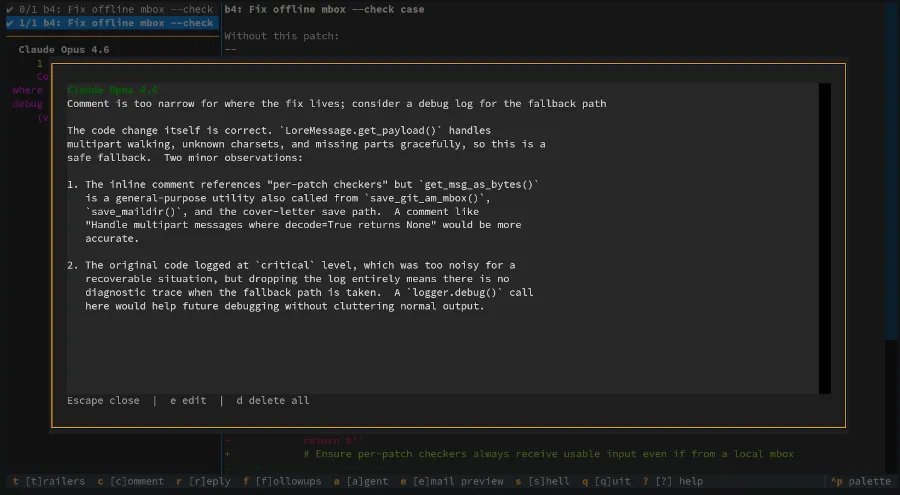
The b4 review TUI represents a significant evolution in Linux kernel development tooling. The integration with Claude Code provides AI-assisted analysis of patch series, offering suggestions for improvements, identifying potential issues, and streamlining the review process. This approach leverages modern large language models to augment human reviewers rather than replace them.
Current Capabilities
Based on the available demonstrations, the b4 review TUI currently supports:
- Patch series visualization and navigation
- Integration with patchwork for tracking patch status
- AI-powered code review suggestions
- Interactive patch acceptance workflows
- Real-time collaboration features
Development Timeline
The project has progressed rapidly from initial concept to near pre-alpha status in just a few months. This accelerated development timeline suggests strong backing and clear prioritization from the Linux Foundation. The opt-in nature of the AI features indicates careful consideration of developer preferences and workflow integration challenges.
Impact on Linux Kernel Development
If successful, this tool could significantly reduce the time required for patch review in the Linux kernel development process. The Linux kernel's development model relies heavily on peer review, and any tool that can make this process more efficient could have substantial downstream effects on development velocity.
Future Considerations
The pre-alpha status indicates that while core functionality is working, there's likely significant refinement needed before production use. Key areas for future development may include:
- Enhanced customization options for review workflows
- Improved integration with existing development tools
- Expanded AI capabilities beyond code review
- Performance optimization for large patch series
The Linux kernel development community has historically been cautious about adopting new tools, particularly those involving AI. The success of b4 review will likely depend on how well it integrates with existing workflows and whether it demonstrably improves developer productivity without introducing friction or complexity.
As the tool approaches pre-alpha release, the development team will likely be seeking feedback from early adopters to guide the final stages of development before a broader release.
Comments
Please log in or register to join the discussion