A physics enthusiast's home experiments with a $120 air quality monitor reveal surprising truths about cooking emissions and ventilation effectiveness. The data-driven approach challenges common assumptions about indoor pollution risks from everyday activities.
When a self-described physics enthusiast decided to explore home instrumentation, they didn't expect their first experiment would involve frying eggs next to a £120 air quality monitor. Armed with a Temtop m2000—a device measuring CO2, PM2.5/PM10 particles, temperature, and humidity—they embarked on a mission to validate claims about cooking's impact on indoor air pollution. The results challenge widespread assumptions and highlight the power of accessible measurement tools.
The Experiment Setup
The Temtop m2000 was chosen for its data-export capabilities, allowing real-time tracking of air quality metrics. After establishing baseline readings (CO2 under 1000ppm and PM2.5 within safe limits), the tester placed the device near a stovetop during egg-frying—a scenario often cited as a pollution risk. 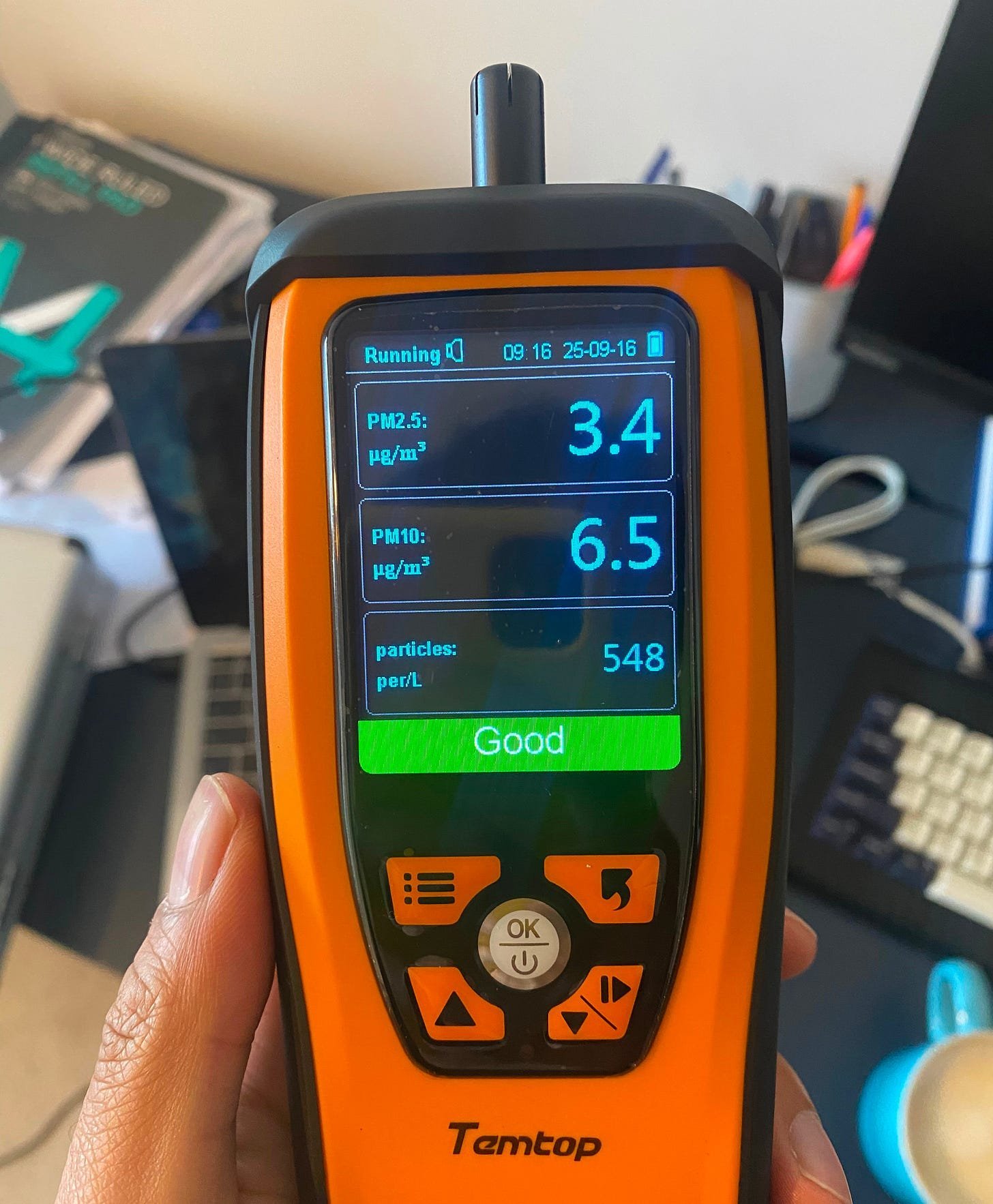 shows the setup in action.
Unexpected Findings
Contrary to warnings, PM2.5 levels peaked at just 11 μg/m³ during cooking—well below the 24-hour safety threshold of 15 μg/m³ recommended by air quality guidelines. Levels quickly normalized post-cooking, suggesting minimal risk from brief kitchen activities. More intriguing was the ineffectiveness of the extractor fan, which showed negligible impact on particle dispersion—a revelation warranting further investigation.
Implications for Home Science
This micro-experiment demonstrates how affordable sensors empower non-experts to conduct environmental audits:
- Validation over speculation: Quantitative data refuted anecdotal claims about cooking hazards
- Ventilation mysteries: The fan's poor performance hints at complex airflow dynamics in home environments
- Future experiments: Planned tests include using dry ice to measure air-change rates and evaluating DIY Corsi-Rosenthal air purifiers
"I’m learning more about air quality guidelines," notes the experimenter. "Considering cooking only takes half an hour max, it looks like there’s basically no danger from an air quality viewpoint."
Beyond the Kitchen
While limited to one home setup, this approach showcases how consumer-grade tools enable hypothesis-driven exploration of everyday phenomena. As air quality monitors become more sophisticated and affordable, they democratize environmental science—turning kitchens into laboratories and residents into investigators. The experimenter’s next venture into tracer gas studies could yield practical insights for HVAC efficiency and pandemic-era ventilation concerns.
Source: Frying Eggs and Air Quality Tests by CasualPhysicsEnjoyer
Comments
Please log in or register to join the discussion