Dive into the unsung heroes of Linux distributions – package managers like APT, DNF, and Pacman. Discover how these tools prevent dependency chaos, enforce security, and embody the philosophical differences between distros while keeping billions of systems running smoothly.
In the Linux ecosystem, package managers are the silent guardians preventing digital anarchy. They transform what could be a fragile house of cards—where installing one application might break another through conflicting dependencies—into a robust, maintainable system. Unlike monolithic installers, these tools connect to curated repositories, resolve intricate dependency trees, and apply updates consistently. This architecture isn't just convenient; it's foundational to Linux's security and stability.
The Core Trio: APT, DNF, and Pacman
APT (Debian/Ubuntu) reigns as the stalwart of stability. Powering Debian derivatives, its dpkg backbone handles .deb packages while APT orchestrates higher-level operations. Its simplicity masks sophistication:
sudo apt install vlc
sudo apt update && sudo apt upgrade
With massive repositories and GUI tools like GNOME Software, APT prioritizes accessibility. Yet PPAs (Personal Package Archives) reveal its flexibility, allowing curated third-party sources—though they can occasionally introduce instability.
DNF (Fedora/RHEL) evolved from YUM to become the enterprise-grade choice for RPM-based systems. It introduces critical innovations:
sudo dnf install package-name
sudo dnf upgrade
Delta RPMs minimize bandwidth by downloading only changed package segments, while modular repositories let users toggle between software versions (e.g., Python 3.9 vs 3.11) without system-wide disruptions.
Pacman (Arch Linux) embodies speed and minimalism. Its terse syntax fuels Arch's rolling-release model:
sudo pacman -S neofetch
sudo pacman -Syu
Compressed .pkg.tar.zst packages accelerate installations. 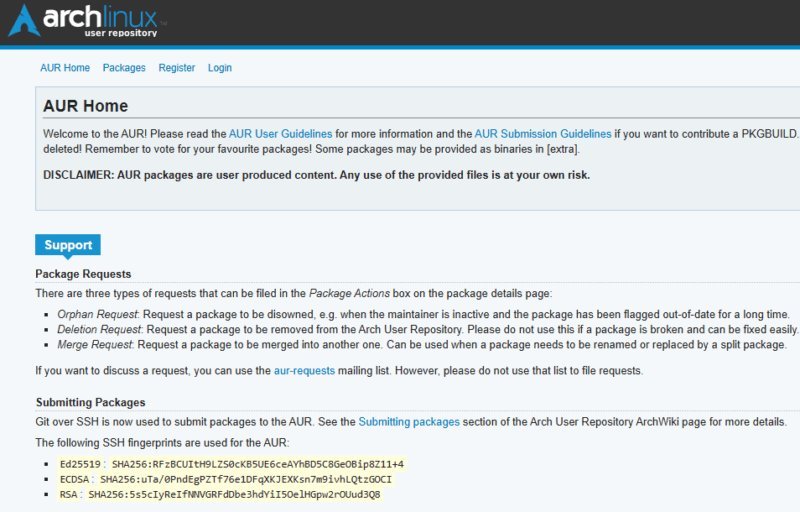 But Pacman's real superpower is the Arch User Repository (AUR), where community-maintained packages—accessed via helpers like
 yay—deliver cutting-edge software unavailable elsewhere.
Beyond the Giants: Specialized Managers
- Zypper (openSUSE): Uses RPMs but adds unique features like patterns (
zypper install -t pattern web-server) for group installations and Btrfs snapshot rollbacks. - APK (Alpine): Ultra-lightweight, ideal for containers—
apk add packageinstalls in seconds. - Portage (Gentoo): Source-based compilation via
emerge, optimized for specific hardware (at the cost of time). - Nix/Guix: Revolutionize dependency management with isolated, immutable packages enabling atomic rollbacks and reproducible environments.
GUI Frontends: Bridging the Gap
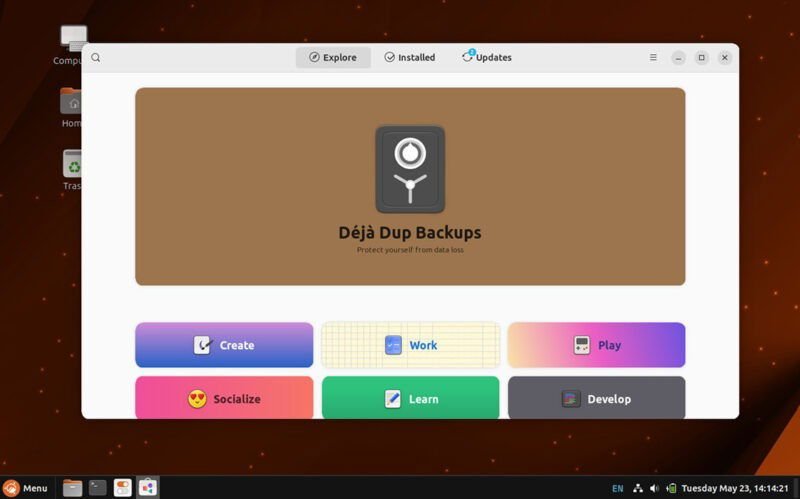 Graphical tools democratize package management:
- Ubuntu's Software Center and Synaptic
- Fedora's GNOME Software (integrating DNF5)
- KDE Discover (multi-backend support)
- Arch's Pamac (AUR/Flatpak/Snap integration)
While convenient for casual use, they often lag behind terminal precision for complex operations.
Universal Packages and Alternatives
Flatpak, Snap, and AppImage bypass distro-specific managers by bundling dependencies—enabling cross-distro app distribution at the cost of increased storage and potential security trade-offs. Meanwhile, manual compilation persists for niche use cases.
Why Your Distro's Choice Matters
Package managers aren't interchangeable utilities; they reflect philosophical choices. APT prioritizes stability, DNF enterprise rigor, and Pacman bleeding-edge agility. As universal packages gain traction, default managers counterbalance with trusted sources and dependency resolution that standalone formats can't replicate. For developers and sysadmins, mastering your distro's tool isn't just practical—it's key to understanding Linux's DNA.
Source: The Ultimate Guide to Linux Default Package Managers by Haroon Javed
Comments
Please log in or register to join the discussion