An examination of Julian Orr's anthropological study of Xerox service technicians and how their informal knowledge-sharing networks led to the development of the Eureka knowledge management system, revealing the crucial social dimension of technical expertise.
The Social Architecture of Technical Expertise
In the mid-1980s, while America's offices were becoming increasingly dependent on Xerox photocopiers, an anthropologist named Julian Orr made a startling discovery. The technicians responsible for maintaining these complex machines operated with a knowledge base that was fundamentally social—built through conversation, storytelling, and peer-to-peer learning rather than solely through formal documentation. This revelation would eventually lead to the creation of the Eureka knowledge management system, but not before exposing profound tensions between the technicians' practice and corporate management's understanding of their work.
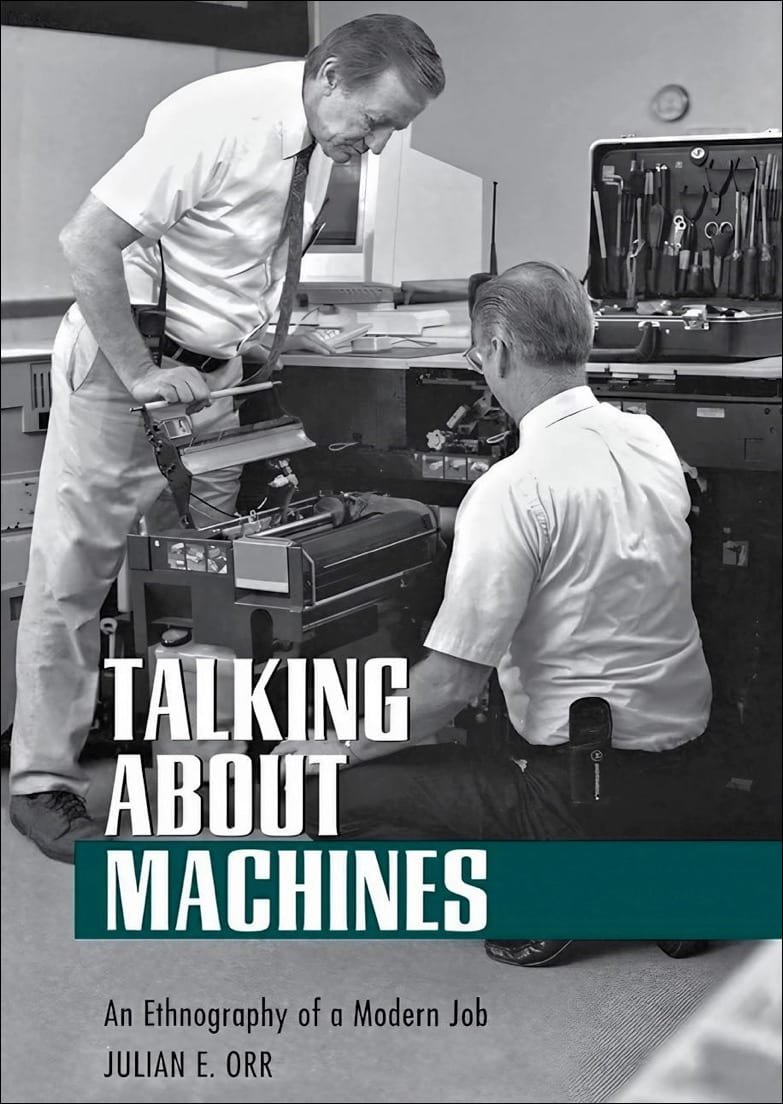
Orr's research, culminating in his influential book Talking About Machines: An Ethnography of a Modern Job (1996), documented how Xerox service technicians developed sophisticated problem-solving methods that existed largely outside the company's official procedures. The technicians, organized into regional teams, maintained what Orr called a "community of practice" centered around the triangular relationship of technician, customer, and machine. This social architecture of knowledge proved essential for maintaining machines that had become increasingly complex and idiosyncratic.
The Complexity Challenge
By the 1980s, Xerox copiers had reached extraordinary levels of sophistication. The Xerox 9400, introduced in 1977, weighed one and a half tons, occupied a 9x15 foot footprint, and cost $85,000 (equivalent to $430,000 in 2024). It could produce two copies per second, collate them into 50 separate bins, and handle two-sided sheets with adjustable image sizes. Every stage of the process required extreme precision—from imaging to paper handling to managing the sequence of electric fields that transferred toner onto paper.
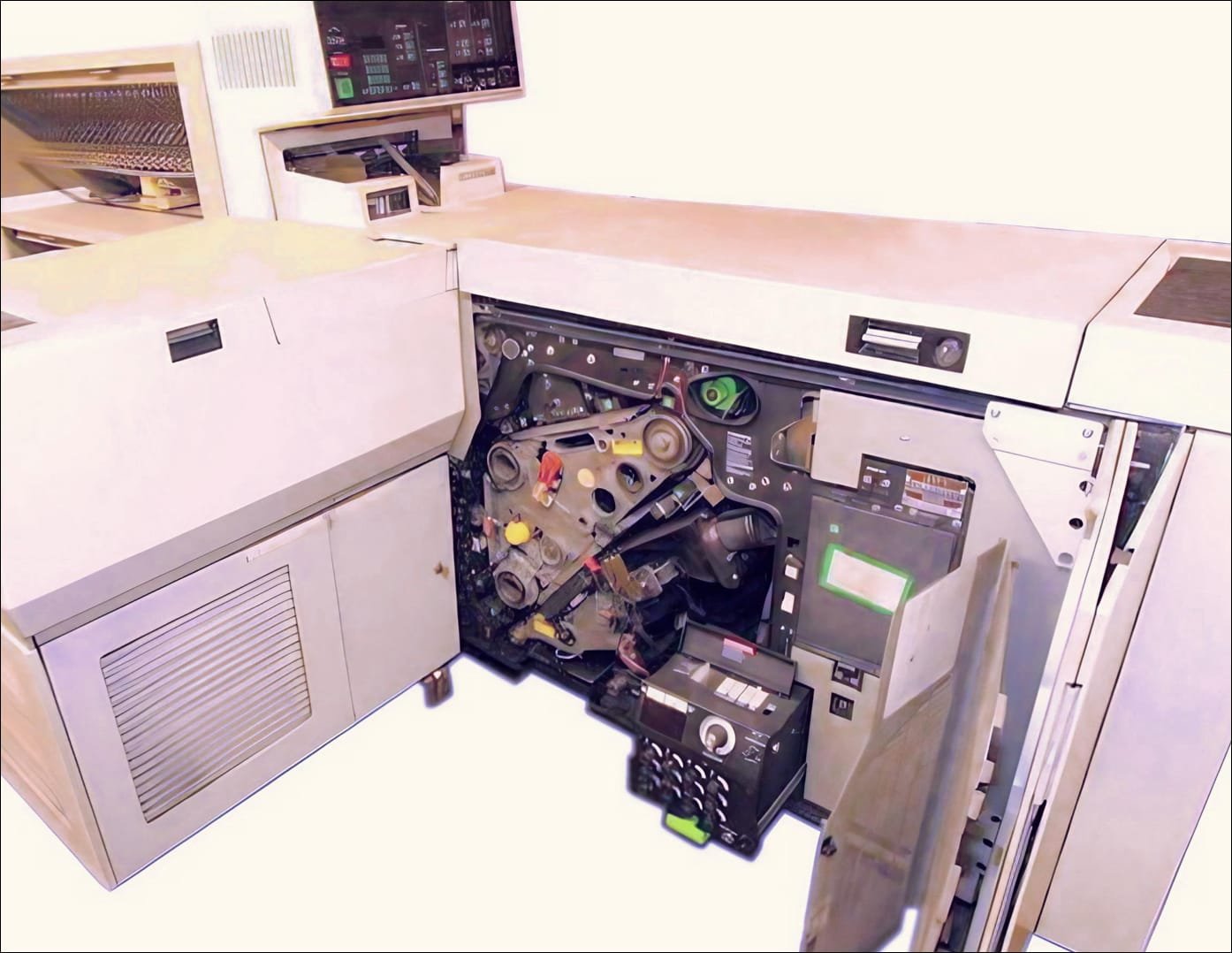
Such complexity created conditions where "individual machines are quite idiosyncratic, new failure modes appear continuously, and rote procedure cannot address unknown problems," as Orr observed. The machines were so temperamental that half of all problems technicians encountered stemmed not from mechanical failure but from user error or misunderstanding. This led to the technicians' adage: "Don't fix the machine, fix the customer."
War Stories as Diagnostic Tools
The most fascinating aspect of Orr's research was his documentation of the technicians' "war stories"—narratives they shared about solving particularly baffling problems. These stories served multiple purposes: they documented solutions, established the teller's reputation within the community, and preserved knowledge that couldn't be captured in formal documentation.
Orr noted that "given that the only status within the community is that of competent practitioner, fame can only be based on a reputation for extraordinarily competent practice, the ability to solve newer and harder problems." Since technicians normally worked alone, their achievements would remain unknown unless they shared them through storytelling.
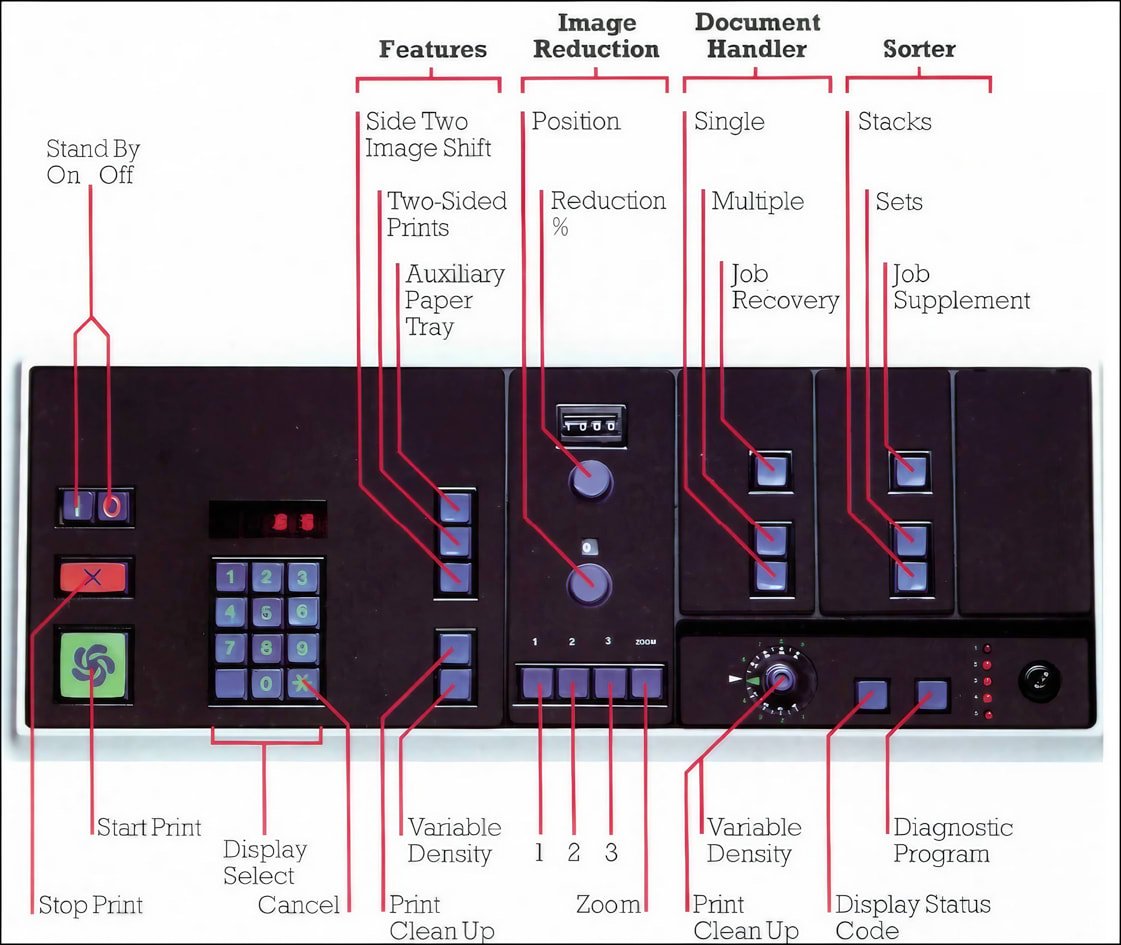
One particularly revealing war story concerned an upgrade to the Xerox 1075 copier that created a more difficult diagnostic problem. The upgrade improved the "XER" circuit board so that it no longer burned out when there was a short in one of the four "dicorotrons" that managed the electrical fields for copying. Instead, the machine would shut down and display a misleading error code—"E053"—indicating a blown circuit breaker, which could be caused by any number of things. Technicians would spend hours replacing components based on the documentation, only to have the machine continue crashing. The solution emerged when they noticed that occasionally a seemingly spurious "F066" error code would appear, which led directly to the dicorotons.
This story exemplified how the technicians' collective knowledge operated at a level of sophistication that official documentation couldn't capture. As Orr explained, "the circulation of stories among the community of technicians is the principal means by which the technicians stay informed of the developing subtleties of machine behavior in the field."
The Documentation Gap
Orr's research exposed a significant disconnect between how Xerox management understood technician work and how technicians actually performed it. The company's service manuals contained "Fault Isolation Procedures" that were essentially directive decision trees—"do this, then do that"—without providing the underlying reasoning that would enable technicians to understand what they were doing or adapt to novel problems.
"This directive documentation is designed not to provide information for thinking about the machine and its problems but to direct the technician to the solution through a minimal decision tree," Orr wrote critically. "The documentation is designed not to enable deduction." When technicians had to resort to "shotgunning"—randomly replacing parts until the problem went away—it represented a failure of both the documentation and the technicians' ability to solve problems methodically.
The technicians had little input into creating these manuals, which were written by engineers and management who, Orr noted, "seek control over their employees, through control of the knowledge necessary to do the job, and can hire cheaper employees, since they do not need skilled labor." This approach reflected a broader corporate effort to "de-skill" technicians, especially after the Vietnam War ended in 1975 and the supply of military-trained technicians dried up.
From Social Practice to Knowledge Management
The most significant outcome of Orr's research was the development of the Eureka knowledge management system, which attempted to capture and disseminate the technicians' informal knowledge globally. The project emerged from PARC researchers' realization that instead of building an artificial intelligence system to diagnose problems (which technicians found unhelpful), they should create "a system for experts" that would allow technicians to share their hard-won knowledge.
The implementation of Eureka reveals much about organizational resistance to recognizing frontline expertise. The project faced significant opposition from Xerox management, particularly from the Worldwide Customer Service division in Rochester, New York. Managers viewed technicians primarily as cost centers and were skeptical of any initiative that might encourage them to spend time sharing knowledge rather than directly servicing customers.
The breakthrough came when Olivier Raiman, Eureka's primary designer, found support in Xerox France, where the company had less hierarchical management structures. With funding from PARC and Xerox France (corporate headquarters refused to provide money), Raiman developed a system where technicians would submit tips structured as Problem, Cause, Solution. These tips would be vetted by other technicians, particularly the most experienced specialists known as "tigers," before being added to the database.
The French experiment was remarkably successful. When tested with 40 technicians using Eureka versus 40 as a control group, the Eureka users showed approximately 10% lower parts cost and 10% lower average service time. Within a year, Xerox France went from being an average or below-average performer in service to becoming a benchmark performer, with service metrics 5-20% better than the European average depending on the product.
The Persistence of Organizational Tensions
Despite Eureka's eventual global implementation across all 25,000 Xerox service representatives, the project revealed persistent tensions between formal organizational structures and the informal knowledge networks that technicians had developed. Even as the system succeeded in improving service efficiency and technician satisfaction, Xerox never fully integrated the technicians' knowledge into its core operations.
The technicians' lore remained isolated from other parts of the company. "No formal process incorporates Eureka's information back into the documentation," the system's developers noted. Additionally, while technicians' titles were elevated to "customer service engineer," they were never compensated for the time they spent generating and validating tips for the Eureka database.
More fundamentally, Xerox never shifted its perspective on customer service from a cost center to a value center. The service technicians represented the company's primary interface with customers, possessing invaluable knowledge about how machines were actually used, what caused failures, and how customers experienced products. Yet this knowledge wasn't systematically leveraged to improve product design, sales approaches, or overall customer experience.
If Xerox had truly embraced the insights from Orr's research, the best technicians—the "tigers"—might have been considered for promotion paths into sales, design engineering, and manufacturing. Design engineers could have observed their machines failing in the field, salespeople could have accompanied technicians on service calls to understand actual customer needs, and future managers could have been trained through apprenticeship with experienced technicians.
Enduring Lessons
The Xerox Eureka story offers several enduring lessons about knowledge management and organizational learning:
Knowledge is fundamentally social: Technical expertise develops and operates through social networks, not just individual cognition or formal documentation.
Communities of practice emerge organically: These knowledge-sharing communities form around shared practices, not organizational structures, and often develop their own norms, language, and identity.
Frontline expertise is undervalued: Organizations frequently fail to recognize the sophisticated knowledge held by those closest to the work, viewing them as implementers rather than knowledge creators.
Technology enables but doesn't create knowledge sharing: Eureka succeeded not because of its technological sophistication but because it captured and amplified the existing social practices of technicians.
Organizational change requires deep cultural shifts: Implementing knowledge management systems requires more than technological solutions—it requires changing how organizations value and reward knowledge sharing.
As we navigate an increasingly complex technological landscape, the lessons from Xerox's experience remain remarkably relevant. The challenge isn't just capturing knowledge but creating organizational cultures that value and leverage the expertise of those closest to the work—whether they're maintaining photocopiers, developing software, or providing customer service. The technicians' insistence that "the groups now are based on real and continuing relationships which could not be achieved with weekly meetings" reminds us that authentic knowledge sharing emerges from sustained human connection, not just technological platforms.
Comments
Please log in or register to join the discussion