
Decades of research reveal nonviolent movements engaging just 3.5% of a population achieve transformative political change, though critics note the rule's limitations in complex modern contexts.
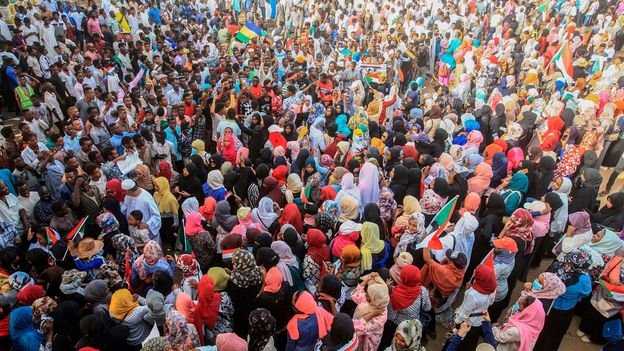
Political scientists have observed a persistent pattern across global uprisings: nonviolent resistance consistently outperforms armed struggle in achieving systemic change. Harvard researcher Erica Chenoweth's analysis of 323 campaigns from 1900-2006 reveals nonviolent movements succeed twice as often as violent ones (53% vs 26%). More strikingly, her data shows that movements engaging just 3.5% of a population in active protest have never failed to achieve their goals—a threshold now known as the "3.5% rule".
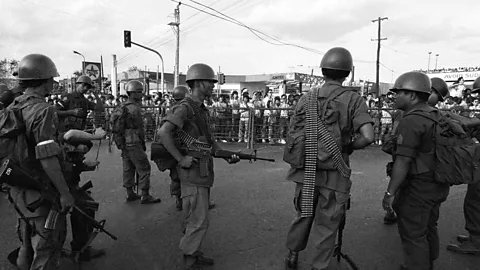 Caption: The People Power Revolution in the Philippines (1986) mobilized 2 million citizens—over 3.5% of the population—toppling the Marcos regime in four days (Credit: Getty Images)
Chenoweth's methodology established rigorous criteria: movements qualified only if they achieved regime change within one year of peak activity without foreign military intervention. Violent campaigns were defined by use of weapons, kidnappings, or infrastructure destruction. Even India's independence movement was excluded due to Britain's weakened post-war resources, demonstrating the strictness of her analysis.
Three factors explain nonviolence' effectiveness:
- Broader participation: Nonviolent protests engage diverse demographics, including elderly and physically limited individuals
- Moral authority: Peaceful tactics maintain public sympathy while violent actions alienate potential supporters
- Institutional leverage: Mass participation makes security forces hesitate when confronting crowds containing friends or family
General strikes proved particularly potent, while consumer boycotts (like those against apartheid South Africa) enabled low-risk participation. Chenoweth notes: "Nonviolent techniques are more visible, making it easier for people to learn how to participate and coordinate maximum disruption."
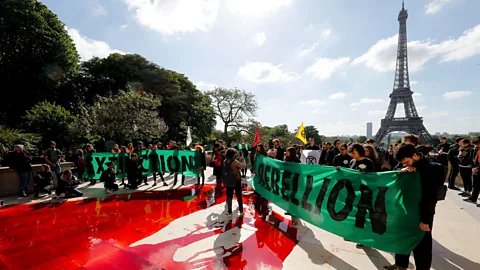 Caption: Extinction Rebellion organizers explicitly credit Chenoweth's research as inspiration for their climate activism (Credit: Getty Images)
Critics highlight limitations to the 3.5% framework:
- Scale challenges: 3.5% translates to 11 million Americans—more than New York City's population
- Unity requirements: Bahrain's 2011 uprising failed despite initial momentum due to factional splits
- Contextual exceptions: East Germany's 1950s protests attracted 2% of the population but still failed
- Modern complexities: Digital activism complicates measuring "active participation" in hybrid movements
Current applications include Extinction Rebellion and Black Lives Matter, though Chenoweth acknowledges they face "incredible inertia." Political scientist Matthew Chandler confirms the enduring relevance: "It's hard to overstate how influential this research has become." Yet as University of Copenhagen's Isabel Bramsen observes, 3.5% represents only active participants—actual support is likely far broader.
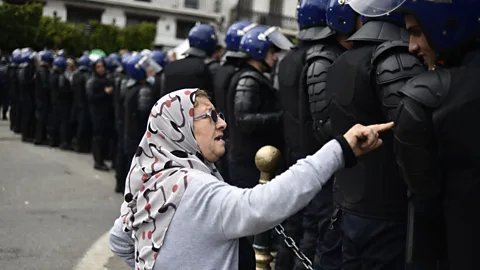 Caption: Algerian protests (2019) exemplified broad-based nonviolent resistance that eventually unseated long-standing leadership (Credit: Getty Images)
The research underscores a historical blind spot: while societies memorialize violent conflicts, Chenoweth argues we systematically undervalue peaceful resistance. "Ordinary people engage in heroic activities that actually change the world," she notes, advocating for greater recognition of nonviolent victories in historical narratives.
Chenoweth's complete findings appear in Why Civil Resistance Works: The Strategic Logic of Nonviolent Conflict (book link).
Comments
Please log in or register to join the discussion