
A technical deep dive into Spain's mandatory V16 emergency beacon system reveals intricate timing mechanisms, unexpected authentication processes, and unresolved security questions about how IoT devices negotiate cellular connectivity during crises.

When Spain mandated V16 beacons as replacements for traditional warning triangles in 2026, they created a nationwide IoT deployment with profound technical implications. Daniel Estévez's meticulous analysis of the NB-IoT communication patterns reveals a system operating on precise temporal intervals – but with surprising deviations from official specifications and unresolved security questions. This examination uncovers not just how emergency signals traverse cellular networks, but how IoT devices negotiate their existence within infrastructure designed for human-scale communication.
Chronological Imperatives in Emergency Signaling
The beacon's operational cadence forms its most distinctive characteristic. Contrary to official documentation claiming initial transmission at 100 seconds post-activation, Estévez's recordings demonstrate the system initiating network attachment at precisely 40 seconds. This initial handshake 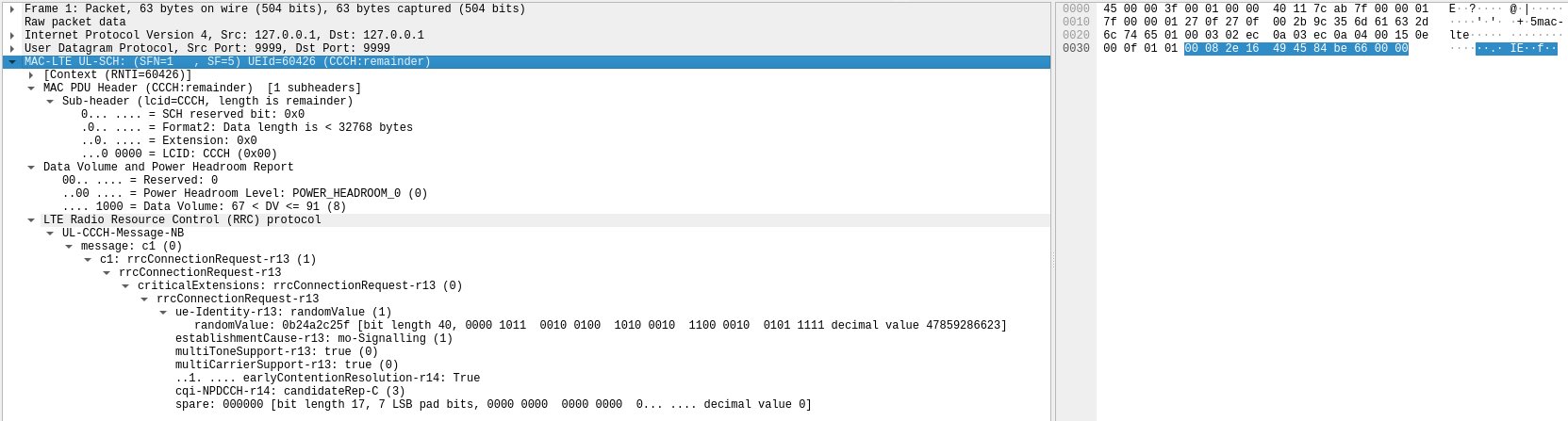 involves an RRC Connection Request using random UE identification rather than S-TMSI, reflecting the device's stateless condition before network registration. The establishment cause is explicitly marked as
 mo-Signalling, distinguishing this administrative negotiation from subsequent data transmissions.
Network enrollment culminates in a critical authentication exchange 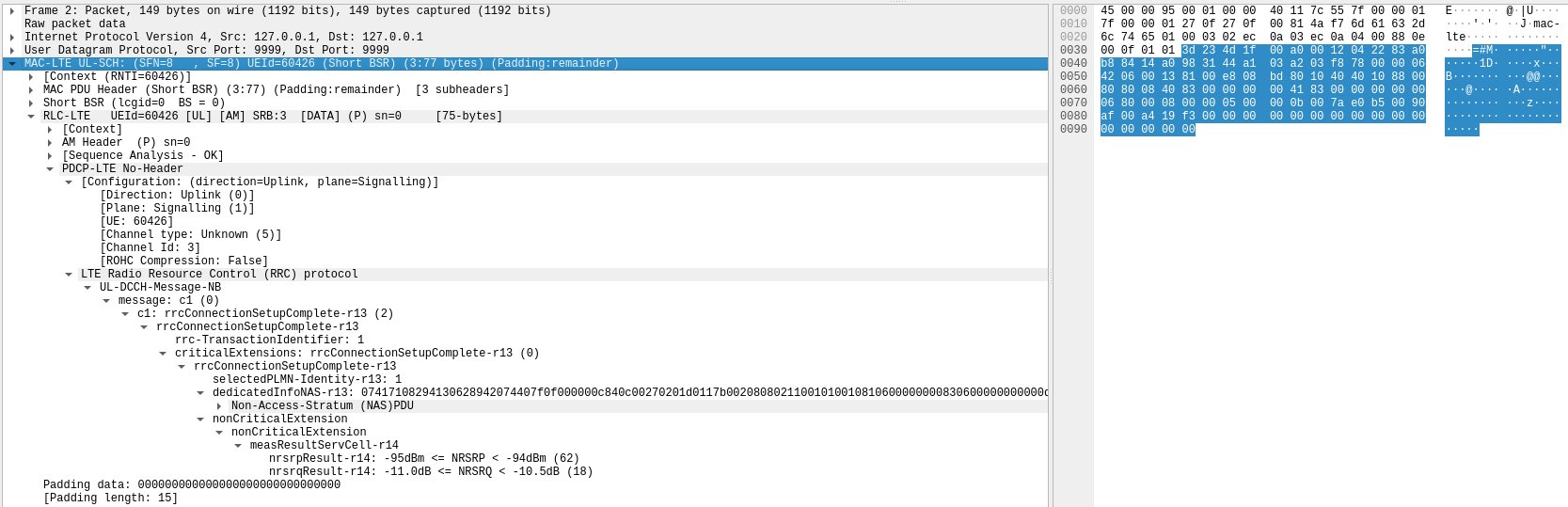 where the beacon transmits its IMSI (214032698247044) and negotiates security protocols. The observed Security Mode Complete message reveals an unexpected 91-byte payload – significantly larger than typical implementations. Forensic analysis suggests this contains a replayed Attach Request message, triggered by a hash mismatch between UE and MME calculations, illustrating how security mechanisms inadvertently increase transmission complexity during critical path operations.
The 100-Second Heartbeat and Its Implications

Post-registration, the beacon settles into its documented rhythm: position transmissions every 100 seconds. These periodic bursts contain Control Plane Service Requests carrying encrypted payloads presumed to contain GNSS coordinates. Each transmission initiates with an NPRACH preamble followed by NPUSCH data bursts, immediately followed 22 seconds later by acknowledgments of RRC connection releases. This creates a pulsing communication pattern: 5 seconds of transmission activity followed by 95 seconds of radio silence, repeated indefinitely.
Notably, the second RRC Connection Request reveals strategic identifier migration: Where initial connection used random UE IDs, authenticated sessions employ persistent S-TMSI values. This creates a surveillance vulnerability – eavesdroppers could theoretically track individual beacons across multiple transmissions by correlating S-TMSI with transmission timing, despite payload encryption.
Encryption Paradoxes and Security Boundaries
The system employs a dual-layer security model: NAS messages receive encryption via EPS security contexts established during authentication, while application-layer payloads show evidence of being unencrypted UDP datagrams destined for 172.31.46.149:50000. This architecture creates philosophical tension regarding security responsibility:
- Network-layer protection: The EPS security context provides robust over-the-air encryption between UE and MME, validated by key derivation from SIM credentials
- Application-layer exposure: Forensic evidence from Vodafone-deployed beacons suggests location data transmits unencrypted within these UDP packets once inside carrier networks
Estévez correctly notes that internal network trust assumptions may justify this design – but introduces attack vectors involving SIM transplantation or firmware modification. A compromised beacon could inject forged location data that would traverse the secured radio link only to deliver malicious payloads within carrier networks. While carrier-side validation could theoretically compare IMEI/IMSI relationships, such correlation requires architectural visibility currently undocumented in specifications.
Temporal Discrepancies and System Evolution
The observed 40-second network attachment delay contradicts official documentation's 100-second initial transmission claim. This temporal dissonance suggests either:
- System documentation inaccurately describes implementation reality
- GNSS acquisition requires additional time beyond network registration
- Beacons implement vendor-specific timing variations
This temporal analysis  reveals how IoT systems develop emergent behaviors beyond specification documents. The beacon's strict periodicity creates predictable radio signatures – devices transmit precisely 40 seconds after power-on, then every 100 seconds thereafter. Such predictability aids network resource planning but creates fingerprinting opportunities.
Philosophical Implications for Emergency IoT
The V16 implementation demonstrates how safety-critical IoT systems inherit cellular infrastructure's inherent tensions. The 100-second transmission interval balances battery conservation against emergency response needs, while the control-plane optimization prioritizes network efficiency over continuous connectivity. Yet these engineering decisions create observable side-effects: predictable transmission windows enabling traffic analysis, identifier persistence enabling device tracking, and security boundary ambiguities between network and application layers.
Future emergency systems must reconcile these tensions. Might zero-trust architectures better protect application data without compromising radio efficiency? Could ephemeral identifiers prevent tracking while maintaining accountability? The V16 beacon provides not just roadside warnings, but profound case studies in how IoT systems negotiate visibility, security and temporal existence within shared infrastructure.
Comments
Please log in or register to join the discussion