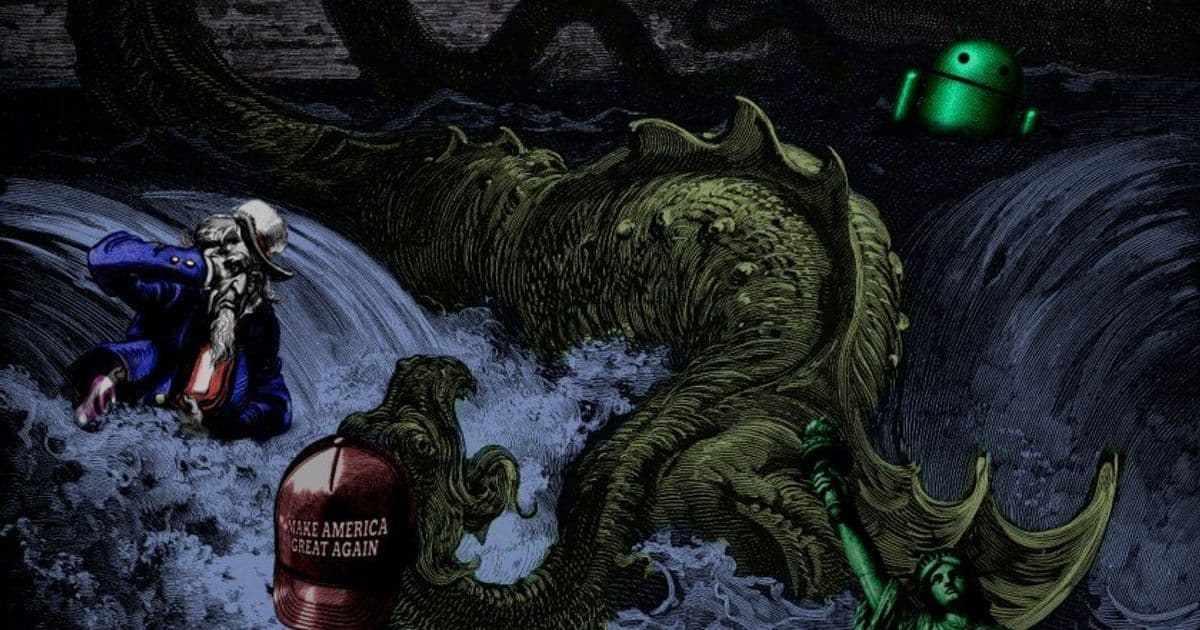
Cory Doctorow argues that the United States’ tech dominance was never a function of product merit but of state‑backed trade leverage. Trump’s aggressive de‑dollarization and trade tactics exposed the fragility of that model, prompting a rapid disassembly of the American internet and opening space for alternative digital public‑goods ecosystems.
The Unraveling of American Tech Power
Cory Doctorow’s latest essay on Pluralistic treats the sudden “mid‑air disassembly” of the American empire as a symptom of a deeper mismatch between power and durability. He draws a line from Reagan’s financialisation of the economy, through Obama’s bailout of Wall Street, to Trump’s reckless trade wars that have finally torn the scaffolding supporting U.S. tech giants.
Why power was never durable
Doctorow leans on Ursula K. Le Guin’s reminder that “we live in capitalism, its power seems inescapable – but then, so did the divine right of kings” (see the NBF Medal announcement). The analogy is clear: monarchs derived legitimacy from bloodlines, while American tech firms have long derived legitimacy from the weight of U.S. trade policy. When the policy shifts, the legitimacy evaporates.
Evidence from the field
- Baldur Bjarnason’s post The old world of tech is dying and the new cannot be born documents how Trump first turned on trading partners, then allies in Europe, and finally delivered a global energy crisis that hurt Asian economies. The post notes that U.S. platforms are now viewed with the same distrust as tobacco or pharmaceutical firms.
- A Reuters story from May 4 2026 shows Zambia refusing to tie health aid to U.S. tech access (link). The refusal illustrates that partner countries are no longer willing to accept American tech as a condition for aid.
- The CERRE paper on European “horizontal interoperability” argues that EU regulators are stuck between symbolic gestures and real action, largely because American firms still enjoy de‑facto immunity under U.S. trade rules (PDF).
These sources paint a picture of a tech sector whose global reach was propped up by a political empire that is now in retreat.
Counter‑perspectives
The “American tech is still indispensable” view
Some analysts point out that platforms like Amazon, Google, and Microsoft still control critical cloud infrastructure and that many multinational corporations have not yet built viable alternatives. They argue that the disassembly is more gradual than sudden and that market forces will eventually re‑align without a dramatic collapse.
The “China will simply replace us” narrative
Doctorow warns against assuming that China will fill the vacuum. While Beijing has invested heavily in domestic capacity, its model is riddled with real‑estate bubbles, demographic decline, and an expanding surveillance state. The “double bind” for the EU—caught between a retreating U.S. and an authoritarian China—remains unresolved.
What this means for developers and the open‑source community
Doctorow sees a potential opening for international digital public goods: free and open software that can replace the opaque “black boxes” of American tech. However, he also notes a paradox: the current copyright framework—an artifact of the same empire that is collapsing—provides the legal scaffolding that makes open‑source licenses enforceable. If the global copyright regime erodes, the ability to enforce those licenses may disappear as well.
- The Post‑American Internet essay (Doctorow’s upcoming book) explores how a world without U.S. trade leverage could accelerate reverse‑engineering and collaborative development, but also how it could leave creators without legal protection.
- A recent post on Pluralistic titled The privilege of bad writers argues that the very act of writing about these shifts is itself a form of resistance, because it keeps the conversation alive outside the corporate echo chambers.
Looking ahead
The next few months will be a litmus test. Trump’s scheduled appearances—Re‑publica in Berlin, SXSW London, and talks in Los Angeles and Menlo Park—are likely to double‑down on the narrative that the U.S. must “protect its tech empire.” At the same time, European policymakers are drafting interoperability mandates that could force a more level playing field.
If the “mid‑air disassembly” continues, developers may find themselves navigating a fragmented ecosystem of national clouds, regional data‑sovereignty laws, and a resurgence of community‑driven platforms. The challenge will be to maintain the collaborative ethos of open source while adapting to a world where the old legal and economic guarantees are no longer reliable.
Bottom line
Doctorow’s essay is a reminder that power without durability is a house of cards. The United States built its tech empire on state‑backed trade leverage; once that leverage is withdrawn, the structure begins to crumble. Whether the collapse leads to a chaotic scramble or to a fertile ground for truly public digital infrastructure depends on how quickly developers, regulators, and civil society can coordinate a new, more resilient model.
Comments
Please log in or register to join the discussion