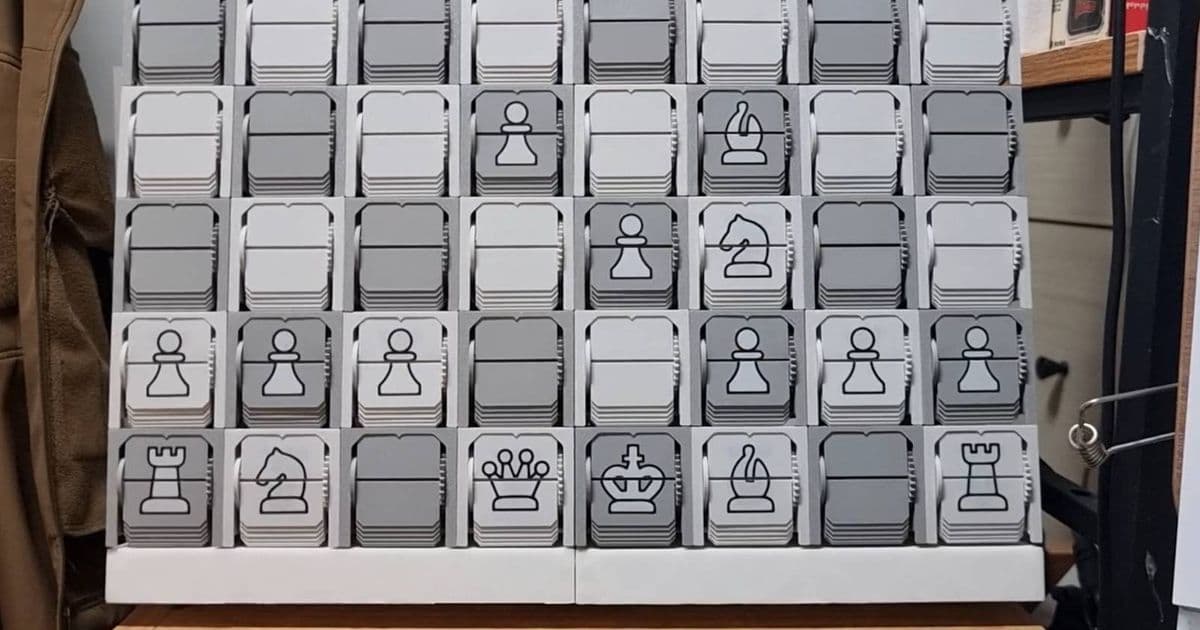
A DIY enthusiast has created an impressive chessboard using split-flap displays, each tile flipping to reveal chess pieces with satisfying mechanical sounds. The project combines an ESP32 chess engine with Raspberry Pi Picos controlling individual ranks.
The world of chess has seen countless innovations over the centuries, but few capture the imagination quite like this split-flap chessboard. Created by e4_user on the Arduino subreddit, this engineering marvel combines retro display technology with modern computing to create a tactile, auditory chess experience that's as satisfying to watch as it is to play.
At first glance, the board resembles something out of a mid-20th-century airport terminal, with each tile featuring a split-flap display that flips over to reveal chess pieces. The distinctive 'takatakataka' sound these displays make when changing positions adds an auditory dimension that traditional digital chess boards simply can't match.
Technical Architecture
The project's technical backbone consists of several key components working in harmony:
- ESP32: The main controller running the chess engine and managing overall game logic
- Raspberry Pi Picos: One microcontroller per rank, handling the mechanical flipping of individual tiles
- Split-flap displays: Each tile contains a mechanism with flaps showing different chess pieces
- Custom firmware: Programming that coordinates between components to execute moves
The ESP32 serves as the brain of the operation, running the chess engine that determines legal moves and game state. Meanwhile, each Raspberry Pi Pico manages its own rank of tiles, handling the precise timing and mechanics required to flip the correct piece into position when a move is made.
Engineering Challenges
Creating a functional split-flap chessboard presents numerous engineering hurdles. The most significant challenge is coordinating the mechanical displays with digital chess logic. Each tile must be able to display multiple chess pieces, requiring a flap system with enough states to accommodate all possibilities.
As e4_user explains, "I recently realized that split-flap displays and chess actually make a pretty great combination, so I started building this project as my first engineering project."
The project currently has 5 of 8 ranks completed, with black pieces still in development. Each rank requires precise calibration to ensure the flaps align correctly and flip smoothly. The creator has also implemented multiple states for the king piece, including various notations, demonstrating the depth of the display system.
The Split-Flap Technology
Split-flap displays, also known as 'flip-dot' displays, are electromechanical display devices that have been used in airports, train stations, and other public spaces for decades. Each display contains a series of flaps with letters, numbers, or symbols on them. When triggered, a mechanism flips the flap to reveal the next segment.
In this chess application, each tile contains multiple flaps, allowing it to display different chess pieces as needed. The mechanical nature of the displays provides satisfying tactile and auditory feedback that digital displays cannot replicate.
Current Status and Future Potential
The project is currently in the prototype phase, with approximately 62.5% of the board completed. The creator has successfully implemented the white pieces and is working on the black pieces. Each completed rank demonstrates the viability of the concept, with smooth flipping and accurate piece placement.
What makes this project particularly interesting is its potential applications beyond casual play. The mechanical nature of the board could be adapted for educational purposes, helping players visualize moves in a more tangible way. The satisfying sound and motion could also make it appealing for tournaments or exhibition matches where the visual and auditory experience enhances the game.
For those interested in building their own split-flap chessboard, e4_user's project serves as an excellent reference point. The use of readily available components like the ESP32 and Raspberry Pi Picos makes the project accessible to hobbyists with intermediate electronics skills.
As chess continues to evolve in the digital age, projects like this remind us that there's still room for innovation in how we interact with this timeless game. The combination of retro technology with modern computing creates a unique experience that honors chess's traditional roots while embracing contemporary engineering possibilities.
You can follow the project's progress on the Arduino subreddit where e4_user has been sharing updates. For more information about split-flap displays and their applications, resources like the Hackster.io article that first spotted this project provide additional technical insights and inspiration for similar DIY endeavors.
Comments
Please log in or register to join the discussion