
A maker combines Victorian aesthetics with modern electronics, creating an open-source cyberpunk pocket watch powered by ESP32-S3 and Arduino.
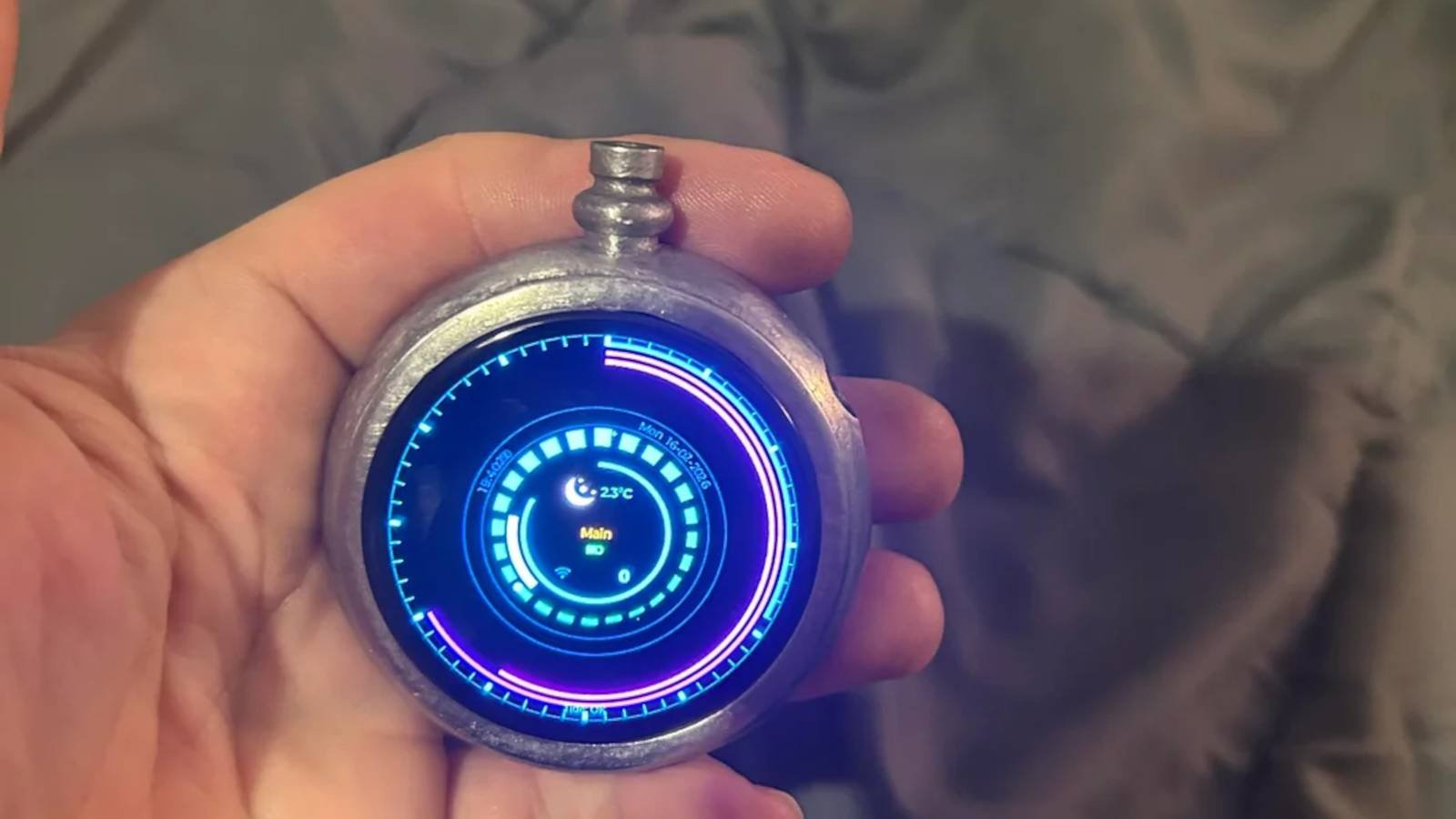
When fiction inspires hardware, extraordinary projects emerge. Math Campbell's Victorian cyberpunk pocket watch—directly inspired by Neal Stephenson's novel The Diamond Age—demonstrates how Arduino ecosystems empower creators to bridge literary imagination and tangible technology. Unlike antique conversions that cram smartwatch internals into vintage cases, this project builds a purpose-built wearable from the ground up.
At its core lies a Waveshare ESP32-S3 development board featuring a vivid 466×466 AMOLED display. Campbell programmed a custom sci-fi interface using Arduino frameworks, prioritizing aesthetic cohesion with the Victorian-steampunk vision. The UI's animations and data displays deliberately evoke fictional tech while maintaining practical functionality.
The hardware arsenal transforms this from a visual novelty into a versatile tool:
- Six-axis IMU for motion tracking and orientation detection
- Real-time clock (RTC) maintaining precise time without network dependency
- Microphone and speaker enabling audio feedback or voice control potential
- MicroSD slot for data logging or offline storage
- Rechargeable battery with power management circuitry
Encasing these components is a 3D-printed stainless steel body designed in Fusion 360. The material choice ensures durability while complementing the retro-futuristic aesthetic. Campbell plans future iterations using hand-forged metal, showcasing how digital fabrication and traditional craftsmanship can coexist.
All project files—including Arduino sketches, PCB designs, and 3D models—are openly available on the Smart Watch v5 GitHub repository. This allows other makers to replicate the build or adapt components for custom wearables. The ESP32-S3's Wi-Fi/Bluetooth capabilities remain intentionally unused in the current firmware, though developers could implement connectivity for notifications or sensor streaming.
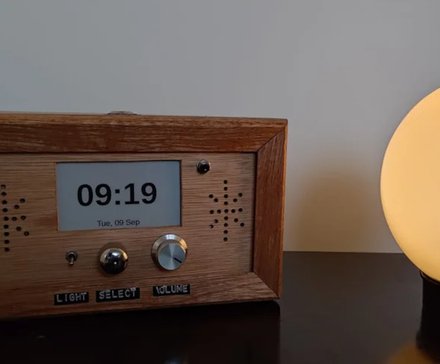
For enthusiasts fascinated by hybrid retro-digital projects, Campbell's creation joins devices like this Raspberry Pi-powered e-paper alarm clock in reimagining everyday objects through open hardware. Both prove that accessible microcontrollers and thoughtful design can transform speculative fiction into functional art.
The pocket watch's true brilliance lies in its balanced execution: high-resolution AMOLED meets Victorian form factor, Arduino's accessibility enables custom UI, and industrial materials house consumer-grade electronics. It stands as both a standalone marvel and inspiration for further hardware experimentation at the intersection of aesthetics and engineering.
Comments
Please log in or register to join the discussion