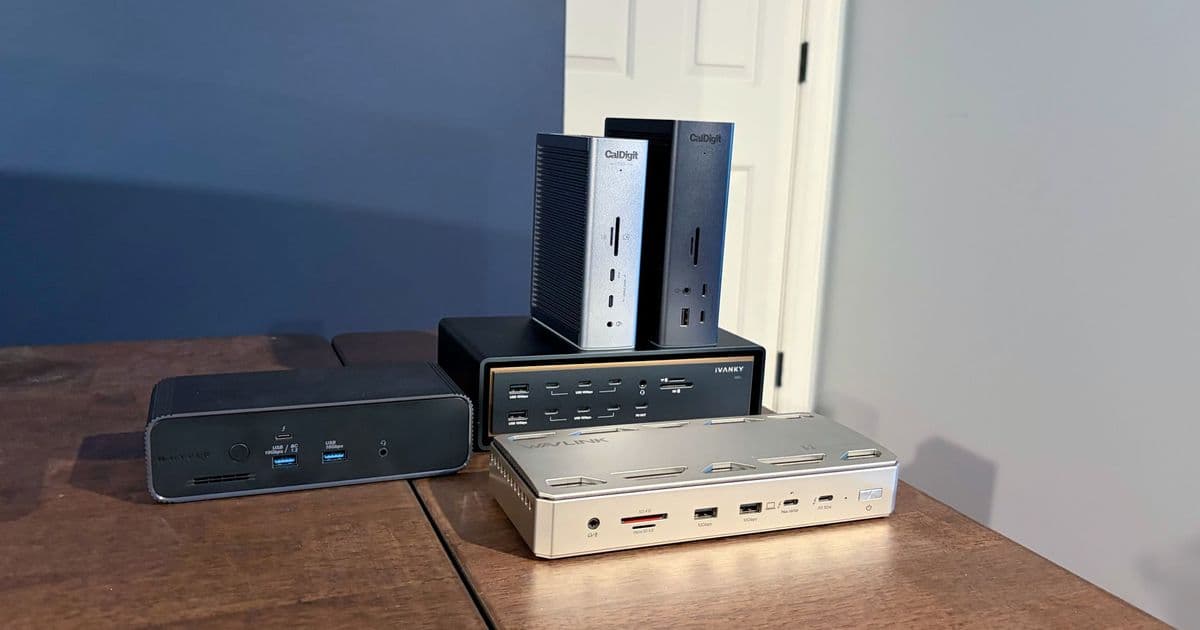
Comprehensive analysis of top Thunderbolt 5 docks, examining technical specifications, performance benchmarks, and market positioning across six major contenders.
Thunderbolt 5 Dock Showdown: Performance, Power, and Portability Compared
Thunderbolt 5 technology has arrived, bringing with it unprecedented bandwidth capabilities and power delivery options. As this new standard proliferates across desktop motherboards and laptops, the docking station market has responded with a wave of new products designed to leverage the increased performance. We've assembled six of the most prominent Thunderbolt 5 docks for comprehensive testing, analyzing their capabilities, performance characteristics, and value propositions.
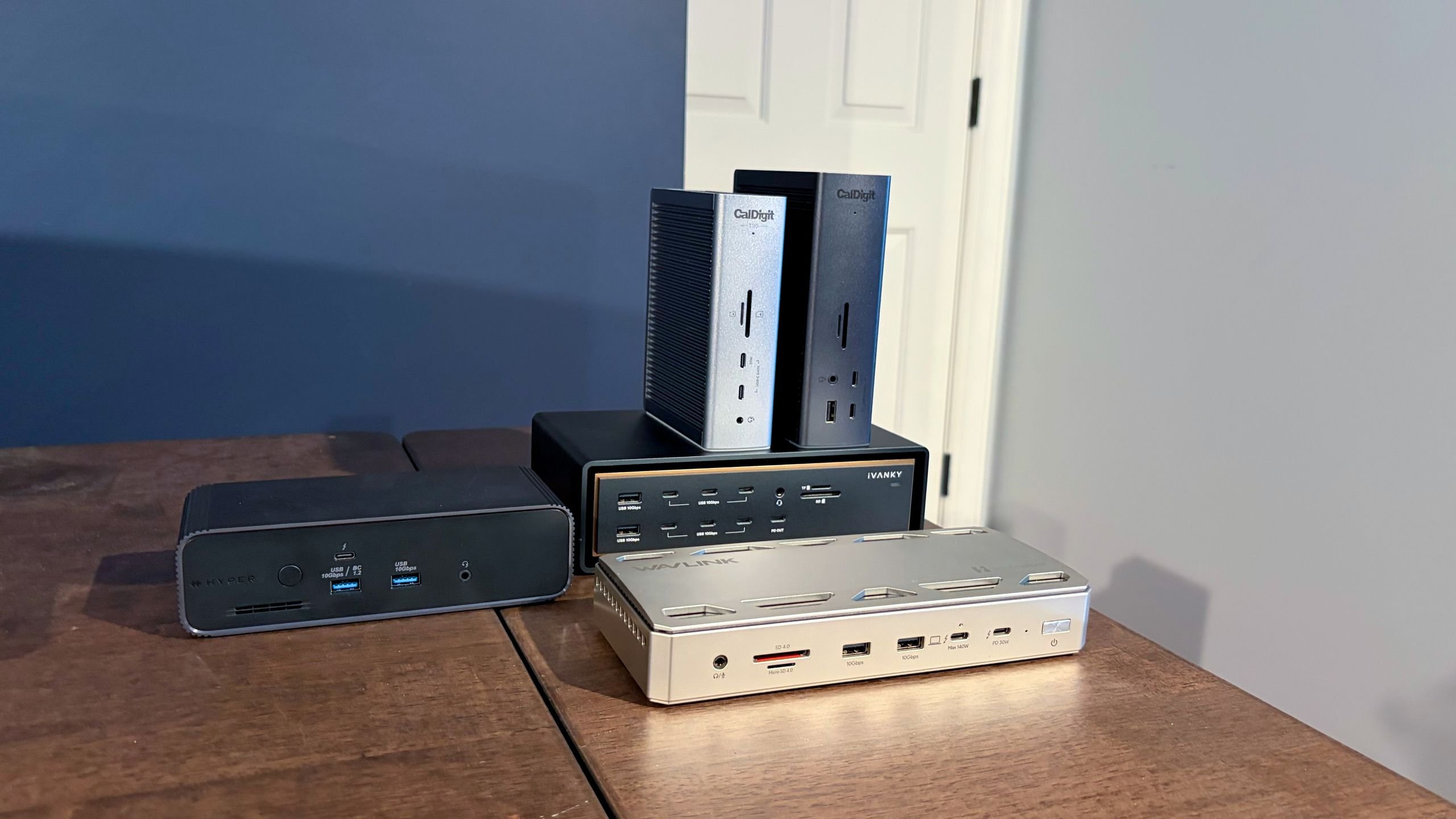
The Contenders
The Thunderbolt 5 dock market currently features several distinct approaches, from minimalist designs to feature-packed behemoths. Our test group includes:
- CalDigit TS5 Plus ($499) - The port powerhouse with 20 total ports
- CalDigit TS5 ($399) - The balanced option with 15 ports
- Razer Thunderbolt 5 Dock ($399) - Gaming-focused with RGB and internal SSD
- WAVLINK WL-UTD58 ($299) - Value champion with M.2 slot
- Hyper HyperDrive Next ($399) - Feature-rich with dedicated power button
- Ivanky FusionDock Ultra ($650) - Mac-exclusive with 26 ports
For our performance testing, we also utilized the Orico Thunderbolt80G enclosure ($165), a dedicated Thunderbolt 5 SSD housing for additional data points.
Technical Specifications and Design Analysis
CalDigit TS5 Plus
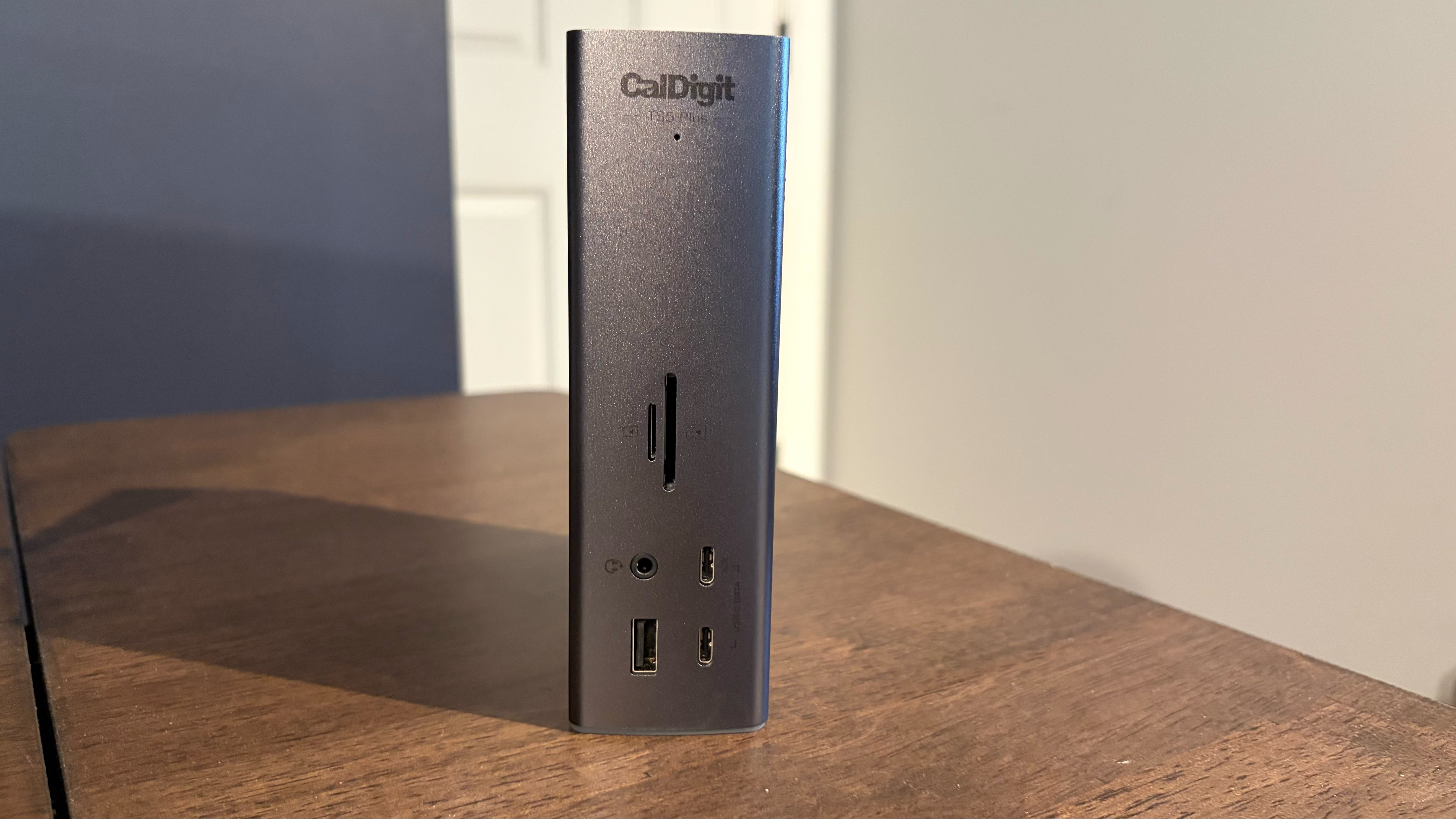
The TS5 Plus represents the pinnacle of port expansion, offering 20 total connections in a space grey aluminum chassis. This dock delivers exceptional connectivity with:
- Front panel: 2x USB-C 3.2 Gen 2, 1x USB-A 3.2 Gen 2, microSD UHS-II, SD UHS-II, audio combo jack
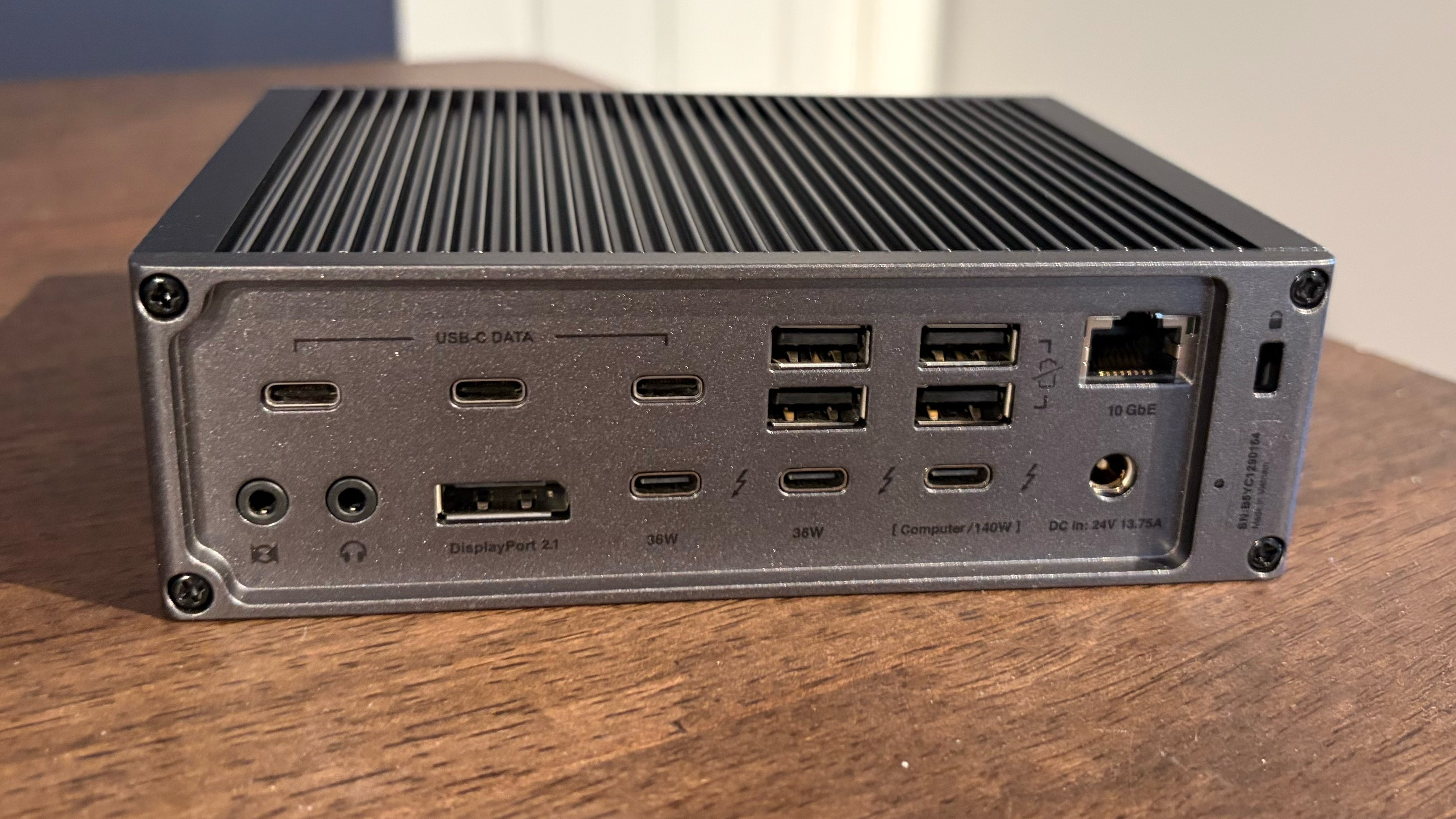
- Rear panel: 1x Thunderbolt 5 upstream, 2x Thunderbolt 5 downstream, 3x USB-C 3.2 Gen 2, 4x USB-A 3.2 Gen 2, DisplayPort 2.1, 10 GbE, audio-in/out, 240W power
The TS5 Plus distinguishes itself with a 10 GbE Ethernet port, a significant upgrade from the 2.5 GbE found in many competitors. It supports up to four monitors when connected to an M5 Max-equipped Mac, with capabilities for four 6K displays at 60 Hz or four 4K displays at 144 Hz. Power delivery reaches 140W, sufficient for most high-performance laptops.
CalDigit TS5
As CalDigit's entry-level Thunderbolt 5 dock, the TS5 provides a more affordable option while maintaining substantial connectivity:
- Front panel: 2x USB-C 3.2 Gen 2, microSD UHS-II, SD UHS-II, audio combo jack
- Rear panel: 1x Thunderbolt 5 upstream, 3x Thunderbolt 5 downstream, USB-C 3.2 Gen 2, USB-A 3.2 Gen 2, USB-A 2.0, 2.5 GbE, audio-in/out, 240W power
The TS5 maintains the same aluminum construction as its Plus sibling but reduces the port count to 15. It still supports up to 120 Gbps (80 Gbps data, 40 Gbps video) and delivers 140W power. Monitor support matches the TS5 Plus, with the same four-monitor capability when paired with appropriate hardware.
Razer Thunderbolt 5 Dock
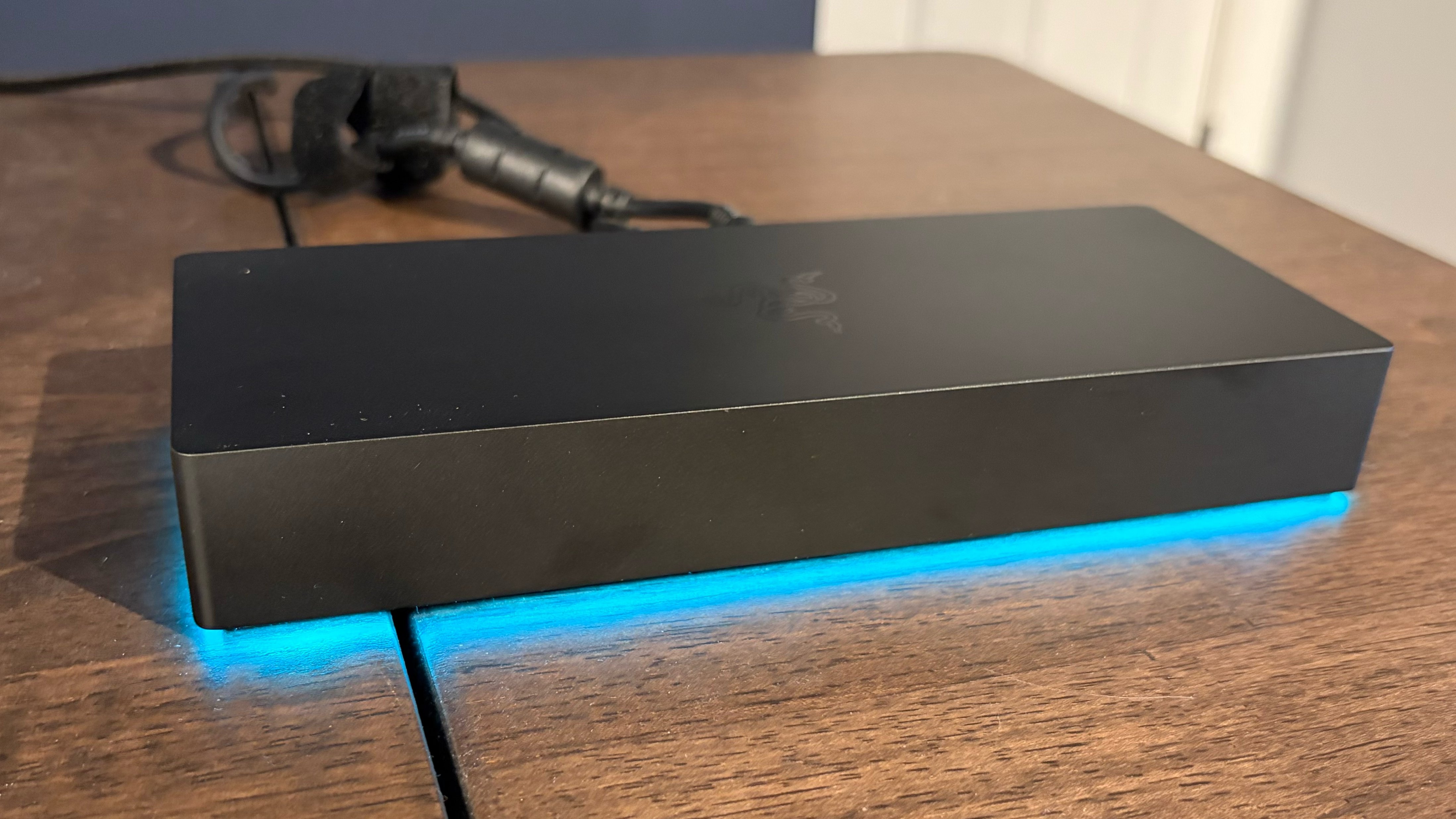
Razer approaches the Thunderbolt 5 dock market with a distinctly gaming-oriented aesthetic, featuring an anodized black aluminum chassis with Chroma RGB lighting. The dock includes several gamer-centric features:
- 1x Thunderbolt 5 upstream, 3x Thunderbolt 5 downstream
- 2x USB-A 3.2 Gen 2, 1x USB-C 3.2 Gen 2
- SD UHS-II slot, audio combo port (7.1 Surround)
- 1 GbE port, 250W power delivery
- Internal PCIe Gen 4x4 M.2 slot with toolless access
The Razer dock distinguishes itself with an integrated cooling fan and internal M.2 slot, allowing users to expand storage without sacrificing external ports. The M.2 slot includes thermal pads for heat dissipation and is accessible via a rotating retention clip. However, the 1 GbE port seems underwhelming for a $399 Thunderbolt 5 dock, especially when competitors offer 2.5 GbE or 10 GbE options.
WAVLINK WL-UTD58
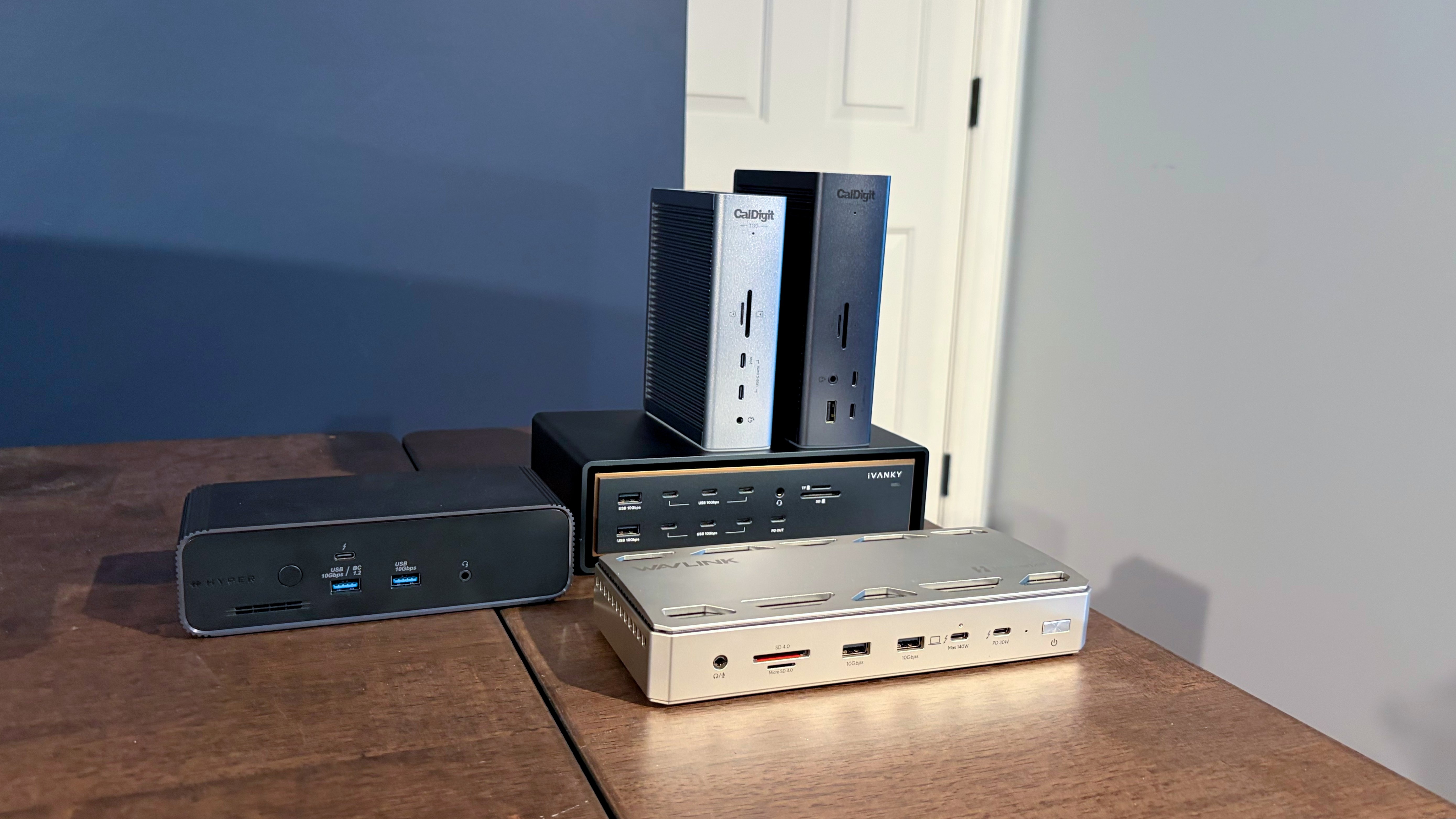
The WAVLINK dock emerges as the value champion at just $299, offering impressive specifications at an accessible price point:
- Front panel: 2x USB-A 3.2 Gen 2, Thunderbolt 5 upstream, Thunderbolt 5 downstream, audio combo jack, microSD UHS-II, SD UHS-II
- Rear panel: 2x USB-A 3.2 Gen 2, 2x Thunderbolt 5 downstream, 2.5 GbE port
- Internal PCIe Gen 4x4 M.2 slot
The WL-UTD58 features a fully aluminum chassis with a landscape-oriented design. Its unique port placement—with power input on the back and Thunderbolt upstream on the front—creates a somewhat cluttered appearance. Despite this, it offers substantial connectivity including dual Thunderbolt 5 downstream ports and a 2.5 GbE connection, making it an excellent value proposition.
Hyper HyperDrive Next
Hyper's Thunderbolt 5 dock takes a different approach with a dark grey aluminum chassis featuring plastic front and rear fascias—a departure from the full aluminum construction of competitors. Key specifications include:
- Front panel: 2x USB-A 3.2 Gen 2, Thunderbolt 5 downstream, audio combo jack
- Rear panel: 2x USB-A 3.2 Gen 2, Thunderbolt 5 upstream, 2x Thunderbolt 5 downstream, 2.5 GbE port
- Dedicated power button
- Internal PCIe Gen 4x4 M.2 slot with multiple form factor support
The HyperDrive Next distinguishes itself with a dedicated power button, a rarity among Thunderbolt docks. It supports various SSD form factors (2230, 2242, 2260, 2280) and includes thermal pads for both sides of the installed SSD. Display support includes one 8K/144 Hz display or two 8K displays at 120 Hz on Windows systems.
Ivanky FusionDock Ultra
The Ivanky FusionDock Ultra represents the most ambitious—and most limited—option in our comparison. This dock is exclusively designed for Apple Silicon Macs and requires two available Thunderbolt ports on the host system. Its specifications are impressive:
- Front panel: 6x USB-C 3.2 Gen 2, 1x USB-C 3.2 Gen 2 (45W PD), 2x USB-A 3.2 Gen 2, microSD UHS-II, SD UHS-II, audio combo jack
- Rear panel: 2x Thunderbolt 5 upstream, 4x Thunderbolt 5 downstream, USB-C 3.2 Gen 2, 2x USB-A 3.2 Gen 2, DisplayPort 2.1, HDMI 2.1, 10 GbE, audio-in/out, S/PDIF, 240W power
The FusionDock Ultra achieves its remarkable 26-port count through dual Thunderbolt 5 chips. It features a "floating midframe design" with an outer heatsink and twin cooling fans that activate based on load. While it offers unparalleled connectivity, its Mac-only compatibility and $650 price limit its appeal to a narrow audience.
Performance Testing and Benchmarks
For our performance evaluation, we used a PNY CS2150 PCIe 5.0 SSD across multiple configurations:
- Direct connection to an Asus Z890 Creator WiFi motherboard (baseline)
- Internal M.2 slot in the Razer Thunderbolt 5 Dock
- External connection via Orico Thunderbolt80G enclosure to CalDigit TS5 and TS5 Plus
- External connection via Orico enclosure to Ivanky FusionDock Ultra (on MacBook Air)
CrystalDiskMark Results
- Baseline (direct connection): 10,381.26 MBps reads, 8,645.4 MBps writes
- Razer Thunderbolt 5 Dock: 5,627.29 MBps reads, 5,620.6 MBps writes
- CalDigit TS5 and TS5 Plus: ~5,300 MBps reads, ~5,520 MBps writes
- Ivanky FusionDock Ultra (via Orico enclosure): ~3,000 MBps reads, ~2,500 MBps writes
All Thunderbolt 5 docks cite a theoretical maximum of 6,200 Mbps transfers (64Gb/s PCIe 4.0 interface). The performance differences between docks were minimal, with all achieving approximately 85% of the theoretical maximum. The FusionDock Ultra showed lower speeds, likely due to Thunderbolt 4 compatibility limitations on the test MacBook Air.
Network Performance
Testing with iPerf3 showed that each dock achieved its theoretical maximum network speeds:
- CalDigit TS5: 2.5 GbE
- CalDigit TS5 Plus and Ivanky FusionDock Ultra: 10 GbE
- Razer, Hyper, and WAVLINK: 1-2.5 GbE
Thermal Management
All docks operated within acceptable temperature ranges, remaining warm to the touch even when idle. The Razer and Ivanky docks featured active cooling fans that were only audible when placing an ear close to the unit. Passive cooling in the CalDigit, WAVLINK, and Hyper docks proved sufficient for typical operation.
Market Implications and Recommendations
The Thunderbolt 5 dock market has matured quickly, offering distinct options for different user needs and budgets. Several key trends emerge from our testing:
Performance Convergence: All tested Thunderbolt 5 docks deliver similar performance characteristics, with variations primarily in port selection and build quality rather than fundamental speed differences.
Port Expansion Premium: Docks with extensive port selections command significant price premiums. The CalDigit TS5 Plus, with 20 ports, costs $499, while the WAVLINK with 15 ports costs just $299.
Specialized Features: Gaming-focused docks like the Razer model differentiate themselves with RGB lighting and internal storage options, while professional-oriented docks emphasize connectivity and display support.
Platform Limitations: The Ivanky FusionDock Ultra demonstrates that extreme port expansion often comes with compatibility limitations, restricting its market to a specific subset of Apple Silicon users.
Value Analysis
- Best Overall Value: WAVLINK WL-UTD58 at $299 offers the best balance of features, performance, and price.
- Professional Workstation: CalDigit TS5 Plus at $499 provides maximum connectivity for users needing extensive port expansion.
- Gaming Setup: Razer Thunderbolt 5 Dock at $399 offers gaming-specific features with acceptable performance.
- Mac-Exclusive: Ivanky FusionDock Ultra at $650 serves a niche market with unparalleled connectivity for Apple Silicon users.
Future Considerations
As Thunderbolt 5 becomes more prevalent, we expect to see:
- Increased adoption of 10 GbE ports as standard features
- More sophisticated thermal management solutions
- Enhanced compatibility with both Intel and Apple platforms
- Potential price stabilization as manufacturing scales
Conclusion
Thunderbolt 5 docks have evolved significantly, offering impressive capabilities across a range of price points. For most users, the CalDigit TS5 provides the best balance of features, performance, and value at $399. However, budget-conscious users will find the WAVLINK WL-UTD58 compelling at just $299, while professionals requiring maximum connectivity might justify the $499 CalDigit TS5 Plus.
The integration of internal M.2 slots in several models represents an interesting trend toward converged storage and connectivity solutions. As SSD performance continues to improve, Thunderbolt 5's 80 Gbps bandwidth ensures these docks will remain relevant for years to come.
For those considering a Thunderbolt 5 dock, the key considerations should be port requirements, display needs, budget constraints, and platform compatibility. With our comprehensive testing, users can make informed decisions based on their specific needs rather than marketing claims alone.
Comments
Please log in or register to join the discussion