
Japanese ceramics giant Toto, best known for its Washlet toilets, is seeing its stock surge 11% as its decades-old electrostatic chuck business for semiconductor manufacturing becomes a critical supplier to the AI memory market.
The Japanese toilet manufacturer Toto has experienced its most rapid share price increase in five years, climbing 11% in a single day. This surge isn't driven by bathroom fixture sales, but by an unexpected and lucrative side business: manufacturing electrostatic chucks for semiconductor wafer handling. Goldman Sachs analysts attribute the stock movement directly to Toto's role in the NAND flash memory supply chain, a segment experiencing intense demand due to AI data center expansion.

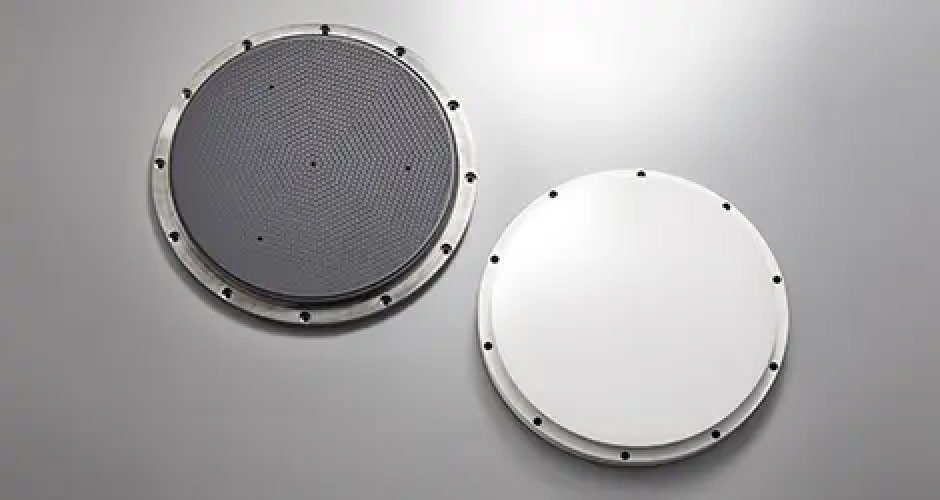
Toto's ceramics expertise, honed over decades producing high-precision sanitaryware, translates directly to the semiconductor industry's need for contamination-free wafer handling. The company has been mass-producing electrostatic chucks since 1988. These devices use electrostatic force to securely hold silicon wafers during fabrication processes, preventing particle contamination that could ruin billions of dollars worth of chips. This capability has evolved from a niche diversification into a core business segment.
According to Bloomberg data compiled for March 2025, Toto's electrostatic chuck division now contributes over two-fifths (40%) of the company's operating income. This represents a significant shift for a company whose primary brand identity remains in bathroom fixtures. The business has grown steadily alongside semiconductor manufacturing complexity, as each new process node requires more sophisticated wafer handling solutions.
Goldman Sachs analysts, quoted by the Japan Times, upgraded Toto's rating from neutral to buy, citing "significant profit growth" ahead. Their analysis points to a tight supply-demand environment in the memory industry as a key tailwind. NAND flash memory, essential for AI training and inference workloads, faces constrained production capacity while demand from AI data centers continues to accelerate. This imbalance creates pricing power for suppliers like Toto.
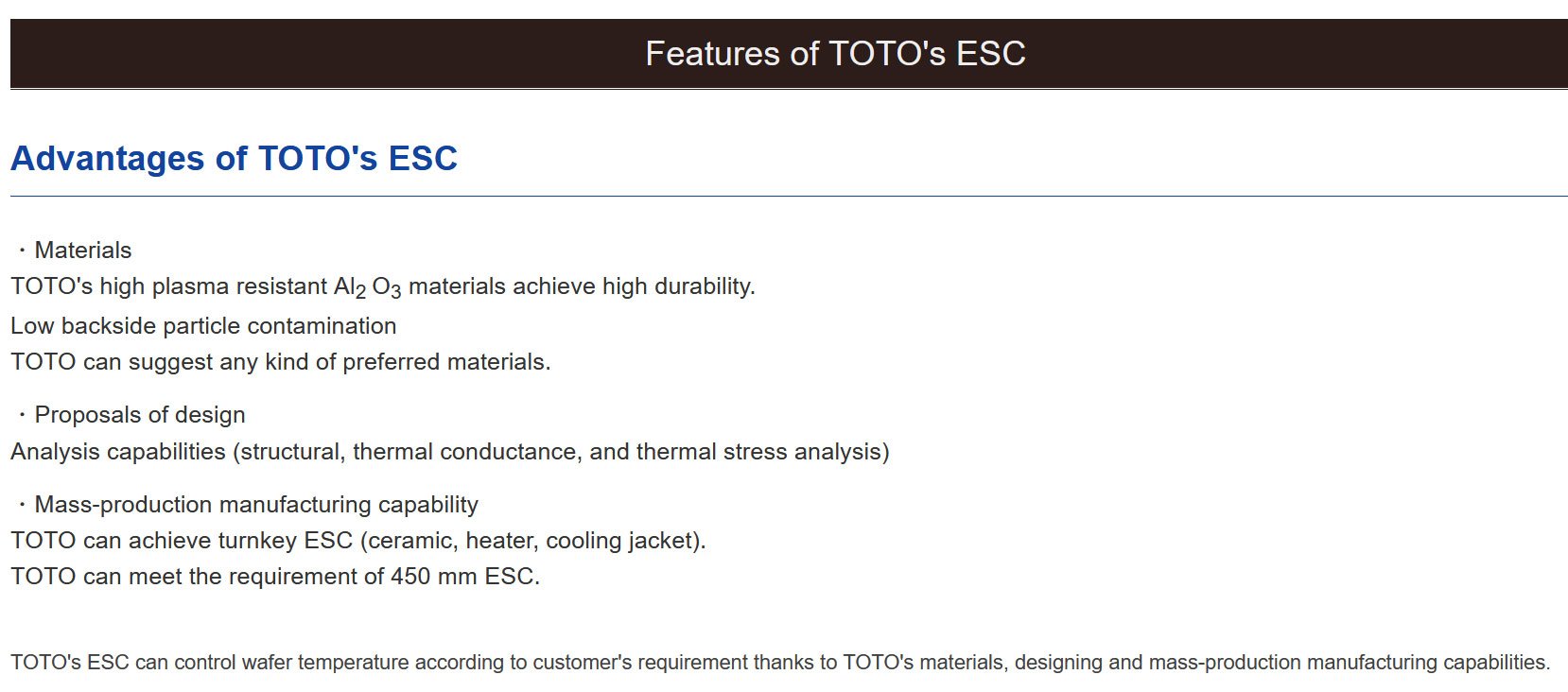
The electrostatic chuck market itself is a specialized segment within semiconductor equipment. These chucks must maintain extreme flatness (often within microns) and uniform electrostatic fields across 300mm wafers. Toto's ceramics manufacturing capabilities provide the material science foundation for this precision. The company's experience with high-temperature firing processes and material consistency directly applies to producing the ceramic components required for these chucks.
This isn't an isolated case of Japanese industrial companies pivoting to semiconductor materials. The article notes other unexpected beneficiaries: an MSG seasoning manufacturer that produces chip-insulating films, and cosmetics brand Kao, whose facial cleanser expertise translates to semiconductor wafer cleaning agents. These examples highlight how established manufacturing capabilities in seemingly unrelated industries can find critical applications in the semiconductor supply chain.
For Toto, the timing is particularly advantageous. The AI boom has created unprecedented demand for memory bandwidth and capacity. Training large language models requires massive amounts of NAND flash for storage, while inference workloads need fast access to cached data. This demand is straining existing production capacity and driving investment in new fabrication facilities, all of which require electrostatic chucks.
The company's electrostatic chuck business benefits from several structural advantages. First, the ceramic components require specialized manufacturing knowledge that is difficult to replicate quickly. Second, as semiconductor processes advance, chuck specifications become more demanding, favoring established suppliers with proven quality records. Third, the business has high switching costs—once a fab qualifies a specific chuck design, changing suppliers involves significant requalification risks.
Toto's financial results reflect this business evolution. While the company doesn't break out electrostatic chuck revenue separately in its public filings, analysts have tracked the segment's growth through industry reports and supply chain checks. The 40% operating income contribution suggests this is no longer a side business but a major profit driver. The company's ceramics division, which includes both toilet manufacturing and semiconductor equipment, has become its most valuable segment.
Looking ahead, the AI memory market shows no signs of slowing. Major cloud providers continue to expand data center capacity, and each new AI model iteration requires more memory. This creates a sustained demand environment for NAND flash, which in turn drives demand for Toto's electrostatic chucks. The company is reportedly expecting the current wave of AI data center construction to provide additional boost to its business.
The broader implication is a reminder of the semiconductor industry's complex supply chain. While headlines focus on chip designers and foundries, a vast ecosystem of materials and equipment suppliers enables modern chip manufacturing. Many of these suppliers come from unexpected industries, bringing specialized expertise that becomes critical at specific process nodes. Toto's success demonstrates how industrial companies with deep materials science capabilities can find lucrative niches in the semiconductor ecosystem.
For investors, Toto's story highlights the importance of looking beyond traditional industry classifications. A company's core competencies in manufacturing, materials, or process engineering may have applications in high-growth technology markets. The 11% stock surge reflects the market's recognition that Toto's ceramics expertise has created a valuable, defensible position in the AI-driven semiconductor supply chain.

As AI continues to transform computing infrastructure, the demand for specialized semiconductor equipment and materials will only intensify. Toto's electrostatic chuck business represents a perfect example of how established industrial capabilities can become essential components in the technology revolution, turning a toilet manufacturer into an unlikely beneficiary of the AI boom.
Comments
Please log in or register to join the discussion