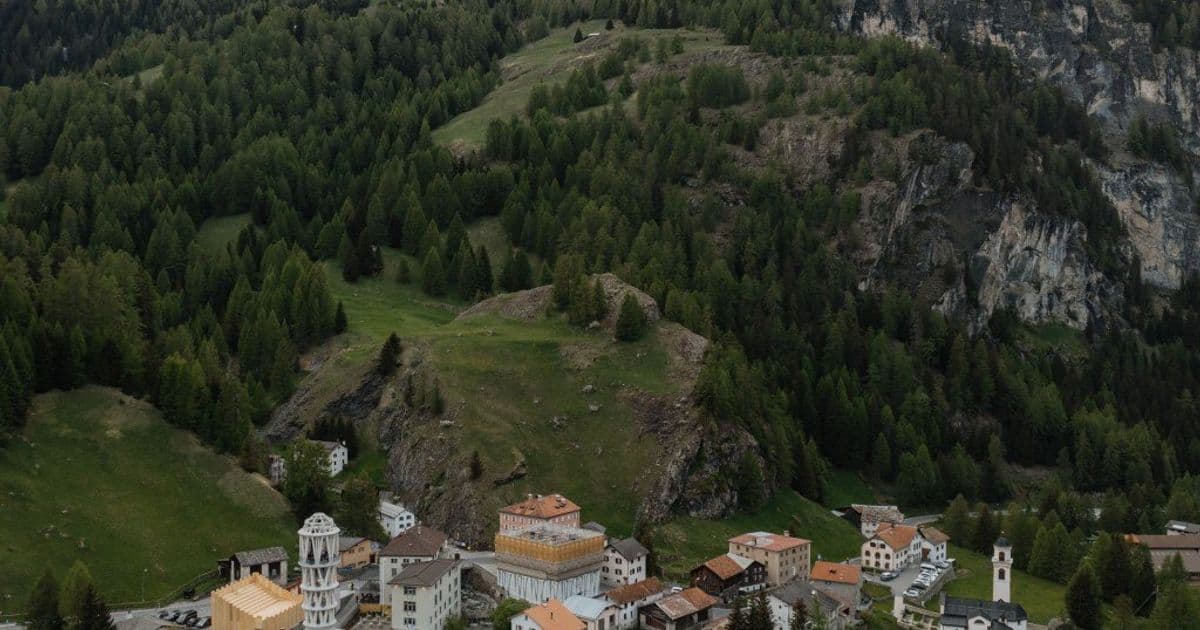
A Swiss cultural foundation and ETH Zurich have completed the world's tallest 3D-printed building, demonstrating how digital construction can create complex, load-bearing structures without traditional formwork.
In the remote mountain village of Mulegns, Switzerland, a 30-meter tower rises above the Julier Pass, marking a milestone in construction technology. The Tor Alva (White Tower), completed in 2025, stands as the world's tallest 3D-printed building, demonstrating how digital fabrication can create complex architectural forms without traditional formwork.
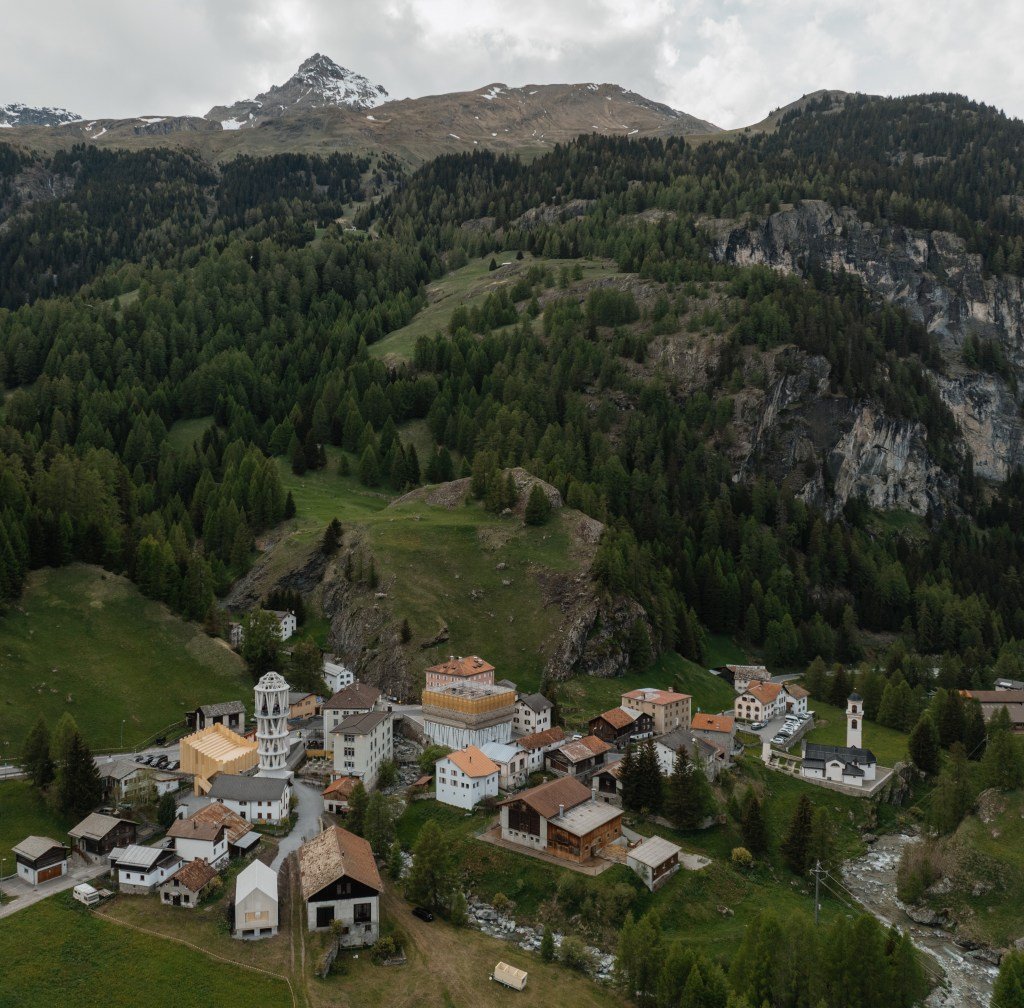
Figure 1: The digitally constructed Tor Alva, or White Tower, stands in Mulegns, a small village on the Julier Pass in Switzerland. Credit: Birdviewpicture, Nova Fundaziun Origen
The tower's construction represents a fundamental shift in how buildings can be made. Rather than pouring concrete into wooden molds, an industrial robot at ETH Zurich applied specially developed concrete layer by layer, guided by complex algorithms that simultaneously create structure and ornamentation. This process eliminated the need for supporting molds entirely, allowing for intricate designs that would be impossible or prohibitively expensive with traditional methods.
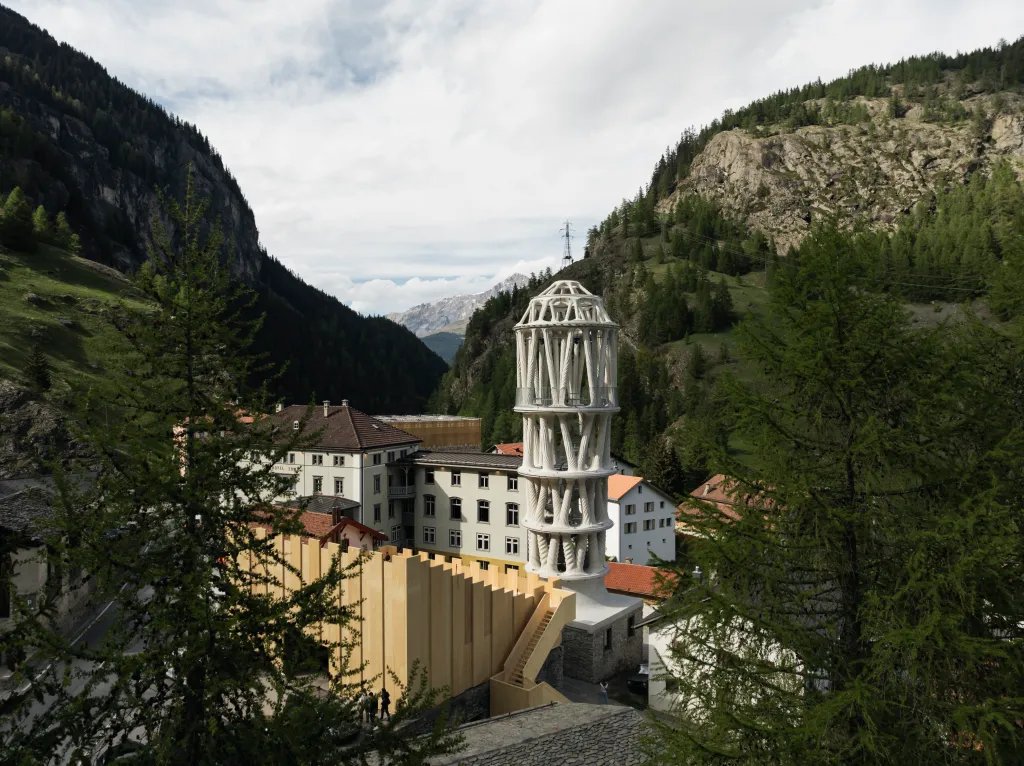
Figure 2: The columns of the Tor Alva in Mulegns were assembled in the nearby village of Savognin and brought to Mulegns by heavy load transport. Credit: Benjamin Hofer/Nova Fundaziun Origen
The project required five months to print the column elements alone. Each of the 48 columns that support the circular, four-story structure was manufactured entirely through 3D printing. The columns were assembled in Savognin, a nearby village, and transported to Mulegns by heavy load transport—a logistical challenge that underscores both the size of the components and the remote location of the site.
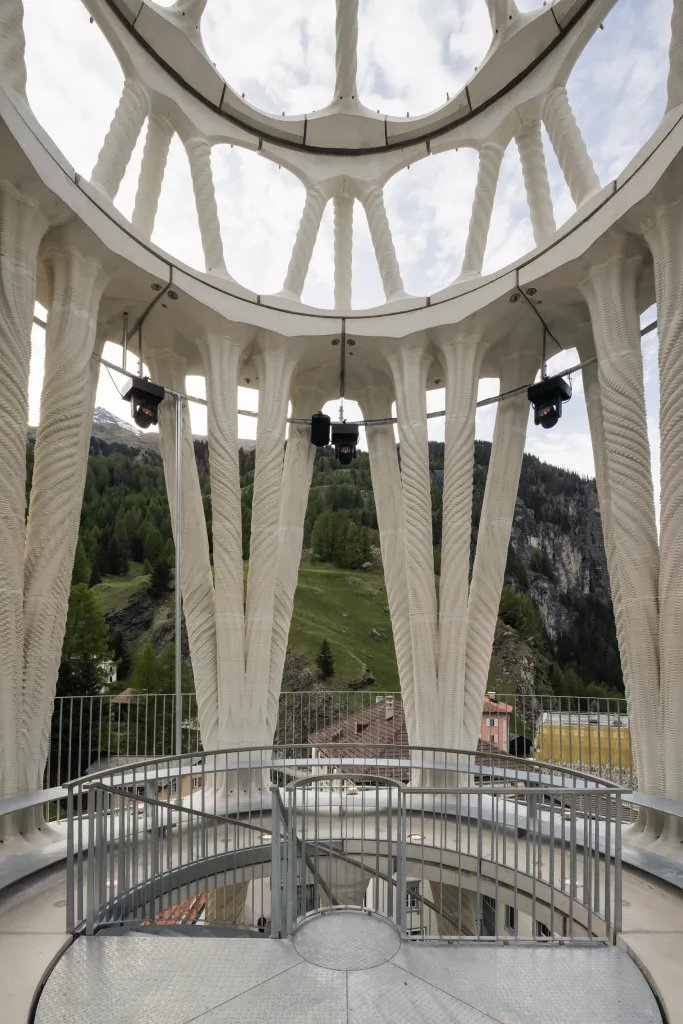
Figure 3: Entrance to the Tor Alva in Mulegns. The structure's load-bearing columns were manufactured entirely with 3D printing. Credit: Benjamin Hofer/Nova Fundaziun Origen
Beyond its technical achievements, the Tor Alva serves a cultural purpose. The structure commemorates the Graubünden confectioners who emigrated throughout Europe during the 19th and early 20th centuries. Nova Fundaziun Origen, the Swiss cultural foundation behind the project, sees the tower as a means to revitalize Mulegns, a tiny village that has faced population decline.
The tower's design incorporates practical considerations for its remote location. A modular approach allows for disassembly and reassembly, providing flexibility for future use or relocation. This adaptability reflects the project's experimental nature—it's not just a building, but a demonstration of what's possible when digital design meets robotic construction.
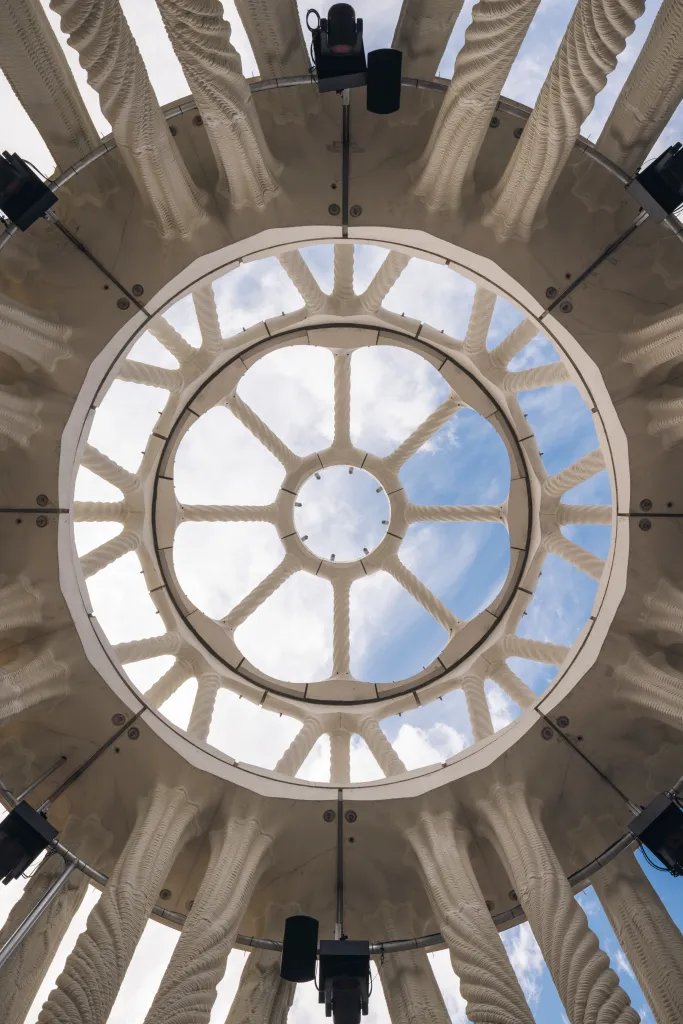
Figure 4: View into the cupola of the Tor Alva in Mulegns. A modular design allows for disassembly and reassembly. Credit: Benjamin Hofer/Nova Fundaziun Origen
The Tor Alva represents more than an architectural curiosity. It demonstrates that 3D-printed construction can achieve structural integrity at significant scale while enabling forms that traditional methods cannot produce. The complex algorithms driving the printing process create both the structural framework and decorative elements simultaneously, suggesting a future where architectural ornamentation emerges naturally from structural necessity rather than being added as an afterthought.
This achievement builds on years of research in digital construction methods. ETH Zurich has been at the forefront of developing robotic fabrication techniques for architecture, exploring how industrial robots can be repurposed for building applications. The Tor Alva applies these research findings to a full-scale building, proving the viability of the technology beyond laboratory prototypes.
The implications extend beyond this single tower. If 3D-printed construction can produce load-bearing structures of this scale with complex geometries, it opens possibilities for more efficient use of materials, reduced construction waste, and buildings that respond more directly to their environmental and cultural contexts. The technology could be particularly valuable in remote locations where transporting traditional construction materials and skilled labor is challenging.
As the construction industry faces pressure to reduce its environmental impact and adapt to changing needs, projects like the Tor Alva point toward a future where buildings are not just constructed differently, but conceived differently—where the boundaries between structure, ornament, and fabrication method blur into a unified design approach guided by algorithms and executed by robots.
Comments
Please log in or register to join the discussion