
The translation industry is experiencing a fundamental shift as AI tools automate tasks once performed exclusively by humans, leading to significant income loss, job displacement, and a reevaluation of the profession's future. While some argue AI cannot fully replace human nuance in high-stakes fields, the economic impact is already severe for many translators and interpreters worldwide.
The promise of instant, free translation has been a technological dream for decades, but for professional translators and interpreters, that dream has become a professional nightmare. Tools like Google Translate and, more recently, generative AI models have steadily eroded the demand for human language services, leaving many in the field grappling with a stark reality: their livelihoods are being systematically dismantled by the very technology they once viewed as a distant abstraction.

For Timothy McKeon, an Irish-language translator, the shift has been abrupt and devastating. For years, he enjoyed steady work translating documents for European Union institutions. The rise of AI translation tools, however, has upended his career, causing him to lose approximately 70% of his income. The work that remains often involves polishing machine-generated translations, a task McKeon refuses on principle. He views this as complicity in his own obsolescence, arguing that every edit he makes feeds the software, training it to become more proficient and, consequently, more capable of replacing him. "You’re essentially expected to dig your own professional grave," he stated.
This sentiment is echoed across the industry. A 2024 survey by the United Kingdom’s Society of Authors found that over a third of translators had lost work due to generative AI, with 43% reporting a drop in income. The data supports these personal accounts. Carl Frey and Pedro Llanos-Paredes at Oxford University analyzed U.S. data from 2010 to 2023, discovering that regions with higher usage of Google Translate experienced slower growth in translator jobs. Their baseline estimate suggests that roughly 28,000 additional translator jobs would have been created in the absence of machine translation. "It’s not a story of mass displacement but I think that’s very likely to follow," Frey warned.
The economic pressure is forcing a painful transition. McKeon is part of the Guerrilla Media Collective, an international group of translators, where he observes that nearly everyone now supplements their income with other work. This mirrors trends in the United States, where Andy Benzo, president of the American Translators Association, notes that many professionals are leaving the field entirely.

The impact extends beyond individual freelancers to language service companies. Christina Green, president of Green Linguistics and a court interpreter in Wisconsin, recently had to lay off staff after losing a major Fortune 10 corporate client to an AI translation service. "People and companies think they’re saving money with AI, but they have absolutely no clue what it is, how privacy is affected and what the ramifications are," Green argued. She is also fighting a Wisconsin bill that would allow courts to use AI for translation in certain proceedings, a move she fears could set a dangerous national precedent.
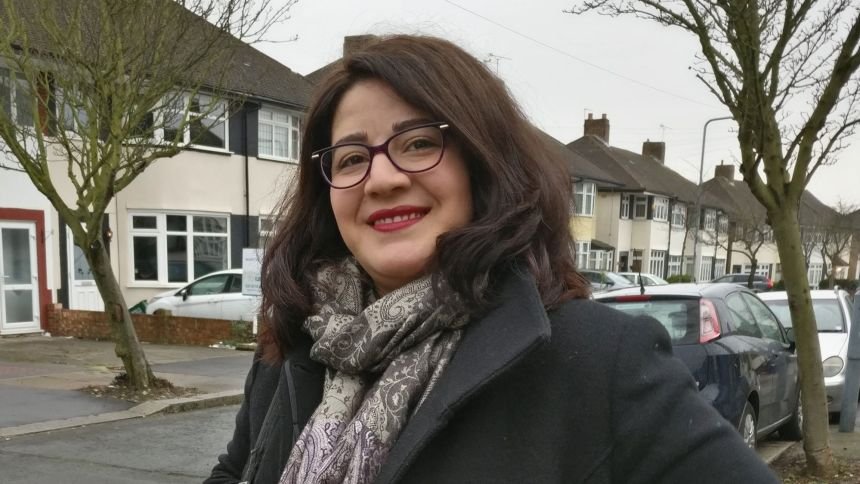
Fardous Bahbouh, an Arabic-language translator and interpreter based in London, sees this as a systemic issue requiring government intervention. She contends that governments are not doing enough to protect foreign-language professionals or help them transition to other work, warning that inaction could lead to greater inequality and in-work poverty. Her research confirms that technology, including AI, is "hugely impacting" the industry.
Despite the widespread disruption, there are domains where human expertise remains indispensable. Andy Benzo points out that while AI is suitable for low-risk tasks like finding directions, the risks in high-stakes fields like diplomacy, law, finance, and medicine are "humongous." The nuance of specific words in legal or medical contexts is often beyond the current capabilities of large language models. "I’m a translator and a lawyer and in both professions the nuance of each word is very specific and the (large language models powering AI tools) aren’t there yet, by far," Benzo said.
Literary translation appears to be another relatively insulated field. Ian Giles, a translator and chair of the Translators Association at the UK’s Society of Authors, notes that while his corporate translation work has vanished, literary commissions have continued. The creative and cultural nuances of fiction may prove more resistant to automation than straightforward commercial or technical texts.
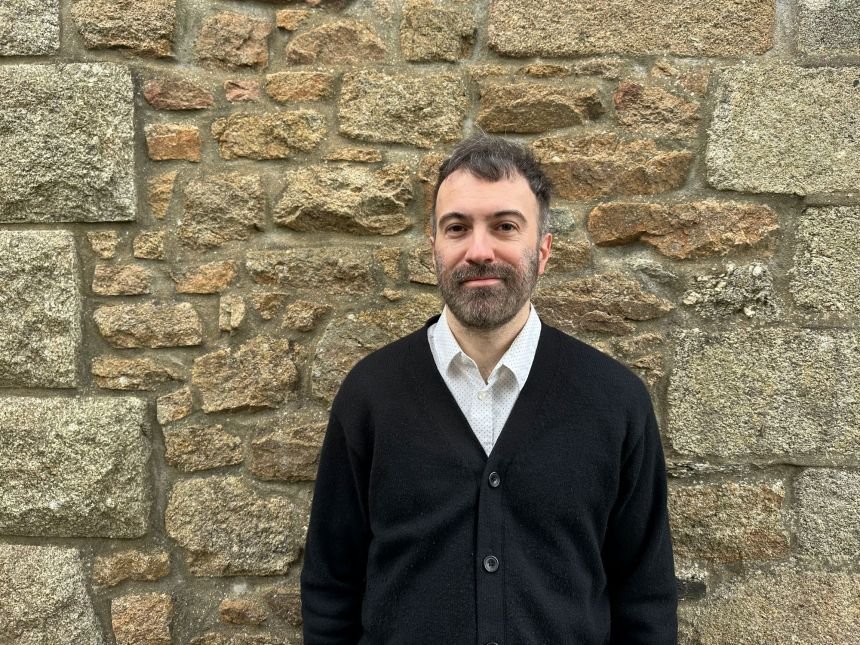
Ultimately, the technology cannot replicate a fundamental human element: connection. Carl Frey of Oxford University observes that while machine translation is pervasive, it cannot build relationships. "The fact that machine translation is pervasive doesn’t mean you can build a relationship with somebody in France without speaking a word of French," he said. This underscores a potential future where human translators may shift from being the primary translators of text to being interpreters of culture, mediators of nuance, and guardians of meaning in an increasingly automated linguistic landscape. The industry is at a crossroads, forced to redefine its value proposition in a world where translation is no longer a scarce skill but a ubiquitous commodity.
Comments
Please log in or register to join the discussion